

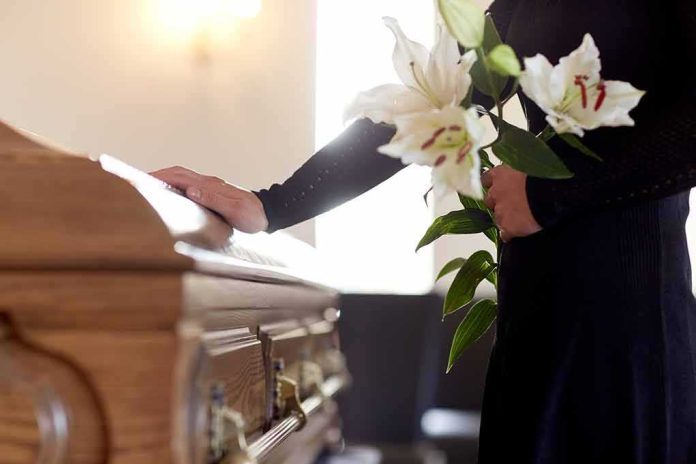
Video from a village wake shows a 15-year-old girl sitting up inside her coffin, startling mourners and prompting an official inquiry.
Story Snapshot
- A Guatemalan teen, believed dead, sat up and spoke during her wake.
- Family says no doctor declared death and no certificate was issued.
- Authorities requested medical evaluations and opened a review.
- The case highlights risks when deaths are presumed without clinical checks.
What The Family Says Happened
Relatives gathered in El Jocote, Guatemala, to mourn 15-year-old Yuleidy Ixcotoyac after she lost consciousness earlier that day. During the wake, her mother, Lesvia Ríos, leaned over the coffin and saw movement. Witnesses say the teen then opened her eyes, sat up, and spoke as people cried out in shock. Video from the wake shows mourners helping her and reacting in disbelief, underscoring the dramatic turn from grief to relief.
Reports say the father, Abraham Ixcotoyac, had checked for signs of life on the roadside, believed his daughter had died, and brought her home for a wake. Outlets covering the event state that no clinician confirmed a death and that no death certificate existed. That gap helps explain how a funeral proceeded even though the teen later showed signs of life at the service itself.
What Officials Are Reviewing
Local reporting indicates Guatemala’s Public Ministry began an inquiry after the wake video spread worldwide. Coverage also notes that government child protection authorities requested full medical evaluations under a judicial order to assess the teen’s condition and the chain of events. These steps focus on whether any formal medical assessment occurred and how a presumed death advanced to a wake without clinical documentation.
Several reports emphasize a core fact: a doctor did not examine the teen before the wake, and a death certificate was not issued. That detail narrows the likely issue from a mysterious “return from death” to a breakdown in confirming death in a clinical setting. When families must make snap judgments without medical support, tragic mistakes and near-misses become more likely, as this case shows.
Why This Resonates Beyond Guatemala
Communities everywhere trust that key life-and-death steps follow basic guardrails. This case shows what can happen when those guardrails fail or are absent. Clear rules exist for a reason: trained professionals should confirm death, record it, and guide next steps. Skipping those steps can put grieving families through avoidable trauma and can endanger the person who still needs urgent care. The wake video drives home how high those stakes are.
Medical literature describes rare “apparent death” episodes, but those are usually documented in hospitals with monitors and staff. Here, reports point to a simple fact pattern: a teen lost consciousness, a parent believed she was gone, and hours later she showed signs of life during a wake. That difference matters. This story is less a mystery of biology and more a warning about basic systems that protect people when seconds count.
What Comes Next And Practical Lessons
Authorities will likely map the timeline, confirm the medical status of the teen, and determine which procedures were missed. That review can show what training, transport, or access gaps played a role. For families anywhere, the lesson is clear. When someone collapses, call emergency services, seek a clinician, and demand written confirmation for life-and-death decisions. For governments, the charge is simple: make emergency care fast, affordable, and present where people live.
Sources:
greekreporter.com, perthnow.com.au, lavozdeguate.com, misinforeview.hks.harvard.edu