

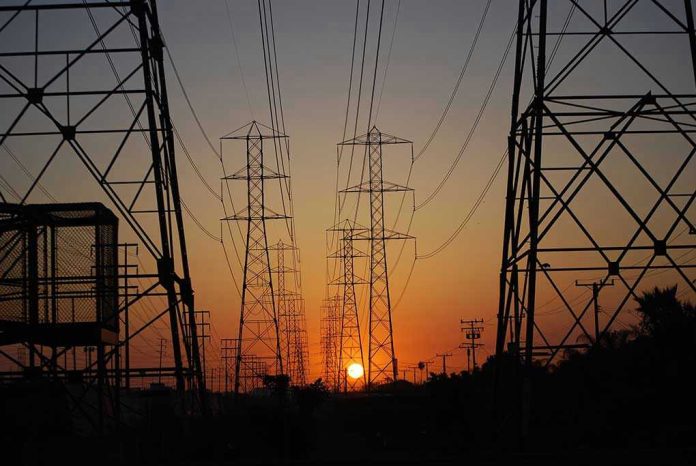
One winter weekend blackout in San Francisco quietly exposed just how fragile, politicized, and avoidably chaotic big-city power really is.
Story Snapshot
- Massive outage knocked out power to about 130,000 PG&E customers at its peak.
- Roughly 110,000 regained service, yet more than 20,000 remained in the dark for hours.
- Traffic, restaurants, small shops, and holiday events ground to a halt across key neighborhoods.
- The blackout reignited questions about grid reliability, priorities, and basic competence in a wealthy American city.
A modern city brought to a standstill in seconds
The lights slipped out first in homes, then on crowded streets, then across the glowing skyline that usually defines San Francisco’s winter evenings. Within minutes, a massive outage rippled through the city, cutting power to roughly 130,000 Pacific Gas & Electric customers and turning busy corridors into improvised hazard zones. Traffic signals flickered off, drivers crept through intersections on guesswork, and entire blocks of restaurants and retail abruptly shut their doors on a critical holiday weekend.
This was not some obscure rural failure or a freak storm flattening power lines in farm country. This was core San Francisco, on a Saturday, in one of the wealthiest regions of the United States. Families lost heating and lighting, elderly residents anxiously tracked phone batteries, and business owners watched fridges warm and point-of-sale systems go dead. By the time PG&E restored power to roughly 110,000 accounts, more than 20,000 customers were still stranded in the dark, waiting for an explanation as much as for electricity.
More Than 20,000 Still Without Power After Massive San Francisco Blackouthttps://t.co/mCsRHPoNZg#APSRadioNews#SanFrancisco#thousandswithoutpower pic.twitter.com/2VNrTyFNtE
— APS Radio News (@ApsRadioNews) December 21, 2025
Restaurants, stores, and holiday plans paid the highest price
Downtown and neighborhood businesses absorbed the shock immediately. Kitchens full of paying customers suddenly faced dark stoves, silent refrigerators, and panicked staff juggling safety and refunds. Owners sent employees home early, often without full shifts, and dumped now-risky perishable inventory. Shoppers walked past dark storefronts instead of brightly lit holiday displays, and families who came in for seasonal outings left with canceled reservations and cold dinners cobbled together at home.
Holiday lighting displays that city leaders love to showcase—symbols of vibrancy, investment, and civic pride—went black alongside everything else. The city that markets itself as a global tech hub could not reliably keep basic power flowing for retail, dining, or tourism when it mattered most. From a common-sense, conservative perspective, this reflects a recurring pattern: the priorities are heavy on messaging and light displays, light on long-term infrastructure resilience and accountable management that protects everyday livelihoods.
Traffic chaos revealed safety gaps and planning failures
Darkness on the streets turned from inconvenience to outright danger as traffic lights failed across large sections of the city. Drivers rolled into busy intersections with no clear right-of-way, and pedestrians crossed on instinct rather than signals. Emergency services faced yet another preventable strain as they responded to collisions, stalled vehicles, and disabled facilities. Every minute without functioning signals multiplied the odds of serious accidents in dense urban corridors.
City officials and PG&E will likely point to technical fault chains, rare equipment failure, or weather-related stress. Those details matter, but ordinary residents saw something simpler: a critical system failed, and contingency planning looked thin. A grid that cannot maintain traffic control, lighting, and communications for a major American city during a single equipment event invites hard questions about maintenance discipline, capital investment, and whether ratepayer dollars consistently go where they should—toward reliability first.
PG&E’s strained credibility and the trust deficit
PG&E carries reputational baggage that colors every new outage. High-profile wildfires, safety violations, and years of controversy have already eroded public trust. When another massive blackout hits, many residents no longer assume “unavoidable accident”; they assume preventable failure layered on delayed maintenance and bureaucratic priorities. Conservative common sense says repeated service breakdowns by a regulated monopoly demand rigorous scrutiny, not automatic benefit of the doubt.
Utility defenders will argue that restoring power to roughly 110,000 customers in a relatively short window shows capability and effort. That perspective holds some weight. But for the remaining 20,000-plus who stayed without power well after the headlines softened, what mattered was not the percentage restored but the hours lost, the medicines kept on ice, the work missed, and the sense that leadership treats reliability as a talking point, not a non-negotiable obligation tied to the generous rates and political protection PG&E enjoys.
What this blackout says about priorities and preparedness
This single Saturday outage functioned as a stress test for San Francisco’s infrastructure and political will. A modern American city with abundant tax revenue and proximity to world-leading technology firms should deliver dependable basics: power that stays on, traffic that remains safe, and businesses that do not collapse over a single grid event. Yet the blackout exposed exactly the opposite for thousands of residents and entrepreneurs, at a time of year when margins and morale are both thin.
From a conservative standpoint, the lesson is blunt. Grand visions, climate branding, and high-concept planning mean little if government regulators and utilities cannot secure the fundamentals. Reliability, accountability, and transparent performance metrics should outrank ceremonial announcements and decorative projects. San Francisco’s latest blackout is not only a technical failure; it is a warning flare. Either leadership treats grid stability as a first principle, or residents will keep learning in the dark just how fragile their city has quietly become.
Sources:
More than 20,000 still without power after massive San Francisco blackout