

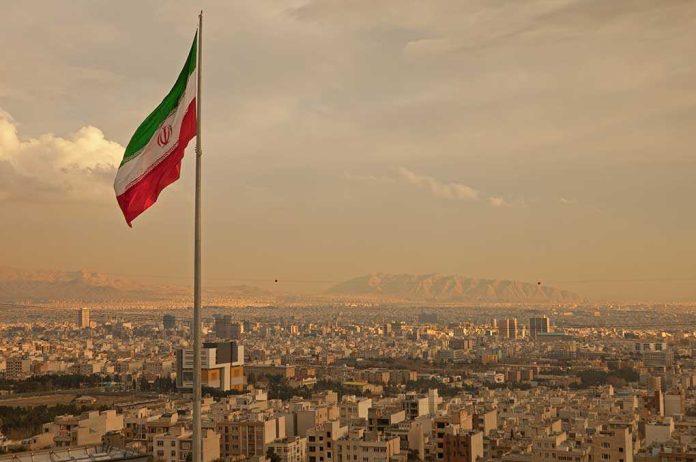
The escalating protests in Iran have captured global attention, with President Trump’s potential military intervention looming large.
Story Snapshot
- Over 2,000 protesters killed in Iran amid anti-government demonstrations.
- President Trump threatens tariffs and military action against Iran.
- Protests have spread across 187 cities, facing severe regime crackdowns.
- Trump’s social media posts encourage protesters to continue their actions.
Iran’s Unrest: A Nation in Turmoil
Protests erupted in Iran in late December 2025, sparked by economic grievances over inflation and the devaluation of the rial. As these demonstrations morphed into a full-fledged anti-government movement, the regime’s response was swift and brutal. Over 2,000 individuals have lost their lives, and more than 10,000 have been detained. This marks one of the deadliest episodes of unrest in Iran’s recent history, surpassing previous protests in both scale and severity.
President Trump has not remained silent in the face of these events. Through social media, he has openly encouraged Iranian protesters to “take over institutions” and announced a 25% tariff on nations trading with Iran. His administration is reportedly considering military options, including airstrikes, as a response to the Iranian government’s crackdown. This strategy of blending economic pressure with military threats is a novel approach by the U.S. in dealing with Iran.
Historical Context and Previous Protests
Iran’s current wave of protests is deeply rooted in decades of economic mismanagement, corruption, and repressive governance. The Islamic Republic, established after the 1979 Revolution, has faced numerous protests over the years. Notably, the 2019 “Bloody November” protests resulted in approximately 1,500 deaths, and the 2022 demonstrations following the death of Mahsa Amini in police custody saw over 500 casualties. The current protests, however, have surpassed these events in their intensity and death toll.
The Iranian regime, led by Ayatollah Ali Khamenei, has labeled the ongoing unrest as a “terrorist war” allegedly orchestrated by foreign powers such as the U.S. and Israel. This narrative has been used to justify the harsh crackdowns and internet blackouts imposed by the government. Meanwhile, exiled dissidents like Reza Pahlavi have been vocal in their calls for the regime’s overthrow, urging international support for the protesters.
Trump’s Strategy and International Reactions
President Trump’s administration appears to be leveraging both economic and military tools to exert pressure on the Iranian regime. The announcement of tariffs aims to isolate Iran economically, while the consideration of military strikes underscores the seriousness of U.S. intentions. Vice President J.D. Vance has advocated for negotiations as a first step, but White House Press Secretary Karoline Leavitt has confirmed that military options remain on the table.
China, a significant trade partner with Iran, has opposed the tariffs, highlighting the potential for broader economic implications. The situation has also put pressure on global oil markets, as instability in Iran could disrupt energy supplies. The U.S. State Department has advised American citizens in Iran to evacuate through neighboring countries, reflecting the escalating tensions.
Potential Outcomes and Global Implications
The short-term implications of these events include the potential for increased violence and further destabilization of the region. Should the U.S. proceed with military intervention, it could lead to a significant escalation in conflict. In the long term, the protests could either lead to regime change in Iran or provoke a wider regional war. The U.S.’s actions may also serve to reassert its influence in the Middle East, a region long fraught with geopolitical tensions.
For Iranian protesters, the stakes are incredibly high. With over 2,000 lives lost, the human cost is already staggering. The international community remains divided, with various stakeholders weighing their interests and the potential consequences of intervention. As events continue to unfold, the world watches closely, aware that the outcome could reshape the geopolitical landscape.