

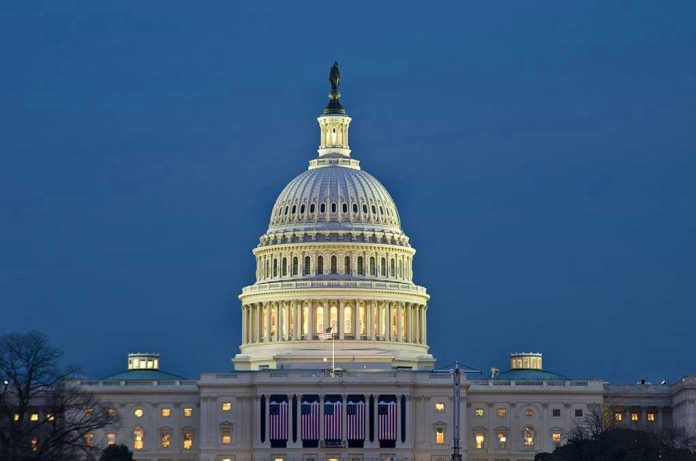
Washington triggered a partial shutdown at midnight—because the House still hadn’t voted on a Senate-passed funding deal—leaving everyday Americans stuck watching another round of D.C. dysfunction.
Quick Take
- A partial federal shutdown began at 12:00 a.m. Saturday, January 31, 2026, after funding lapsed for dozens of agencies.
- The Senate passed a bipartisan funding package 71–29 late Friday, but the shutdown started anyway because the House was not in session to vote.
- The funding plan largely keeps the government funded through September 2026, while giving the Department of Homeland Security a two-week extension at current levels.
- Immigration enforcement oversight demands—sparked in part by the death of ICU nurse Alex Pretti—became a flashpoint in the negotiations.
Shutdown Starts Despite Senate Deal
Federal funding lapsed at 12:00 a.m. Saturday, January 31, 2026, starting a partial government shutdown even after the Senate approved a bipartisan funding package Friday evening. The core problem was timing and procedure: the House had not voted before the deadline and was not scheduled to return until Monday. That lapse forced dozens of agencies to begin orderly shutdown steps, even though a deal exists on paper.
The Senate vote was 71–29, showing broad support but not enough to avoid disruption without House action. Senate Majority Leader John Thune negotiated a time agreement to process amendments, and Sen. Lindsey Graham lifted a hold after receiving commitments for future votes tied to sanctuary city policy and “Arctic Frost” provisions. Meanwhile, OMB Director Russ Vought said the administration expects a short lapse while Congress finishes appropriations.
What’s Funded, What’s Not, and Why DHS Is Different
The practical impact depends on how long the House waits. Reports indicate many major departments were caught in the lapse, including Defense, Homeland Security, State, Treasury, Labor, Health and Human Services, Education, Transportation, and Housing and Urban Development. Other parts of government continue operating because Congress funded them earlier, including the Justice Department, Veterans Affairs, the FDA, and the EPA. If the House passes the package Monday, the shutdown could be brief.
The funding structure also matters. The Senate package separates Department of Homeland Security funding from other appropriations and extends DHS for two weeks at current spending levels, while most of the rest of the government is funded through September 2026. That short DHS extension effectively creates another deadline almost immediately, guaranteeing a second round of high-stakes negotiations centered on border security, enforcement practices, and agency accountability—issues that directly impact national sovereignty and the rule of law.
Immigration Enforcement Oversight Became the Pressure Point
Democrats’ objections focused heavily on immigration enforcement policy, particularly oversight of Immigration and Customs Enforcement operations. The reporting describes new Democratic demands tied to ICE practices, including requirements related to body cameras being turned on, limits on masking during operations, and an end to certain roving patrol approaches. Senate Minority Leader Chuck Schumer publicly warned that Democratic votes would depend on “real, strong change,” framing the shutdown leverage as a tool to force policy concessions.
The dispute gained more intensity following the death of Alex Pretti, an ICU nurse killed in a shooting involving federal law enforcement in Minneapolis, which was cited as a catalyst for Democratic calls for changes. The available reporting does not fully detail what final oversight language, if any, will be adopted during the two-week DHS window. That lack of clarity matters because lawmakers may be asking the public to accept major enforcement changes without a settled, transparent end-state.
House Vote Monday, Two-Thirds Threshold, and the Risk of More Brinkmanship
Speaker Mike Johnson plans to bring the package to the floor Monday under suspension of the rules, a process that requires a two-thirds majority. That requirement increases the need for bipartisan alignment and reduces leadership’s margin for error. House Minority Leader Hakeem Jeffries has withheld endorsement, saying there was “no agreement that’s been before us,” signaling potential resistance even after the Senate’s 71–29 vote.
If the House passes the bill, President Trump is expected to sign it shortly after, ending the lapse. If the House does not pass it, the shutdown continues and the pressure shifts to federal workers, contractors, and citizens needing services. Separately, the two-week DHS extension sets up another cliff—meaning the same immigration enforcement fights could return quickly. Based on currently available reporting, the duration and final policy tradeoffs remain uncertain until the House acts.
Sources:
January 2026 Partial Government Shutdown Imminent: Key Considerations for Federal Contractors
Government shutdown deadline: Senate passes funding deal
Graham blockade stalls government funding deal hours before shutdown