

The fight over whether a “white crystal-like substance” in Lorenzo Salgado Araujo’s van was methamphetamine or crystallized salt is not a minor detail; it sits at the center of a broader struggle over credibility, narrative control, and accountability in a deadly immigration enforcement shooting.
Key Points
- FBI agents visually identified small bags of a white, crystal-like substance as consistent with methamphetamine, using that observation to secure a federal search warrant.
- The Harris County district attorney and the family’s attorney both publicly dispute that the substance was drugs, describing it as granulated salt in a homemade electrolyte mix for outdoor workers.
- No laboratory confirmation has been released for either side, underscoring how much of the current narrative rests on appearance and assertion rather than forensic proof.
- The medical examiner has ruled Araujo’s death a homicide, and prosecutors insist the substance’s identity has no bearing on whether the shooting was justified.
- The drug claim lands in a larger pattern where ICE and federal investigators invoke self-defense and suspected criminality after fatal shootings, while communities and local officials question the integrity of those accounts.
How the “Crystal-Like Substance” Entered the Story
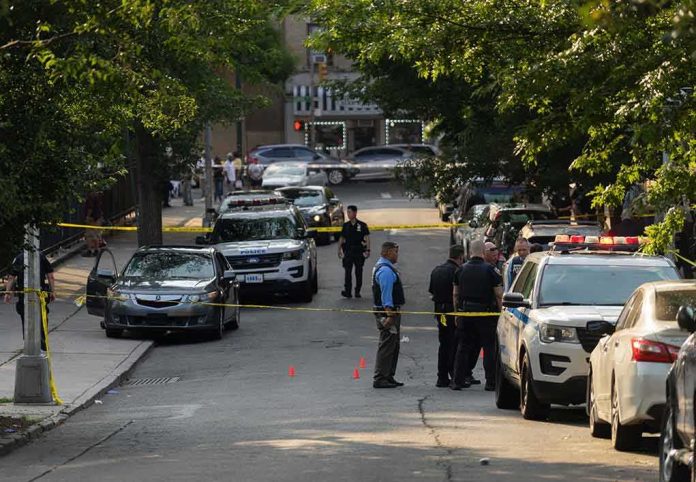
To understand why an apparent bag of crystals is now central to the public dispute over Araujo’s death, you have to start with the sequence of federal actions. Days after an Immigration and Customs Enforcement (ICE) agent fatally shot Araujo during a traffic stop in Houston, an FBI special agent arrived on scene and later sought a federal search warrant for the white cargo van he had been driving. In the sworn affidavit supporting that warrant, Special Agent David McNeilly wrote that he observed, from outside the vehicle, “small plastic bags with a white crystal-like substance,” packaged in a manner he stated was consistent with methamphetamine distribution.
The affidavit did more than describe what he saw; it translated those observations into probable cause for “distribution, manufacturing, or possession with intent to distribute a controlled substance and simple possession of a controlled substance,” language that squarely situates the incident within federal drug enforcement rather than solely an immigration stop. Images attached to the warrant reportedly show the bags on or near the van’s dashboard, reinforcing the claim that they were in plain view. That affidavit became the backbone of subsequent public reporting that drugs “may have been” in the van at the time of the shooting, a framing that inevitably colors how many people interpret the entire encounter.
Yet the same warrant is careful on a crucial point: it does not say laboratory testing has confirmed the substance to be methamphetamine. The agent’s conclusion rests on training, experience, and visual assessment of packaging and appearance—important tools in street-level policing, but not a substitute for forensic analysis. That gap between what the agent believes he saw and what has been scientifically proven is where the counter-narrative takes hold.
The Salt and Electrolyte Mix Explanation
On the other side of the dispute are Araujo’s family and local prosecutors, who offer a very different account of those same bags. Ruby Powers, attorney for Araujo’s brother Victor, has stated in multiple public forums that the substance “likely was salt,” part of a homemade electrolyte mix used by outdoor laborers to stay hydrated in the Texas heat. In her written statement, Powers describes granulated salt combined with lemon and water as a routine, practical preparation for construction or landscaping crews working long hours outside.
This is not an abstract theory; it is based on consultations with the family and their description of daily life in manual labor. In greater Houston’s climate—summer temperatures routinely topping 90 degrees with substantial humidity—workers improvising low-cost hydration solutions is entirely plausible. The family’s account holds that the bags contained the dry component of that mix, to be combined with liquids on site. The packaging itself, small clear bags, is not inherently incriminating; such bags are widely used for everything from food portions to small hardware. What matters is how they are interpreted.
Harris County District Attorney Sean Teare has gone further, stating publicly that his office “doesn’t believe the substances collected were drugs” based on the evidence reviewed so far. In interviews, Teare has emphasized that, “just eyeballing the evidence as it was collected yesterday,” prosecutors saw nothing consistent with drug possession—and that, in any case, the presence or absence of drugs is irrelevant to whether deadly force was justified. Teare’s skepticism is significant: he is not a family advocate but the chief local prosecutor, and his office has access to the collected physical evidence.
The counter-story, then, is both specific and grounded: named attorneys and the elected district attorney have articulated a concrete alternative explanation tied to the realities of outdoor work, not simply a blanket denial. Where it remains weaker is in the absence, thus far, of a publicly disclosed laboratory report confirming that the substance is indeed salt or some other benign compound. The argument rests on witness accounts, lived experience, and initial prosecutorial assessment rather than completed forensic testing.
What Forensic Science Says About Look-Alike Crystals
The FBI agent’s assessment—that packaging and a white crystalline appearance were consistent with methamphetamine—reflects common practice in drug investigations, but it also illustrates the limits of relying on visual cues alone. Forensic literature has documented multiple instances where inorganic salts and other compounds produce crystalline structures that resemble illicit drugs, including methamphetamine, to a lay or even trained observer. In one published case, sodium thiosulfate crystals were seized and initially treated as suspected methamphetamine until confirmatory analysis showed they were not controlled substances.
These look-alike scenarios occur because crystal habit—how a substance crystallizes in shape and texture—is determined by chemical and environmental factors that do not line up neatly with legal categories. Under certain conditions, perfectly legal materials can grow as clear or white crystals, in shards or granular form, that mimic the appearance of drug crystals at a glance. That is why standard forensic protocols call for laboratory testing such as gas chromatography–mass spectrometry (GC–MS) or infrared spectroscopy to establish substance identity definitively.
In Araujo’s case, both sides implicitly acknowledge this scientific reality by invoking ongoing testing. The FBI warrant notes that the substances are being examined, but stops short of claiming a positive methamphetamine result. Teare, for his part, stresses that his office’s doubts are based on preliminary review, not a completed forensic report, and that final conclusions await lab results. As long as those results remain undisclosed, the dispute remains in the realm of contested inference rather than settled fact. Given how often crystalline appearance can mislead, caution is warranted before using the word “drugs” in public narrative as though it were proven.
Homicide, Self-Defense, and the Relevance of Alleged Drugs
The argument over the substance’s identity becomes more consequential when placed alongside the official classification of Araujo’s death and competing accounts of the shooting itself. Congresswoman Sylvia Garcia has confirmed that the Harris County Medical Examiner ruled Araujo’s death a homicide—a term that, in medical-legal usage, signals that one person caused another’s death, not that the killing has been adjudicated as criminal murder, but it squarely rejects “natural” or “accidental” explanations.
ICE and the Department of Homeland Security have asserted that the agent fired in self-defense, claiming Araujo “weaponized” his van by ramming a federal vehicle and attempting to run over an officer. Three detained witnesses inside the van, through their attorneys, dispute that narrative, stating that ICE vehicles struck the work van and that agents were never in front of the vehicle or in danger of being run over. Bystander photos circulated by civil rights advocates reportedly show no visible front-end damage to Araujo’s van, raising further questions about the alleged ramming.
Against that backdrop, Teare’s insistence that the crystal-like substance has “absolutely no bearing” on whether the use of force was justified becomes easier to understand. Even if the bags were confirmed to contain drugs, that would not transform the legal analysis of whether deadly force was necessary at the moment the shots were fired. The core questions in any use-of-force review—immediacy of threat, proportionality, and adherence to policy—are independent of suspected contraband discovered after the fact. Linking the drug allegation to self-defense operates more as narrative framing than as rigorous legal reasoning.
Smear Campaign Concerns and Narrative Control
The family’s attorney has explicitly described the drug insinuation as part of a smear campaign, arguing that raising the specter of methamphetamine in a homicide investigation involving an immigrant laborer shifts public attention away from the circumstances of the shooting and toward the alleged moral character of the deceased. That concern resonates with a long history in which claims of drug involvement or “criminal alien” status are used to normalize or excuse lethal encounters with law enforcement.
In television interviews, Powers and other advocates point out a simple but powerful fact: Araujo is dead, and any drug investigation now can only target the surviving passengers. From their perspective, invoking meth distribution in the warrant functions rhetorically to saddle the entire group with suspicion, thereby weakening public sympathy and dampening outrage. The timing matters; the warrant was filed a week after the shooting, at a moment when protests and calls for independent investigation were growing.
Federal officials, for their part, have emphasized procedure. The U.S. Attorney overseeing the region has stressed that all information is preliminary and that the FBI and DHS are conducting investigations into both the shooting and the suspected drugs. By that account, noting possible contraband is simply part of standard investigative practice. Yet that explanation does not fully address why, given the lack of confirmed lab results, “drugs” became a featured element of official communications and media coverage rather than a cautious, technical aside.
A Pattern of Deadly Force and Structural Impunity
What gives this Houston dispute its broader significance is not just the contested bag of crystals, but the pattern of federal immigration shootings into which it fits. Investigative reporting has documented at least 59 shootings by ICE officers between 2015 and 2021, resulting in 23 deaths across more than two dozen states. Since the start of Donald Trump’s second term, tracking by outlets such as The Week and American Immigration Council suggests a new surge in deadly encounters, with multiple people shot and killed by ICE or CBP agents in public operations.
These incidents share recurring features: vehicle stops, claims that drivers turned cars into weapons, immediate assertions of self-defense by federal agencies, and slow or opaque release of evidence. Body camera footage is frequently absent or withheld; in Araujo’s case, ICE officers involved in the stop were not equipped with body cameras, though DHS has since promised deployment within weeks. Federal immunity doctrines further complicate accountability: in a separate Minneapolis case, a senior federal official emphasized that the ICE agent enjoyed “absolute immunity” from state prosecution, leaving investigation solely to the FBI.
That structural arrangement feeds skepticism when the same institutions that deploy deadly force also control the narrative about what was found in a victim’s vehicle. Civil rights organizations and some legal scholars argue that federal agencies investigating themselves, with limited local oversight and legal protections shielding officers from state charges, create a built-in bias toward justification. Within that context, the leap from “crystal-like substance” to “drugs” is not merely a factual claim but a move in a larger contest over legitimacy.
Attorney for Witness to ICE Fatal Shooting Tells CNN Alleged Drugs in Vehicle Just ‘Crystalized Salt’ (by Stephanie Kaloi)
An unsealed search warrant revealed the FBI accused Lorenzo Salgado Araujo, the father of three shot to death by an ICE agent in Texas last week, of having…
— Tina M Long (@TinaMGLong) July 18, 2026
What Will Ultimately Clarify the Substance—and What Won’t
At some point, laboratory toxicology and chemical analysis will likely resolve the narrow question of what those crystals actually were. GC–MS or infrared spectroscopy can distinguish methamphetamine from sodium chloride or other salts with high confidence, and both the FBI and Harris County DA have indicated that testing is underway. If the results confirm that the bags contained salt or a benign electrolyte mix, the warrant’s portrayal of suspected drug offenses will look, at minimum, overstated. If they confirm methamphetamine, the family’s specific explanation will be disproven, and prosecutors will have to factor that into related investigations of the surviving passengers.
Yet even definitive lab results will not settle the core controversies that brought this case to national attention. Whether Araujo’s killing was legally justified, whether ICE agents followed policy in initiating the stop, why unmarked vehicles with no body cameras were used, and how often federal immunity operates to shield agents from state accountability—those questions persist regardless of what was in the plastic bags. As Teare has insisted, substance identity “has no bearing whatsoever” on whether deadly force was appropriate.
What the drug-versus-salt dispute does reveal, with unusual clarity, is how fragile public trust becomes when life-and-death decisions rest on opaque investigations and contested narratives. In an environment where immigration enforcement already carries a history of disproportionate harm and scant transparency, every visually ambiguous crystal and every hastily drafted warrant matters. They are not just pieces of evidence; they are signals of whose story will be believed.
Sources:
mediaite.com, click2houston.com, springnews.org, facebook.com, cnn.com, instagram.com, youtube.com, thehill.com, dea.gov, chemistry.mdma.ch, ojp.gov, thetrace.org, factually.co, nytimes.com, congress.gov