

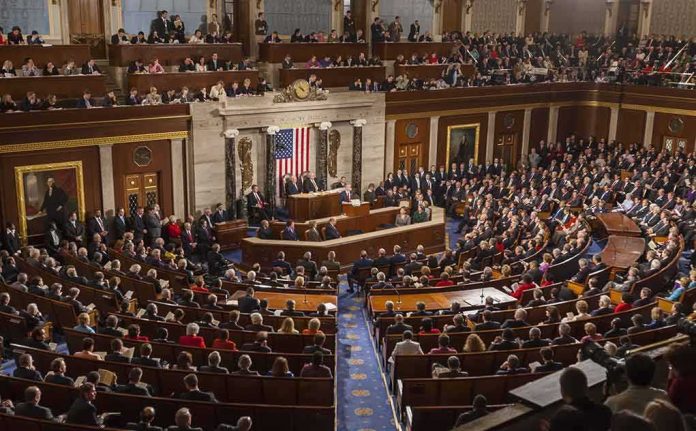
The U.S. House voted to order President Trump to pull U.S. forces from hostilities with Iran, reviving a long-running fight over who decides when America goes to war.
Story Snapshot
- The House passed a war powers resolution telling President Trump to end hostilities with Iran.
- The vote was close, with a narrow majority and a few Republicans crossing party lines.
- The measure relies on the War Powers Resolution’s withdrawal clause, a tool Congress often uses in such disputes.
- The action signals growing unease in both parties about open-ended military commitments.
What The House Decided And Why It Matters
On June 3, the U.S. House of Representatives approved a measure directing the President, under the War Powers Resolution, to remove U.S. forces from hostilities with Iran. The House Clerk recorded the tally as 215 to 208, showing a narrow but clear majority for the directive. National outlets said a small number of Republicans joined Democrats. That crossover signaled bipartisan concern over unchecked war powers, even under a Republican president. The vote reflects rising pressure to define the mission and the legal basis for force.
The text of the House measure states that Congress “directs the President to remove” U.S. forces from hostilities against Iran, unless Congress later authorizes force. That language uses the War Powers Resolution’s central idea. Congress should decide when the nation enters sustained hostilities. Supporters argue this protects troops and taxpayers by forcing public debate and a recorded vote on war aims. The directive is part of a broader attempt to reset the balance between Congress and the presidency.
The Constitutional Tug-Of-War Over War Powers
Since 1973, Congress has tried to use the War Powers Resolution to rein in the White House during short or escalating conflicts. Presidents from both parties often claim they can act first to meet fast-moving threats. They say they will consult Congress but do not always seek a formal authorization at the start. Legal analysts note that the statute’s withdrawal clause sets a strong signal, yet real enforcement can be murky after court rulings on legislative vetoes. The result is recurring standoffs that test each branch.
Backers of the House action say the Constitution gives Congress the sole power to declare war. They argue that major combat requires lawmakers to approve or deny the mission. They also note the public cost of long wars without clear goals. Critics counter that presidents need speed and flexibility to protect Americans and allies. They warn that rigid limits can invite danger. Reuters reported that sponsors framed this move as restoring constitutional order after fast-paced strikes and expanding aims in Iran.
What Happens Next And What It Signals
The House vote sends a message even as the legal path remains complex. A concurrent resolution marks Congress’s formal position. It can shape politics, strategy, and the pace of operations, even if further steps are needed to bind policy in court. Lawfare explained that the War Powers framework instructs withdrawal when hostilities lack approval, but turning that into a clear, enforceable command can still be disputed. That is why follow-up action, including authorizations or funding limits, often decides outcomes.
BREAKING: House passes War Powers resolution directing the president to remove U.S. forces from hostilities with Iran.
Vote: 220-204. Seven Republicans joined all Democrats.GOP yes votes: Massie, Davidson, Fitzpatrick, Barrett, Mace, Miller-Meeks, and Nunn. pic.twitter.com/7FC3CbBSkv
— ☮️ Arizona Desert Dweller (@MzzzRMF) September 16, 2026
For many Americans, this moment touches a shared worry: leaders from both parties drift into conflict while ordinary families pay the price. People on the right see endless missions, higher costs, and strain on energy and trade. People on the left see expanded force without a vote and more risk for civilians. The House move will not fix all of that. But it puts elected members on record about war and peace. That is a step toward the accountability the country keeps asking for.
Sources:
thegatewaypundit.com, apnews.com, npr.org, nytimes.com, justice.gov, lawfaremedia.org