

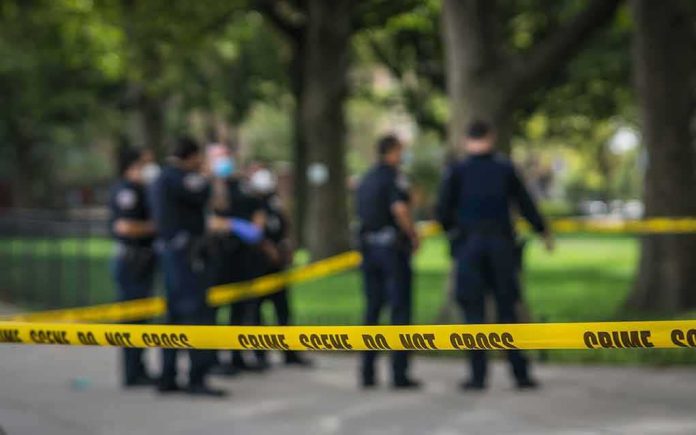
When a double homicide breaks the silence of a California state beach, the first duty is simple and solemn: establish what happened and who has been held to account. In the Moss Landing case, those core facts are clear — two boys were killed, a suspect has been arrested and charged, and investigators have moved swiftly across multiple jurisdictions to build their case.
At a Glance
- Two victims — 15-year-old Marco Antonio Perez and 13-year-old Nathaniel Flores — were found dead at Moss Landing State Beach.
- Deputies responded to reports of gunfire near Jetty Road shortly before 2 a.m. on November 2, 2026.
- An 18-year-old, Donald William Breeden of Greenfield, was arrested and booked on two counts of murder.
- Booking records indicate criminal street-gang enhancements and bail set around $2.035 million.
The established facts: two boys killed, a suspect charged
Monterey County deputies were dispatched to Moss Landing State Beach, near Jetty Road, just before 2 a.m. on November 2, 2026, after reports of shots fired. Two victims were pronounced dead at the scene; they were later identified as 15-year-old Marco Antonio Perez and 13-year-old Nathaniel Flores. The Sheriff’s Office confirmed the deaths and the location, marking the incident as a double homicide at one of the Central Coast’s most frequented shorelines.
Within days, investigators identified and arrested a suspect. On November 5, officials took 18-year-old Donald William Breeden of Greenfield into custody. He was booked into the Monterey County Jail on two counts of murder connected to the Moss Landing shootings. Authorities publicly linked the arrest to the fatal beach incident and announced that the investigation continued apace.
Charges, enhancements, and custody status
Breeden’s booking listing included criminal street-gang enhancements alongside the two murder counts — a charging posture that can significantly increase potential penalties if proven. Bail was set at approximately $2.035 million, unusually high for an 18-year-old defendant and consistent with the gravity of the alleged crimes and the enhancement allegations. Reports citing jail and law-enforcement records documented those details as part of the initial custodial status.
Prosecutors often move first through arrest and booking, then file formal complaints and supporting documents in court. Early public information in this matter reflected that sequence: the arrest and charges were announced before any detailed charging affidavit or probable-cause statement was widely available, a common cadence in active homicide investigations.
Timeline and immediate investigative steps
The early-morning shooting created a large, complex crime scene across sand, surf line, and parking approaches — environments that complicate evidence recovery. Deputies closed the area and canvassed for physical evidence, while hospitals in the region received additional injured individuals connected to the night’s events. Initial briefings described two fatalities and other injuries, though the precise nature of all injuries and their relationship to gunfire varied across early accounts, as is often the case in the first 24–48 hours of scene management.
By November 5, investigators had executed search warrants in Greenfield and King City, a south-county corridor with established interagency coordination on serious violent crime. Serving warrants in multiple locations in the same investigative window is consistent with efforts to locate weapons, apparel, vehicles, and digital evidence that can corroborate or refute witness accounts, establish presence, and link a suspect to a shooting through ballistics or DNA. Officials tied those warrant operations to the Moss Landing case and to Breeden’s subsequent arrest.
What “gang enhancement” means in California practice
California’s gang enhancement statutes impose additional penalties when prosecutors can show that a felony was committed for the benefit of, at the direction of, or in association with a criminal street gang, and with the intent to promote criminal conduct by gang members. In homicide cases, that enhancement can substantially elevate sentencing exposure. Statewide, gang-related homicides constitute a significant minority of killings with a known circumstance — roughly one in five in recent years — although arguments and domestic violence collectively account for larger shares. The California Department of Justice’s statistical abstracts consistently report firearms as the predominant instrument in homicides, reinforcing why gun and ballistic evidence become pivotal in cases like Moss Landing.
Enhancements are allegations, not conclusions; they are ultimately tested on specific proofs: the identity of a qualifying gang, evidence of association or benefit, and mens rea — the intent to promote or assist criminal conduct by that group. In public posture, however, the presence of a gang enhancement and a seven-figure bail often shapes perception of risk and culpability even before trial.
How early crime reporting converges: event, suspect, place
The Moss Landing coverage fits a durable template in high-profile gun cases: an anchor in the casualty count, a named suspect once arrested, and a vivid location that carries symbolic weight — in this case, a family beach known for otter watching by day and unsanctioned gatherings by night. Social science on mass-shooting and gun-violence coverage shows how media frames emphasize perpetrators and victim tallies while leaving broader causal factors undeveloped in the first wave; those patterns are descriptive, not necessarily distortive, but they help explain why the narrative coheres around names, numbers, and geography before motive or forensic detail emerges.
For readers parsing early reports, this pattern clarifies what to expect: the who, where, and immediate consequences arrive first; the why — motive, affiliations, precipitating conflicts — tends to follow only after interviews are complete, lab reports return, and the case reaches a courtroom where allegations are distilled into elements and evidence.
Greenfield, King City search warrants lead to arrest in Moss Landing double homicide https://t.co/mrFpSKFSDm
— King City Rustler (@KingCityRustler) November 6, 2026
Why the through-line still matters: consequences for justice and community
When the victims are children, the community’s demand for speed and certainty is visceral. Public safety officials still have to build cases that endure the slow discipline of criminal procedure. That is why the initial facts — two boys killed at the shore; a named adult charged; warrants executed across two cities; custody with high bail and enhancements — are more than headlines. They are the spine of a case that will move into discovery, preliminary hearing, and, if not resolved earlier, trial.
What to watch as the case advances
The next meaningful milestones are predictable in a California double-homicide: the filing of a formal complaint laying out counts and enhancements; a preliminary hearing where a judge decides whether sufficient cause exists to hold the defendant to answer; and the first glimpses of specific evidence — witness accounts, surveillance timelines, and forensic findings such as ballistics or DNA linkages. Each step converts public narrative into litigated fact, aligning community understanding with the record rather than rumor. For now, the record supports this: two young lives lost at Moss Landing, and one 18-year-old booked to face two murder charges for it.
Sources:
nypost.com, sanluisobispo.com, montereyherald.com, ksbw.com, kron4.com, latimes.com