

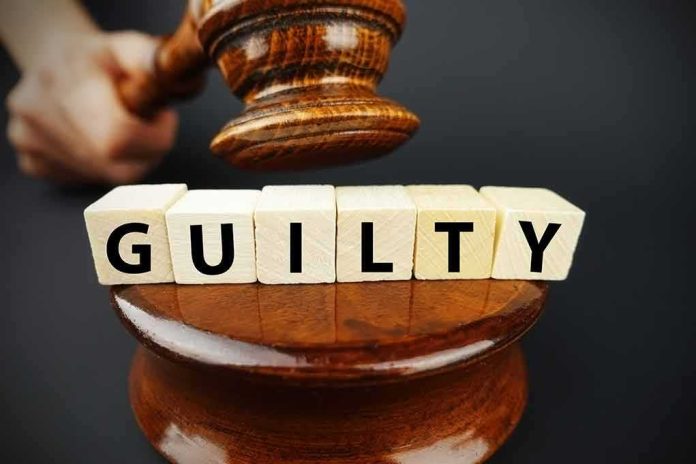
A British jury found comedian Russell Brand guilty of rape, and a judge locked him up for more than ten years.
Key Points
- A Southwark Crown Court jury convicted Brand of one rape count and three sexual assault counts after a four-week trial.
- Brand was sentenced to 10 years and six months in prison.
- The jury cleared Brand of two rape counts and one attempted indecent assault charge.
- The judge said Brand should expect “a significant custodial term” and denied him bail before sentencing.
- The case involved alleged conduct dating back to 1999 through 2009.
Jury Convicts Brand on Four of Seven Counts
A jury at Southwark Crown Court convicted Russell Brand of one count of rape and three counts of sexual assault after a four-week trial. The Metropolitan Police confirmed the verdicts came down on November 5, 2026, closing out a case that had hung over the once-famous comedian and actor for years.
Brand originally faced seven charges tied to six different women, including three rape counts and one attempted indecent assault charge. The jury did not buy every claim prosecutors put forward. Jurors acquitted Brand of two rape counts and the attempted indecent assault charge, delivering a split verdict rather than a blanket condemnation.
Judge Hands Down Decade-Plus Sentence
Four days after the verdict, on November 9, Brand received a formal sentence of 10 years and six months behind bars. The Metropolitan Police confirmed the sentencing took place at the same Southwark courthouse where he was convicted.
The math behind that number breaks down clearly. The court handed Brand eight years for the rape conviction, running consecutively with 35 months combined for the three sexual assault counts. That structure pushed his total custodial term past the decade mark. Before sentencing, Mr Justice Bennathan had already signaled where things were headed. He told Brand to expect “a significant custodial term” and refused him bail while he awaited his punishment, a sign the court viewed the convictions as serious from the start.
Verdict Shows a System That Still Weighs Evidence Count by Count
Conservatives have long pushed back against mob justice and demanded that courts, not public opinion or social media pile-ons, decide guilt. This case actually shows that process working as designed. The jury did not simply convict Brand because of his notoriety or the volume of accusations against him. It sorted through seven separate charges and only convicted on four, clearing him of three others entirely.
That distinction matters. Broader data on sexual offense cases in England and Wales shows convictions are far from automatic. In the year ending March 2026, only 4.7% of recorded sexual offenses resulted in a charge, and nearly half of closed investigations were dropped due to evidential difficulties. Historically, fewer than one in five victims of rape or sexual assault even report the crime to police. Against that backdrop, a conviction that survives a full jury trial carries real weight.
Russell Brand’s ex Jemima Goldsmith comes forward after sentencing
TV producer Goldsmith, 52, made the claims shortly after her ex-partner was sentenced to 10 years and six months in prison for rape and three counts of sexual assault.Goldsmith and Brand are believed to have…
— Clippie (@von_herren) November 10, 2026
Brand built a public career as a comedian, actor, and later a political commentator with a large online following, making this case a lightning rod regardless of political leanings. The charges stemmed from alleged conduct between 1999 and 2009, meaning jurors had to weigh old claims and faded memories alongside whatever corroborating evidence prosecutors could still produce. The result stands as the final trial-court outcome in this matter, a reminder that fame offers no shield once a jury hears the evidence and reaches its verdict.
Sources:
gbcghanaonline.com, cps.gov.uk, bbc.com, dw.com, edition.cnn.com, gov.uk