

Iran says it wrecked a U.S. radar in Bahrain; the U.S. says nothing got through.
Story Snapshot
- Iran’s Revolutionary Guards claimed drones destroyed a U.S. early-warning radar in Bahrain.
- U.S. Central Command said two Iranian drones were shot down with no damage.
- Bahrain reported intercepting several Iranian aerial attacks before impact.
- No independent images or inspections have confirmed radar damage.
What Each Side Says Happened
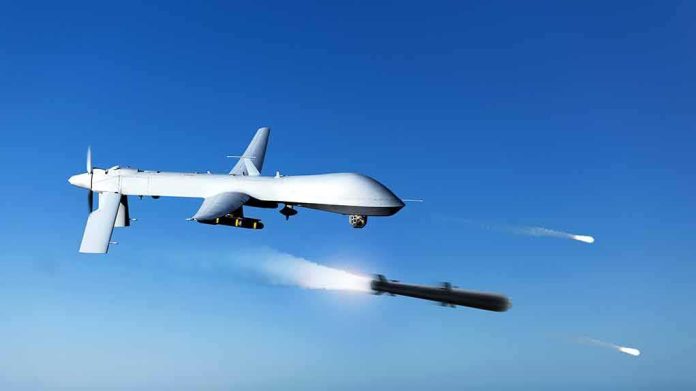
Iran’s Islamic Revolutionary Guard Corps said its aerospace forces struck and destroyed a U.S. early-warning radar in Bahrain. The group tied the operation to what it called a U.S. attack on a telecom tower in Sirik, Iran, and cast the strike as a warning to Washington. U.S. Central Command countered that two one-way Iranian drones were launched toward Bahrain and were shot down by U.S. forces, with no injuries or damage reported.
Bahrain said its air defenses intercepted and destroyed several Iranian aerial attacks before they reached their targets. Officials in Manama did not confirm any hit on a radar site. Reports tied to the same incident describe alarms and readiness alerts, but offer no damage assessment. The gap between Iran’s claim of destruction and U.S.-Bahraini accounts of clean interceptions remains the core conflict in the record.
What We Can Actually Verify Today
Independent outlets reported that Iranian drones launched toward Bahrain, and that both sides made competing claims about the outcome. That establishes an attempted attack, not a phantom event. No satellite photos, on-the-ground images, or engineering assessments show a disabled radar. The video circulated by Iran’s forces purports to show strikes at Al-Riffa, but is not authenticated for time, place, or target identity. That leaves success claims resting on statements, not physical proof.
Conflicting drone counts muddy the water. Some Iran-linked claims describe six drones, while U.S. Central Command cites two one-way drones. The record does not yet resolve whether this was one wave, multiple waves, or apples-to-oranges counting. In fast-moving conflicts, both undercounts and overstatements happen. Clear resolution would require radar tracks, wreckage logs, or declassified engagement reports. Until then, numbers will be used as talking points, not settled facts.
How To Read The Claims Through A Clear Lens
Wartime messaging always serves a purpose. Iran presents retaliation and reach. The U.S. and Bahrain present defense and control. Launch evidence is easier to show than effect evidence. Radar tracks, interceptor launches, and recovered debris often become public first. Damage to a sensitive radar is harder to verify because access is restricted and forensics may be classified. That reality has produced both proven strikes and false boasts in recent years across the region.
The U.S. Embassy in Bahrain warned of an "increased threat of armed attacks" after Bahrain intercepted Iranian drones, the second attack in three days. The Houthis claim missiles were fired at Riyadh airport; the Saudi-led coalition claims both were intercepted.
UKMTO confirmed a…— Sunny Burns (@SBSentinellive) November 16, 2026
A common-sense test helps. First, did a launch occur? Yes. Second, did defenders engage? Both the U.S. and Bahrain say they did. Third, did a key radar go down? That is the claim that demands proof. If a strategic radar were destroyed, follow-on signs often appear: lingering outages, rerouted air defense coverage, or official repair activity. None of that has surfaced in public reporting tied to this event. That weighs against Iran’s “destroyed” claim today.
What Would Settle It
Three items would close the gap fast. Before-and-after commercial satellite images of the radar site would show blast damage or lack of it. Declassified engagement logs from U.S. Central Command and Bahrain would confirm intercepts and wreckage counts. Authenticated original video files from Iran’s forces, with intact metadata and reliable geolocation, would either bolster or sink the strike narrative. Without these, this story stays in the realm of clashing statements, not settled facts.
Prudence leans toward the U.S.-Bahrain account for now. It aligns with visible facts and carries the burden of operational risk if false. Still, Americans should keep their eyes open. Past conflicts include cases where early denials later gave way to confirmed damage once imagery emerged. The right stance is firm skepticism of an adversary’s boast, paired with a demand for verifiable proof from everyone. Strength and honesty go together in defense policy.
Sources:
facebook.com, inquirer.com, arabtimesonline.com, aljazeera.com, aa.com.tr