

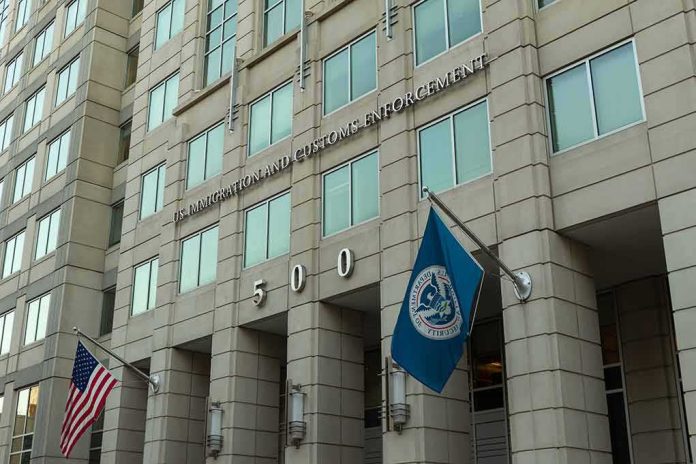
A House Judiciary Committee report says Fairfax County let at least 1,670 immigration detainers go unfulfilled in two years, raising red flags for public safety and the rule of law.
Story Highlights
- House Judiciary staff report cites 1,670 unfulfilled detainers tied to Fairfax County from 2023–2025.
- Independent ICE records reported elsewhere align with more than 1,150 detainers lodged since late 2022.
- Fairfax policy says an immigration detainer is only a request and not legal authority to hold someone after local release.
- County leaders deny “declining” detainers and say federal agents must execute arrests before release.
Committee Findings Point to Pattern of Noncooperation
House Judiciary Committee staff released an interim report on October 20, 2026, asserting the Fairfax County Sheriff’s Office failed to fulfill at least 1,670 immigration detainers from 2023 through 2025. The report describes repeated releases of deportable noncitizens back into the community rather than into federal custody. Committee leaders also documented formal oversight steps, including a January 15, 2026 records request for detainer counts, communications, and policy files to verify the scope of the problem.
Separate reporting on federal records backs up the scale of the issue. A dataset cited by a policy researcher shows more than 1,150 immigration detainers filed on inmates in Fairfax County between October 2022 and February 2025, with more than 1,000 releases despite those requests. This aligns with the committee’s larger two-year total and suggests a sustained pattern, not a one-off dispute. The volume matters because each unfulfilled detainer can mean a missed arrest window.
Fairfax Policy Limits Holding Without a Judge’s Warrant
Fairfax County’s written policy states that an immigration detainer is a request, not a binding order. The Sheriff’s Office says it lacks legal authority to hold a person past their local release time without a judicial warrant authorizing the arrest. The policy also notes deputies will notify federal officers of scheduled release times for inmates served with detainers. That approach, in place since ending a prior hold-over agreement in 2018, shapes how the jail handles daily releases.
County officials insist they do not “decline” detainers. They say they alert federal officers when someone flagged by immigration authorities is booked and that it is the federal government’s job to show up and make the arrest before local release. They add that their office has never blocked a federal arrest inside the jail. This claim, however, conflicts with federal officials in at least one public dispute over a 2023 custody case.
Disputed Incidents Underscore the Public Safety Stakes
Federal officials accused Fairfax County in 2024 of refusing to honor a detainer in a contested case, while the Sheriff’s Office said no detainer or warrant ever reached its jail during a roughly three-hour custody window. The office said it lacked authority to keep holding the person. The clash highlights how a short timeline, paperwork gaps, and legal limits can turn into a release that federal officers wanted to prevent.
𝐅𝐀𝐈𝐑𝐅𝐀𝐗 𝐒𝐇𝐄𝐑𝐈𝐅𝐅 𝐈𝐆𝐍𝐎𝐑𝐄𝐃 𝟏,𝟔𝟕𝟎 𝐈𝐂𝐄 𝐃𝐄𝐓𝐀𝐈𝐍𝐄𝐑𝐒 𝐀𝐍𝐃 𝐓𝐔𝐑𝐍𝐄𝐃 𝐓𝐇𝐄 𝐈𝐋𝐋𝐄𝐆𝐀𝐋 𝐀𝐋𝐈𝐄𝐍𝐒 𝐋𝐎𝐎𝐒𝐄, 𝐇𝐎𝐔𝐒𝐄 𝐉𝐔𝐃𝐈𝐂𝐈𝐀𝐑𝐘 𝐅𝐈𝐍𝐃𝐒
A new House Judiciary Committee staff report says the Fairfax County Sheriff’s Office… pic.twitter.com/uTuuB4u25O
— M.A. Rothman (@MichaelARothman) October 21, 2026
Policy analysts warn that “declining” a detainer can also mean failing to provide timely notice so federal agents can be at the door at release. They argue that absent firm cooperation, detainers lose force in practice, even if the county says it never rejected a form. That gap creates risk for families and victims when offenders walk out and disappear before immigration agents can lawfully take custody.
What This Means for Safety, Law, and Accountability
House investigators want case-level data to resolve whether the 1,670 figure reflects defiance, timing mismatches, or both. They asked for detainer numbers, service dates, release timestamps, and communications to see if federal officers had a fair chance to act. While legal debates exist over holding people beyond release, the basic public-safety question is clear: did the system give federal officers the notice and access needed to make arrests before release into the community?
Bottom Line for Readers
Conservatives expect basic cooperation to keep dangerous offenders from walking free. The committee’s count and the separate federal records set off alarms about a sanctuary-style approach in a key Virginia county. Local policy says a detainer alone is not enough to keep someone in jail, but families deserve a process that lets federal officers act on time. Congress is pressing for records. The Trump administration can leverage those findings to restore order and protect communities.
Sources:
foxnews.com, washingtonexaminer.com, fairfaxcounty.gov, dcnewsnow.com, judiciary.house.gov, alxnow.com, connectionnewspapers.com, wjla.com