

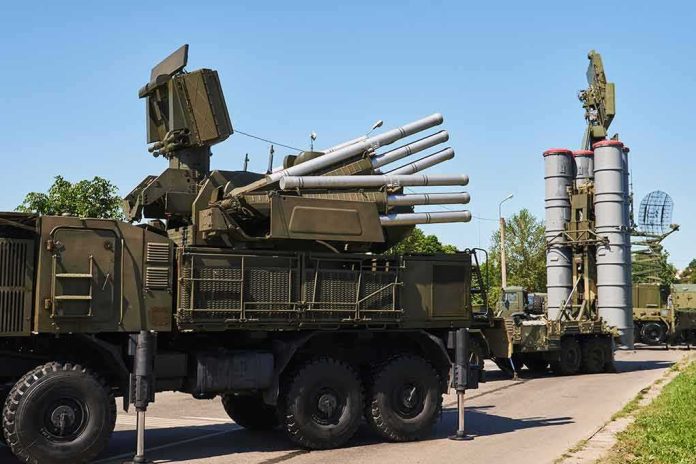
Two Italian technicians were killed when Iranian-made drones targeted a Kuwaiti air-defense site, heightening the risk of wider conflict and testing Western resolve against Tehran.
Story Highlights
- Italy says Iranian-made drones struck Kuwaiti military sites, killing two Italian technicians working at an air-defense station.
- Kuwait confirms two Italian nationals died after an attack on a “vital facility,” with injuries first linked to falling debris.
- Rheinmetall Italia employed the victims, who supported Kuwait’s air-defense system.
- Iran denies involvement and proposes a joint investigation with Kuwait and Italy.
What Happened In Kuwait And Who Was Hit
Italy’s foreign minister, Antonio Tajani, told the Italian Senate that several Iranian-made drones targeted Kuwaiti military installations around 2 p.m. local time. He said two Italian technicians from Rheinmetall Italia were working at an air-defense detection station when the attack occurred. Kuwait’s Defence Ministry reported casualties at a “vital facility,” first describing injuries from falling debris. The ministry later confirmed that two Italian citizens died from those injuries after the strike. Both Italy and Kuwait linked the attack to Iran-made drones.
Kuwaiti officials said air defenses engaged incoming drones near the targeted military site, which aligns with the initial report of debris causing injuries. Reporting identifies the site as part of Kuwait’s air-defense surveillance network, with the technicians performing maintenance duties that support radar and detection functions. The incident marks a rare fatal attack on Kuwaiti territory in the latest round of regional tensions. The attack also underscores how foreign defense workers face danger when hostile actors probe allied military infrastructure.
Tehran’s Denial And Calls For A Joint Probe
Iran’s government rejected responsibility for the strike. Iranian Foreign Minister Abbas Araghchi contacted his Italian and Kuwaiti counterparts, denied any Iranian role, and proposed a joint investigation to establish the facts. The denial sets up a familiar pattern in drone warfare: rapid official attribution by targets and allies, met by categorical denials from the accused state. This dynamic often pushes governments to share limited details while holding back sensitive intelligence and radar data.
Kuwait and Italy have not publicly released technical records such as debris analysis, radar tracks, or satellite images in full. However, both governments have stated that the drones were of Iranian origin, and Italy directly tied the incident to Iranian-made systems. Regional reports sometimes differ on whether a drone directly struck a facility or whether interception debris caused the fatalities. Kuwait’s first account mentioned debris, while Italy highlighted the target as a military installation.
Who The Victims Were And Why The Site Matters
The two Italians worked for Rheinmetall Italia, a company involved in air-defense support and maintenance. Reporting indicates they were performing maintenance tied to Kuwait’s air-defense surveillance or detection systems when the attack unfolded. Such systems act as the eyes and ears that track threats like missiles and drones. Disrupting a detection station can blind a defense network and help follow-on strikes. That is why these facilities, and the people who run and service them, often sit on the front line of modern conflicts.
The deaths also land hard in Europe. When allied technicians are killed overseas by drones linked to Iran, it raises urgent policy questions. Partners look for firm responses that lower risk and restore deterrence. Families and co-workers want straight answers on how the attack happened and whether more could have been done to protect the site. Those questions will intensify pressure on Kuwait and Italy to coordinate on security and evidence-sharing.
Why This Matters For America And Its Allies
President Trump’s administration has pushed to deter hostile regimes and defend partners without sliding into open-ended wars. Attacks on allied air-defense nodes challenge that balance. Drones are cheap, fast to field, and hard to stop. They let adversaries strike at critical systems, hit foreign workers, and test red lines. When Italy and Kuwait point to Iranian-made drones, it underlines the need for tighter base protection, stronger radar coverage, and clearer response thresholds among allies.
Kuwait just summoned Iran's ambassador and handed him a protest note over 'continued Iranian attacks.' It follows Thursday's drone strike on a vital site that killed two Italian defence technicians. Tehran denies it — and calls the whole thing a 'precooked recipe for war.' pic.twitter.com/aR0Vm86ZmF
— The Power Atlas (@ThePowerAtlasHQ) November 27, 2026
Conservatives will see a clear lesson: peace comes from strength and clarity. Allies should harden air-defense sites, improve counter-drone layers, and share sensor data in near real time. Washington should back partners confronting state-backed drone networks while insisting on accountability for strikes that kill civilians and contractors. Iran’s denial and offer of a joint probe can proceed, but the priority remains protecting our people, securing our bases, and stopping those who target them.
Sources:
insiderpaper.com, euronews.com, reuters.com