

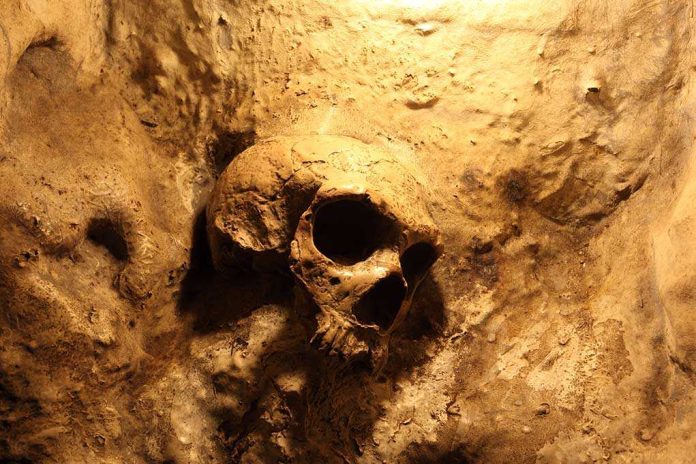
A shocking discovery of over 100 human skulls in a Pennsylvania home has unveiled a dark world of grave desecration and body part trafficking.
Story Snapshot
- Over 100 human skulls found in a Pennsylvania man’s home
- Involvement in a multi-state body parts trafficking network
- Links to Harvard Medical School cadaver thefts
- Gaps in oversight and regulation of cemeteries and body donation programs
Dark Discovery in Pennsylvania
Law enforcement found over 100 human skulls and numerous other body parts in a Pennsylvania man’s home, revealing a chilling involvement in a multi-state body parts trafficking network. The man is accused of stealing remains from cemeteries and purchasing others from a network tied to mortuary and medical school programs, including Harvard Medical School. This discovery has not only shocked the local community but has also put a spotlight on the macabre subculture of human remains collection and trafficking.
Authorities have charged the man with abuse of a corpse, receiving stolen property, and other related offenses. The case is part of a broader investigation into trafficking in stolen human remains, with multi-state ties involving individuals from Massachusetts, Arkansas, and Pennsylvania. The implications of this case extend beyond criminal charges, raising questions about the oversight of cemeteries and body donation programs across the United States.
The Trafficking Network Unveiled
The investigation into the Pennsylvania man revealed a complex network of traffickers operating across state lines. The network allegedly stole and sold donated cadavers and funeral home remains, which were then purchased by individuals like the Pennsylvania suspect. This trafficking network has exposed the vulnerabilities in institutional oversight, particularly in prestigious programs like Harvard’s Anatomical Gift Program, which now faces scrutiny and the need to rebuild trust with donors and families.
As authorities continue to unravel this network, they face challenges in tracing the provenance of remains and understanding the full scope of the operation. The case highlights significant gaps in the regulatory framework governing cemeteries and body donation programs, and it underscores the need for comprehensive reforms to prevent such incidents in the future.
Legal and Institutional Fallout
The discovery of over 100 skulls in a private residence has raised moral outrage and legal questions about the protection of human remains. Pennsylvania law specifically addresses the desecration of venerated objects and institutional vandalism, yet the scale of this case is unprecedented. It bridges the gap between traditional grave desecration and the diversion of donated medical cadavers, both of which are governed by different legal regimes.
The fallout from this case has led to calls for tighter regulations and stronger oversight of cemeteries and body donation programs. Institutions like Harvard Medical School are under pressure to improve their security measures and auditing processes to ensure that donated remains are handled with the utmost respect and integrity.
Broader Implications and Future Directions
The Pennsylvania case has far-reaching implications for legal, institutional, and public trust. In the short term, the individuals involved face significant legal repercussions, including potential felony charges and fines. However, the long-term effects could lead to major shifts in how body donation programs and cemeteries operate. There is a growing demand for uniform standards across states to ensure the proper handling, labeling, and disposal of human remains.
This case also highlights the persistent gray and black markets for human bones, often facilitated by online platforms. Increased scrutiny and regulation of these marketplaces could become a priority for law enforcement agencies. As the investigation continues, it serves as a stark reminder of the need for vigilance and ethical oversight in the handling of human remains.
Sources:
Rural PA – Historic and Archaeological Human Remains
Pittsburgh Criminal Attorney – Institutional Vandalism