

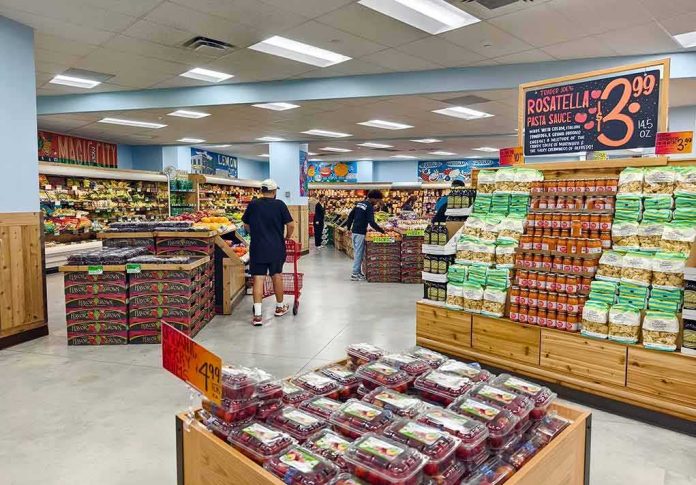
Americans are quietly turning grocery shopping into a survival drill after the biggest food-price jump in half a century.
Story Snapshot
- Food at home is about one-third more expensive than before the pandemic, and shoppers feel it hard.
- Roughly 8 to 9 in 10 Americans say they have changed how they buy groceries to save money.
- Brand loyalty is breaking down as people trade into store brands, coupons, and cheaper stores.
- Middle-class and even higher-income households are cutting extras and buying fewer items, not just the poor.
Americans face the steepest grocery shock in 50 years
Buying food to eat at home has become about 33% more expensive since early 2019, according to government data. That is the largest jump in grocery prices in roughly half a century, and it lands on families already squeezed by housing, fuel, and insurance costs. For many shoppers, the weekly cart now feels like a test: what can they cut that the kids will still eat, and what small comfort can they keep without blowing the budget.
Reporters who fanned out to cities with above-average food inflation heard the same theme again and again. People talked about skipping favorite snacks, brewing their coffee at home, and stretching simple meals over several days. Some families now split trips between a regular supermarket and a discount chain to cover everything. Food banks and the Supplemental Nutrition Assistance Program are not just a safety net for the poorest anymore; working households lean on them when paychecks and prices no longer line up.
Surveys show a near-universal shift in grocery behavior
Survey after survey shows this is not just a few careful shoppers clipping coupons. A LendingTree study reported that 88% of Americans changed how they shop for groceries to save money, up from 85% in 2022. Purdue University’s Consumer Food Insights work found 82% of American adults changed food purchasing habits in 2025, mostly because of higher food prices. Other research from Zappi and UserTesting lands in the same range, with roughly three-quarters to over 90% saying they altered grocery routines as prices climbed.
The tactics sound simple, but they add up. About 44% are choosing store or generic brands instead of name brands. Around 38% are avoiding impulse purchases that are not on their list. In another survey, 46% said they now use coupons, 40% shifted to store brands, and more than a third buy only essentials or fewer items overall. From a conservative, common-sense view, this looks exactly like households doing what they always do when Washington lets inflation run hot: tightening belts and watching every dollar.
Brand loyalty cracks as price beats preference
Price has jumped ahead of taste and brand loyalty as the top driver of grocery choices. Consumer insights data show 70% of shoppers say price or value is now the most important factor when choosing snacks and drinks. Nearly one-third say they will simply buy the cheapest option that meets their needs, no matter the brand. The share of people who buy only brand-name products dropped from about one in five to one in ten in a year, while about two-thirds now mix name-brand and store-brand items.
Retailers feel the shift. Analysts report higher interest in private-label products, fewer grocery trips for big stock-ups, and trading down to cheaper options across categories. Discount chains and dollar stores are gaining traffic as shoppers chase the lowest prices on basics. This erosion of brand loyalty is not just a minor trend; it shows how fast years of careful marketing can lose to a single hard reality: the price on the shelf.
Middle America trims carts and cuts treats
These changes reach far beyond low-income households. Research cited by the Seattle Times notes that households earning $100,000 or more are actually more likely than lower-income families to say rising food prices pushed them to change shopping habits. Purdue’s data show the same pattern, with higher-income shoppers also seeking sales, trading to store brands, and skipping nonessential snacks and specialty items.
America's grocery volume recession started in March 2025. Inflation hid it for almost a year.
Unit sales, the count of actual items leaving stores, have been negative most months since then. But prices kept climbing 2 to 3% a year, so total dollar sales kept growing and earnings… https://t.co/7IxqfO2xdl
— Aakash Gupta (@aakashgupta) July 27, 2026
Shoppers describe meat, fish, eggs, and dairy as prime targets for cuts when budgets tighten. Others drop soda, desserts, and ready-made meals to keep money free for staples. Analysts at McKinsey find that grocery dollar sales rose modestly in 2025, but item volumes actually fell, which means people are paying more while carrying fewer units out of the store. That is what a “volume recession” in groceries looks like in practice: carts that cost more but contain less.
How long will the new habits last?
One big open question is whether these new routines will stick if prices level off. In Purdue’s video summary, more than half of consumers said they were unsure whether they would keep these changes into 2026. Some habits, like using a list or checking unit prices, may become permanent because they feel smart and simple. Others, like skipping every treat or delaying fresh produce, may fade if paychecks finally catch up or if inflation cools for real.
From a conservative standpoint, there is a clear lesson: when policy choices let food inflation run ahead of wages, everyday Americans adapt fast, but at a cost to quality of life. They downgrade brands, trim protein, and lean on charity in a country that should be able to keep basic groceries within reach. The data do not show a nation giving up; they show a nation working around a problem that leaders have not fully fixed.
Sources:
feedpress.me, retailers.com, seattletimes.com, fmi.org, ag.purdue.edu, prnewswire.com, pro.morningconsult.com, miamiherald.com, scrippsnews.com, youtube.com, snipp.com