

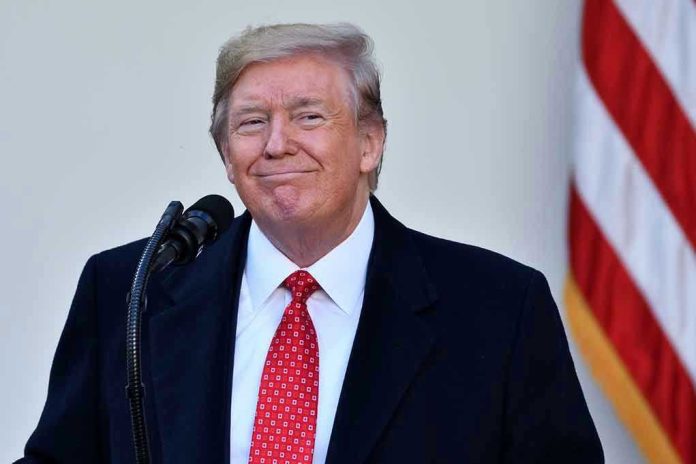
As the world watches, President Donald Trump’s audacious plan to acquire Greenland has reignited, turning diplomatic tides and straining international alliances.
Story Overview
- Trump renews threats to acquire Greenland, including military options.
- Diplomatic efforts intensify with planned visits by Danish and Greenlandic envoys to Washington.
- Bipartisan group of U.S. senators prepares to visit Denmark.
- Greenland and Denmark firmly reject any takeover, reaffirming sovereignty.
Renewed Tensions and Diplomatic Maneuvers
In early 2026, President Trump escalated his ambition to acquire Greenland, explicitly including military intervention as an option. This aggressive stance has prompted Denmark and Greenland to send envoys to Washington, while a bipartisan group of U.S. senators plans a diplomatic trip to Denmark. These moves are against a backdrop of growing strategic concerns in the Arctic, including potential threats from Russia and China.
Greenland’s Prime Minister Múte Egede and Danish PM Mette Frederiksen have both reiterated their firm opposition to any sale or military takeover. Their stance is bolstered by NATO allies who stress the importance of Greenland’s sovereignty. This situation recalls Trump’s first term in 2019 when a similar proposal was met with international outcry and led to the cancellation of a planned visit to Denmark.
Strategic Considerations and Historical Context
Greenland, an autonomous Danish territory with a population of around 56,000, holds significant strategic value due to its location and resources, including rare earth minerals. It also houses the U.S. Thule Air Base, crucial for Arctic defense. Trump’s renewed interest in Greenland dates back to the early 20th century, with multiple U.S. administrations exploring its acquisition for strategic and resource-based reasons.
The Arctic region’s growing geopolitical importance is underscored by increasing Russian and Chinese activity. Trump’s administration views control over Greenland as essential to counter these influences. However, the explicit inclusion of military force in current rhetoric marks a departure from previous diplomatic and economic approaches.
Political and International Implications
Trump’s aggressive rhetoric has strained U.S. relationships within NATO, raising concerns about the alliance’s stability. The situation has sparked a flurry of diplomatic activity, with Denmark offering to enhance the U.S. security presence in Greenland as a countermeasure to the proposed acquisition. Despite these overtures, Trump’s administration has kept military options on the table, a move that could have far-reaching implications for international relations.
Denmark and Greenland’s rejection of U.S. overtures is supported by a unified stance from NATO allies, emphasizing the importance of Greenland’s autonomy. This resistance highlights the potential for a significant diplomatic crisis if Trump’s administration pursues a unilateral approach.
Expert Opinions and Future Outlook
Experts like former U.S. Ambassador Michael McFaul have criticized the plan as counterproductive and potentially damaging to international norms. The proposal is seen as a direct challenge to international law and could undermine decades of diplomatic efforts within NATO. The balance between strategic interests and international diplomacy remains delicate, with significant risks if the U.S. proceeds with a military option.
Looking forward, the resolution of this diplomatic standoff will likely hinge on continued negotiations and diplomatic engagement. The upcoming visits by Danish, Greenlandic, and U.S. lawmakers will be critical in shaping the outcome. The situation underscores the complex interplay of national security, international law, and geopolitical strategy in the 21st century.