

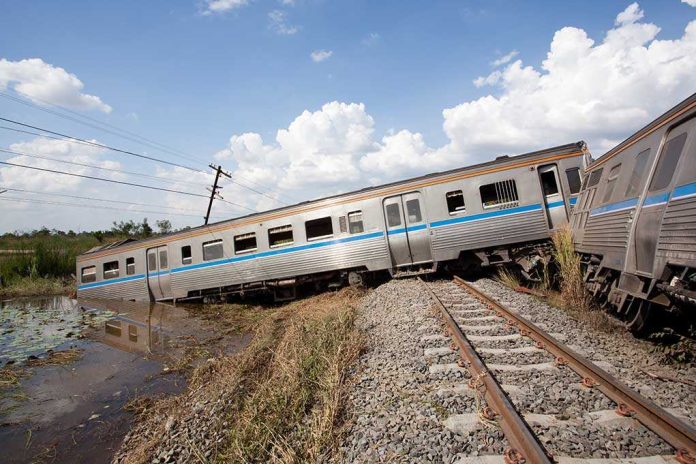
A routine commuter train at London’s busiest station became the center of a chilling safety revelation when investigators discovered the driver fell into a microsleep just seconds before impact.
Story Highlights
- Train driver experienced microsleep due to fatigue from excessive work shifts and inadequate rest
- Safety systems failed to detect the brief loss of alertness or automatically apply brakes in time
- Railway operator Govia Thameslink Railway’s fatigue management practices found severely deficient
- Investigation exposes critical gaps in UK rail safety technology for detecting driver alertness
When Split-Second Awareness Failures Turn Catastrophic
The 2024 collision at London Bridge station represents every commuter’s nightmare scenario. A Southern Railway train struck buffer stops not because of mechanical failure or signal errors, but due to something far more insidious: a driver who briefly lost consciousness during the critical final moments of approach. The Rail Accident Investigation Branch determined this microsleep lasted mere seconds, yet proved long enough to prevent timely braking.
What makes this incident particularly alarming is how preventable it was. The driver had been working a roster specifically designed to increase fatigue risk, compounded by taking numerous extra shifts on designated rest days. The night before the collision, the driver experienced reduced sleep, creating the perfect storm for impaired alertness during critical operational moments.
Railway Safety Systems Exposed as Inadequate
Modern trains carry sophisticated safety technology, yet none proved effective when seconds mattered most. The Train Protection and Warning System, designed to intervene during dangerous situations, failed to activate because the train’s speed remained below the intervention threshold. This technical limitation reveals a fundamental flaw in current safety architecture: systems designed for obvious failures cannot detect subtle human alertness lapses.
Unlike dramatic derailments or signal violations, microsleeps represent invisible threats that existing technology cannot monitor or correct. The investigation found no onboard systems capable of detecting brief attention losses, leaving passenger safety entirely dependent on driver alertness during critical operational phases. This technological gap affects not just Southern Railway but the entire UK rail network.
Operator’s Fatigue Management Failures Under Scrutiny
Govia Thameslink Railway’s approach to managing driver fatigue came under withering criticism from investigators. The company’s practices deviated significantly from established industry standards, creating conditions that systematically increased accident risk. Their rostering system allowed drivers to work excessive hours while medical fitness assessments ignored actual time worked, focusing instead on theoretical duty periods.
The investigation revealed that GTR’s fatigue risk management was “not sufficiently effective” in preventing dangerous situations. Medical fitness processes overlooked the cumulative impact of extended working periods, treating each shift in isolation rather than considering overall fatigue accumulation. This approach directly contributed to creating the conditions that led to the driver’s microsleep and subsequent collision.
Broader Implications for UK Rail Safety Standards
This incident exposes systemic weaknesses affecting the entire British rail network. The absence of alertness-detection technology on mainline trains represents a critical safety gap that could affect any operator. RAIB’s findings will likely prompt industry-wide reviews of fatigue management practices and accelerate development of systems capable of monitoring driver consciousness in real-time.
The economic and regulatory implications extend beyond GTR to influence national transportation policy. Pressure for enhanced safety technology investment, stricter rostering regulations, and more comprehensive fatigue risk assessments will likely emerge from this investigation. The incident provides ammunition for critics questioning privatized rail operations and safety oversight effectiveness.
Sources:
Report 09/2025: Buffer stop collision at London Bridge station
Train crashed into buffer due to driver falling asleep
Train driver fell asleep before London Bridge crash
RAIB releases report detailing 2024 buffer collision at London Bridge station
RAIB Investigation Report R092025