

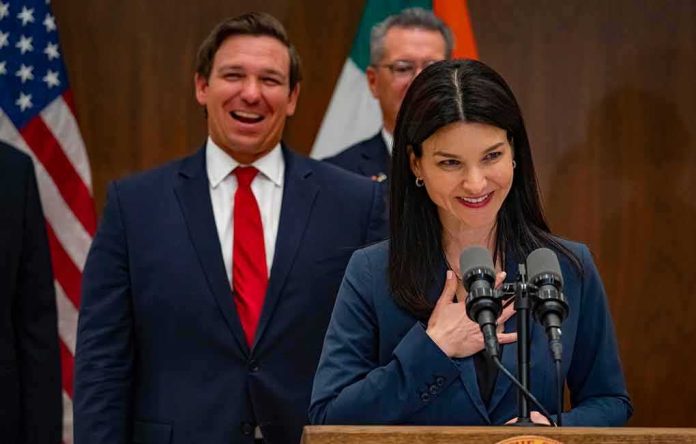
Florida leaders announced 20 voter-fraud indictments across several counties, signaling a tougher stand on illegal voting that conservatives have demanded for years.
Story Highlights
- Florida charged 20 people tied to alleged illegal voting, including noncitizens and felons on probation.
- Cases span multiple counties, with help from statewide prosecutors and election-crimes investigators.
- Past Florida cases saw mixed results, including some dismissals over intent issues.
- Federal authorities have also brought recent election-crime cases in other states.
Florida Announces 20 Charges In Statewide Election-Integrity Operation
Florida Attorney General James Uthmeier, joined by Governor Ron DeSantis, announced 20 defendants charged in a statewide push against illegal voting. Officials said the Office of Statewide Prosecution worked with the Florida Department of Law Enforcement and the Department of State’s election-crimes office. The charges include alleged false claims of citizenship, unlawful registration, and voting by felons still on probation, tied in part to the 2024 General Election. Florida’s message is simple: the ballot is sacred, and cheating will bring charges.
The Department of State’s Election Crimes and Security Office fields tips and coordinates with law enforcement. The office runs a public hotline and investigates suspected violations of Florida’s Election Code. That structure gives the state a central hub to track, screen, and refer cases across counties, which can be crucial when issues cross jurisdictions. Florida built this unit after 2020 to tighten guardrails and raise confidence that every legal vote counts and every illegal vote meets accountability.
What The Charges Claim And Why They Matter To Voters
State officials said the cases include 16 noncitizens who allegedly claimed United States citizenship and voted, and four convicted felons who registered and voted while on probation, according to coverage of the announcement. Prosecutors say the conduct breaks clear laws on voter eligibility and truthful registration. Each illegal vote cancels an honest vote. That erodes trust, tilts close races, and tells rule-breakers that lines do not matter. Florida’s move says the lines still matter.
Supporters of strong election rules argue that clear standards and real enforcement protect every family’s voice. They say weak checks invite abuse by activists and bad actors. They also point to a wave of recent federal actions that show election crimes are not “made up.” The Department of Justice has charged people in multiple states for fraudulent registration or voting by noncitizens, confirming the problem exists beyond Florida. That national context backs Florida’s push to investigate and prosecute here at home.
The Legal Hurdle: Proving Knowledge And Intent
Florida law often requires proof that a person knew they were ineligible yet registered or voted anyway. That standard can be hard to meet. In past Florida crackdowns, some defendants said officials or mailed cards led them to believe they could vote. Courts dismissed at least one case, and outcomes have varied by county and judge. These prior results do not erase the conduct. But they show prosecutors must prove willful acts, not honest mistakes, to win convictions.
This history explains why Florida built a more coordinated process. Central review, better records, and clear notices help prove who knew what and when. That helps separate confusion from fraud. It also gives honest voters clarity and gives rule-breakers fair warning. The current set of 20 indictments will test that system in court. Each defendant is presumed innocent. But the state appears ready to present detailed evidence, including forms, timelines, and status records, to meet the knowledge bar.
Why This Crackdown Aligns With Conservative Priorities
Conservatives want secure borders, clean voter rolls, and equal rules for all. Illegal voting violates each value. Noncitizen voting, even in small numbers, weakens citizenship and cheapens the duty millions followed to become Americans the right way. Voting while on felony probation, against state law, signals that rules are optional. Florida’s charges push back on that message and back up law-abiding citizens who play by the book.
DeSantis prosecutes 20 noncitizens for voter fraud, challenging the 'myth' of its nonexistence.
Full story: https://t.co/FbR0Lc4zZI
— Next News Network (@nextnews) September 25, 2026
Federal activity adds weight. The Department of Justice recently announced separate cases in California, Kansas, and Louisiana, including charges for fraudulent voter registration and voting by an alien. Other filings describe false statements of citizenship to vote and related document crimes. These actions show a broader pattern: election crimes exist, and authorities can track and charge them. Floridians who worry about diluted votes and soft enforcement can see momentum toward real accountability.
What To Watch Next In Lee, Collier, Okeechobee, And DeSoto
Florida’s announcement pointed to cases in several counties, including Lee, Collier, Okeechobee, and DeSoto, as part of the broader sweep. Local courts will now handle arraignments, motions, and trials. Expect defense claims to focus on notice and intent. Expect the state to show records that defendants knew their status yet voted anyway. Voters should watch for consistent rulings that set clear lines, so every legal vote in these counties stays counted and protected.
Sources:
wgcu.org, justice.gov, news4jax.com, miamiherald.com, files.floridados.gov