

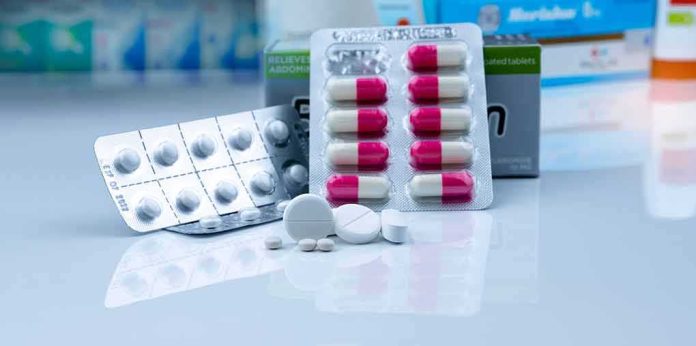
What looks like an odd footnote to a historic prisoner exchange is, in fact, a window into how the United States repatriates people who have lived for months under coercion: a tightly choreographed handoff from isolation to safety, with medical, psychological, and practical scaffolding built in—right down to the contents of a recovery kit.
The Short Version
- Evan Gershkovich says the recovery kit handed to him on his flight home in August 2024 included a Viagra tablet; he kept it as a souvenir.
- His release was part of the largest post-Soviet U.S.–Russia prisoner exchange; he and other Americans landed at Joint Base Andrews to a formal reception.
- Gershkovich has described a demanding psychological transition after captivity, consistent with best-practice recovery models.
- Recovery support after detention is standardized and staged—immediate medical care, decompression, privacy, and longer-term reintegration—not ad hoc.
What Happened: A recovery kit and a return from captivity
At a public appearance in October 2026, Wall Street Journal reporter Evan Gershkovich recounted the final hours of a saga that began with his March 2023 detention in Russia and ended with his release on August 1, 2024. He said that on the return flight arranged by U.S. officials, he received a recovery kit assembled by the Central Intelligence Agency and that it included a Viagra tablet; he said he saved the pill as a memento. His release was one of 24 transfers in a complex exchange that moved 16 detainees from Russia to Western countries and eight in the other direction. Aircraft carrying the freed Americans, including Gershkovich, landed at Joint Base Andrews outside Washington, where families and senior officials greeted them on the tarmac.
Gershkovich has since spoken about the work of reclaiming ordinary life after 16 months in detention—the re-entry shock, the discipline of talk therapy, and the role of writing in sorting memory from instinct. He likened the experience to coming down from the International Space Station: weightless routines replaced overnight by gravity and noise. That metaphor is apt; re-entry is a managed process, not a single moment of arrival.
How repatriation actually works: from emergency medicine to quiet rooms
When governments recover citizens from captivity, professional practice treats the next 72 hours as medically and psychologically consequential. The protocol is simple in outline and exacting in execution: assess and stabilize physical health; secure a calm, private environment; manage stimuli (including media) that can retraumatize; re-establish safe contact with loved ones; and begin staged psychological support. The American Psychological Association frames the essentials in those terms, emphasizing immediate medical attention, safety, family connection, and access to counseling resources—without forcing disclosure on a timeline that serves anyone but the survivor.
Humanitarian organizations that have walked dozens of colleagues through this passage describe the same choreography. The model that emerged from International Committee of the Red Cross experience integrates physical and mental health care, peer support, and workplace reintegration over time; it is not linear, and it does not end at the airport. The James Foley Foundation’s synthesis of post-release outcomes underlines the point: reintegration must be coordinated, extends well beyond the first clinical visit, and depends heavily on family support and institutional follow-through.
The kit in context: logistics, medicine, and morale
Against that backdrop, a “recovery kit” is not a novelty basket. It is a curated set of supplies designed for what professionals encounter repeatedly after captivity: dehydration and electrolyte imbalance, sleep fragmentation, gastrointestinal issues from poor nutrition, dermatological problems, minor wounds, and the cognitive fog that accompanies sustained stress. Kits typically mix medical basics (analgesics, rehydration salts, antiseptics), hygiene items to restore a sense of normalcy, and small comforts that reduce sensory load during transit. Agencies differ in who assembles them case by case; the State Department, the intelligence community, military medical units, and contractors each have roles depending on jurisdiction and risk profile.
Where does a Viagra tablet fit? Gershkovich’s account did not supply an explanation, and there is no public documentation of the kit’s inventory or the intent behind each item. Pharmacologically, sildenafil (the active ingredient in Viagra) is a vasodilator originally developed for cardiovascular indications; beyond erectile dysfunction, it has recognized uses in pulmonary hypertension and certain altitude-related conditions. Whether the tablet in this instance was packed for a specific medical contingency, as a lighthearted morale token, or as a standardized inclusion only the preparers could explain is unknown from publicly available material. What matters for understanding the process is that kits aim to anticipate both the body’s needs and the psyche’s fragile state during the liminal hours between captivity and home.
The road home: why staged recovery is non-negotiable
Decades of research on survivors of hostage-taking and prolonged detention converge on a blunt conclusion: the health consequences endure. Studies of survivors regularly find persistent symptoms of post-traumatic stress and anxiety years later; early support does not erase that risk, but it reduces avoidable harm and prevents secondary injuries—physical and psychological—that can accrue when someone is thrust from confinement straight into a media glare or bureaucratic gantlet. The first hours are about safety and stabilization; the first months are about making life coherent again without forcing pace or narrative. In practice that means guarded privacy even for people whose cases were public, deliberate control of information flow, and long-haul access to trauma-informed care.
Gershkovich’s own description of therapy and the patient work of adjusting to ordinary stimuli maps onto that literature. It also tracks with the experience of other released detainees who, though their circumstances differ, encounter the same paradox: freedom arrives instantly; the capacity to live as if nothing happened does not. Frictionless reintegration is rare. Supported reintegration is possible.
Evan Gershkovich was handed a ‘recovery kit’ on his way back to the US
🔗 https://t.co/fpnOnUyyf6 pic.twitter.com/lNK3eqCFnh
— The Telegraph (@Telegraph) October 10, 2026
Why this episode endures beyond the headline
The August 2024 exchange was geopolitically significant on its own terms; it demonstrated that even during acute confrontation, channel capacity exists for transactional deals that extract people from peril. The detail that has since captured attention—a single pill in a kit—works as shorthand for something more instructive: the U.S. government treats repatriation as a medical and psychological operation as much as a diplomatic one. Professionals pack for the journey they know awaits—a body underfed and overstressed, a mind recalibrating to noise and choice, a family bracing to love someone changed.
What to watch as best practice evolves
Three developments bear watching. First, institutional clarity: as cases span jurisdictions, the division of labor among diplomatic, intelligence, and military medical actors needs to be legible to families and resilient under political turnover. Second, continuity of care: survivors benefit when the same trauma-informed framework that meets them at the air stairs follows them through the next year, not just the next week; public-private coordination has improved here, but outcomes remain uneven. Third, stigma and storytelling: memoirs and interviews, like Gershkovich’s, help normalize therapy and disclose the mundane textures of recovery. That, more than any single item in a bag, is what moves practice forward.
Sources:
feedpress.me, telegraph.co.uk, pbs.org, reuters.com, apnews.com, abcnews.com, tandfonline.com, glos.ac.uk