

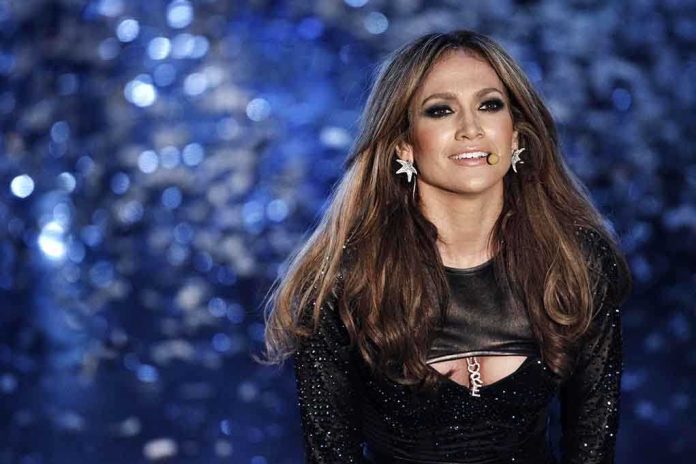
Jennifer Lopez’s wealth and her forty-film résumé are not, on their own, evidence against her claim of discrimination — they are two different measurements entirely, and conflating them is where most of the public argument over her recent remarks has gone wrong.
Key Points
- Lopez told The New York Times she was “only offered a few things” early in her career and had to create projects for herself because she wasn’t “the typical kind of, to be honest, a White actress”
- She has made a consistent version of this claim for decades, telling Variety she was once boxed into “the Latin girl” roles — maids, Spanish-speaking parts — before persuading gatekeepers otherwise
- Independent USC Annenberg and UCLA research corroborates the structural pattern: Latinos have held roughly 3 to 4.5 percent of lead film roles over multi-decade samples despite being about a fifth of the U.S. population
- Critics, including commentators Tomi Lahren and Adrianne Curry-Rhode, counter that her box-office record — over $3 billion worldwide across more than thirty films — undercuts the notion that she was shut out
- The two arguments are not actually in direct conflict: individual success and industry-wide underrepresentation have coexisted throughout Hollywood’s history
What Lopez Actually Said, and Why It Isn’t New
The remarks that drew fresh attention were not a single offhand complaint but the latest iteration of a story Lopez has told for more than twenty-five years. In her New York Times interview, she described being offered “a few things” early on and having to “create things” for herself, attributing the scarcity to not being perceived as “the typical kind of… a White actress”. That language echoes a 2019 Variety interview in which she recalled an industry that, three decades earlier, confined Latina actresses to “the Latin girl” box — Spanish-language parts, domestic-worker roles, little else. The continuity matters: this is not a reaction to a single rejection but a settled account of how she experienced the first stretch of her career, repeated with remarkable consistency across venues and years.
Lopez has also been specific, where she chooses to be, about mechanism rather than just outcome. She described the task of convincing “the agents, the managers, the Tommy Mottolas of the world” that she could play beyond the stereotyped roles she was initially offered. That is a claim about gatekeeping — about who decides which actress gets considered for which part, long before a studio executive or audience ever weighs in. It is also, notably, a claim that implicates an entire layer of the industry that sits upstream of any single casting decision and is largely invisible to the public record.
The Data Behind the Claim
Where Lopez’s testimony is anecdotal, the broader research is not. USC Annenberg’s long-running inclusion studies, covering more than a thousand top-grossing films across multiple multi-year windows, have repeatedly found Latino actors occupying somewhere between 3 and 4.5 percent of lead or co-lead roles, and as little as 3 percent of casting-director positions, despite Latinos making up roughly 18 to 20 percent of the U.S. population throughout that period. UCLA’s 2025 Hollywood Diversity Report found Latinos held just 1 percent of leading roles among the top 104 English-language theatrical releases of 2024. A separate USC analysis of television casting breakdowns found Latina characters disproportionately written through narrow ethnic or stereotyped descriptors rather than as unmarked leads. None of these datasets name Lopez or her specific auditions. But they establish, with hard numbers rather than recollection, exactly the pattern she describes: a persistent, decades-long scarcity of Latino leads that tracks closely with the “little box” she says she had to talk her way out of.
The Pushback: Does Success Disprove the Claim?
The sharpest criticism of Lopez’s remarks has come less from data than from derision. Commentators including Tomi Lahren and Adrianne Curry-Rhode argued that her filmography — Selena, Out of Sight, The Wedding Planner, Maid in Manhattan, Hustlers, among others — and a reported net worth near $400 million make the discrimination claim hard to credit. It is a messenger argument, not an evidentiary one: it asks readers to judge the claim by how comfortable the claimant now appears rather than by what she says happened thirty years ago. The flaw is logical as much as factual. A performer can break through a biased system and still have faced that bias; Lopez’s own account places the limitation specifically at “the beginning of my career,” a period that predates virtually all of the films now cited against her. Commercial triumph after a barrier is cleared is not evidence the barrier never existed.
JENNIFER LOPEZ SAYS BEING LATINA MADE IT HARDER TO LAND HOLLYWOOD ROLES
Jennifer Lopez says she received fewer acting opportunities because she did not fit what she described as Hollywood's "typical" white actress mold. She made the comments during an interview with The New York… pic.twitter.com/h13Zzk1qI0
— Autumn Rivers (@Autumn_Rivers4) November 23, 2026
Selena as Case Study
Lopez’s own breakthrough illustrates the mechanism rather than refuting it. She won the role of Selena Quintanilla over a reported field of more than 20,000 actors and became, by most accounts, the first Latina performer to command a $1 million film salary. That milestone is frequently cited by critics as proof the industry rewarded her — and it did. But it also required an exceptional, highly publicized casting search to surface a Latina lead for a film about a Latina icon, a search that stands out precisely because it was not the industry’s default mode of operating. Exceptional breakthroughs are not evidence against structural scarcity; in a genuinely open system, a performer of Lopez’s talent would not have needed to out-audition twenty thousand rivals or build her own production vehicles to land roles beyond the ones initially offered.
Where the Record Falls Short
Honesty about the evidence requires acknowledging its limits. No casting memo, audition note, or named executive has surfaced publicly tying a specific lost role to Lopez’s ethnicity; her account, however consistent, remains testimonial rather than documentary. The claim that she was offered “only a few things” is not quantified against a baseline — how many roles, compared with which peers, in what genres. And the industry-wide disparities documented by USC and UCLA, while powerful as context, cannot by themselves prove what happened in any single casting room Lopez sat in. That gap between personal testimony and institutional data is common in discrimination narratives generally, and it is why the structural pattern, not any one quote, carries the real evidentiary weight here.
What It Means Going Forward
The durable lesson isn’t about Jennifer Lopez’s bank account. It’s that an industry can simultaneously mint a small number of enormously successful Latina stars and maintain, at the aggregate level, a leading-role share for Latino performers that has barely moved in two decades of measurement. Both things are true at once, and neither cancels the other out. Lopez’s remarks are best read not as a grievance against her own outcome but as a diagnosis of the conditions she had to out-maneuver — conditions the data suggests still constrain the next generation of Latina actors auditioning today.
Sources:
facebook.com, abcnews.go.com, netflixjunkie.com, x.com, flipboard.com