

A children’s entertainer walked into a New York immigration court, and a political firestorm walked out.
Story Snapshot
- Ms. Rachel visited a Manhattan immigration court with Democrat Brad Lander and spoke out about kids without lawyers.
- She criticized how frightened children face deportation, framing her stance as advocacy for kids.
- Karoline Leavitt blasted her the next day, calling the appearance political and attacking her image.
- The record shows visible advocacy, though “left-wing activist” as a fixed identity remains debated.
What Actually Happened In The Courthouse
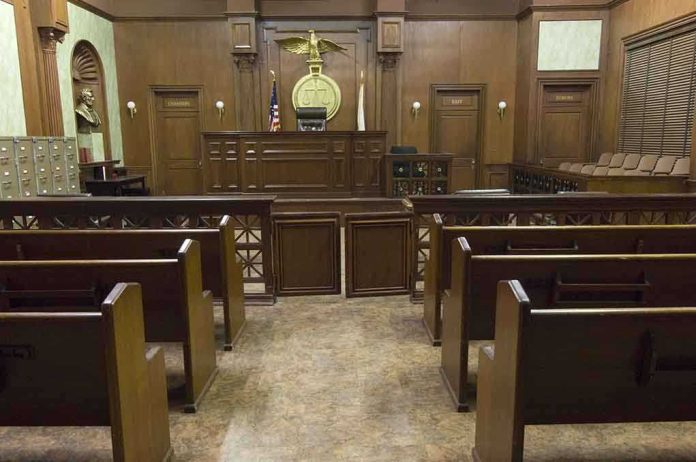
Rachel Accurso, known as Ms. Rachel, went to federal youth immigration court at 290 Broadway in Lower Manhattan on November 23, 2026. She arrived with Brad Lander, a New York Democrat. Reporters said they observed proceedings where minors faced deportation and sometimes lacked lawyers. Accurso spoke about what she saw. She said the kids were scared, and she raised concern about children trying to navigate court alone. Her public comments focused on the children’s welfare.
Coverage framed the visit as advocacy, not entertainment. ABC7 said the appearance highlighted claims that many immigrant children appear without legal counsel. Newsweek described Ms. Rachel as pressing for better support for those minors. These outlets placed the event in a political context because it questioned how the system treats kids. That framing, and her pairing with a Democratic official, guaranteed the debate would jump from courthouse halls to cable hits and social feeds.
Leavitt’s Response And The Political Flashpoint
Karoline Leavitt, a former White House press secretary and now a prominent conservative voice, condemned the visit the next day. Reports date her critique to November 24, soon after the courthouse stop. She argued Ms. Rachel was not just a friendly kids’ host, but a political actor. The coverage highlights Leavitt’s claim that the court appearance, the comments, and the alignment with Brad Lander show a left-leaning agenda wrapped in children’s branding.
Leavitt’s case landed because it sat on observable facts: the visit with a Democrat, the courthouse setting, and public criticism of current immigration enforcement. Those facts are not in dispute. The leap comes in the label. Calling someone a “left-wing activist” suggests more than a single event. It implies a sustained program, repeat campaigns, or formal roles. The current record shows visible advocacy that aligns with progressive causes, but it does not, by itself, prove an all-encompassing political identity.
What Ms. Rachel Says About Herself
Accurso has not hidden her views. Reports quote her saying she is political and willing to risk her career to stand up for kids. She has connected her advocacy to other causes, including support for Palestinian children and concerns about detaining migrant families. She has also criticized kids appearing in court without lawyers and said policy should center children’s needs. These positions make backlash likely in a polarized media climate. That is the cost of public stances.
Karoline Leavitt has criticised Ms. Rachel over her visit to immigrant children facing deportation.
Do you agree with Karoline’s criticism?
A. Yes, she has a point.
B. No, every child deserves compassion.
C. Both sides have a point.
D. Not sure. pic.twitter.com/q7HGPmjpbz— MAGA 2028 🇺🇸 (@Teaseryy) November 25, 2026
Conservatives will agree with this much: children deserve safety, order matters, and immigration law must be enforced. The practical question is how to protect kids while upholding the law. If children appear without counsel, the system looks both cold and inefficient. If public figures turn that problem into a media parade, the issue risks becoming theater. Voters can hold two thoughts at once: protect children and stop performative politics that muddy clear policy fixes.
How To Separate Advocacy From Activism
Issue advocacy means taking a side on a policy question. Partisan activism means sustained work for one party or ideology. The courthouse facts confirm advocacy. They do not, on their own, clinch the broader, permanent activist label. To claim that, you would want a longer record: repeated campaign events, donations, formal roles, or coordinated operations with a party. The reporting so far documents a high-profile visit, pointed comments, and public alignment with progressive priorities. That shows a direction, not necessarily a destination.
Here is the plain path forward. First, get the full text and media of Leavitt’s November 24 post and any follow-ups, so the critique stands on its exact words. Second, obtain clear court data on counsel rates for minors, within privacy limits, to anchor the debate in numbers rather than vibes. Third, map Ms. Rachel’s long-term public actions. If the pattern shows extended, coordinated partisan work, the activist label hardens. If it centers on child welfare across varied settings, it remains issue advocacy.
Bottom Line For Parents And Voters
Parents can love Ms. Rachel’s songs and still demand clarity when she steps into politics. Voters can support strong borders and also insist that America treats children with care and due process. The courthouse visit forced that balance into view. The country should meet it with facts, not fury: confirm what minors face in court, fix what is broken, and stop turning kids into props for any side. That is common sense and, in the end, the only durable solution.
Sources:
kark.com, sg.news.yahoo.com, ny1.com, aol.com, fox16.com