

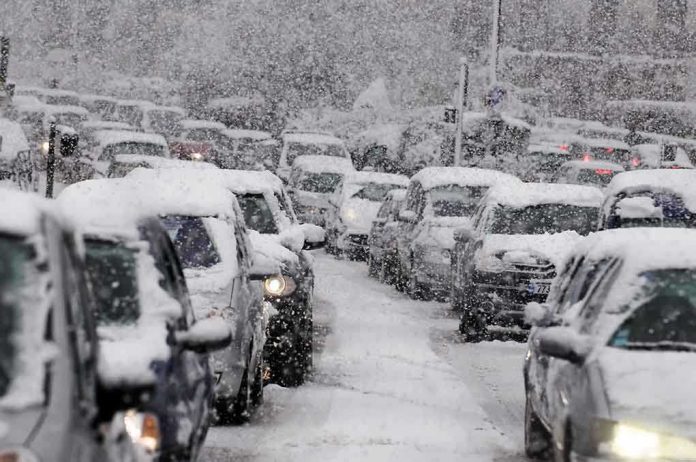
Thousands of families shattered their post-Christmas dreams on airport floors, revealing America’s fragile travel backbone under winter assault.
Story Snapshot
- Winter Storm Blaine dumped heavy snow on JFK, canceling over 500 flights on December 26-27, 2025.
- 50,000 travelers stranded amid chaos, sleeping in terminals with scarce hotels.
- Delta and JetBlue bore the brunt, issuing waivers but facing backlash for delays.
- JFK hit hardest with 28% cancellation rate, exposing infrastructure vulnerabilities.
- Recovery underway by December 27 evening, but lawsuits loom over airline preparedness.
Storm Strikes During Peak Holiday Rush
Winter Storm Blaine intensified over the NYC metro area on December 26 evening. The FAA issued a ground stop at JFK from 6 PM ET as heavy snow and high winds crippled operations. Travelers returning from Christmas faced immediate gridlock. Port Authority declared a Level 2 snow emergency by morning. This timing amplified misery during the year’s busiest travel week, with AAA forecasting 119 million U.S. journeys.
Families clutched luggage in overflowing terminals. Reports described passengers bedding down on cold floors. Airlines like Delta canceled 200-plus flights each. JetBlue competed for limited gates. Social media erupted with #JFKSnowStranded, amassing 150,000 posts on X.
Airlines and Authorities Grapple with Chaos
Delta CEO Ed Bastian defended cancellations as the safest choice, issuing vouchers via X at 2 PM ET on December 27. Port Authority promised full recovery by December 28 morning. FAA lifted the ground stop at 1 PM ET after runways cleared. NYC Mayor Eric Adams deployed MTA buses for shuttles. Unions pushed for ground crew overtime amid 12-hour shifts.
Stakeholders clashed over liability. Airlines lobbied for de-icing priority. Travelers vented frustration online, pressuring Delta directly. Amtrak added trains and LIRR extended service as alternatives. By 4 PM ET, 85% of flights operated, though 120 delays lingered.
Historical Patterns Expose Systemic Weaknesses
JFK’s vulnerability traces to events like 2010 Snowmageddon with 1,000 cancellations and 2022 Winter Storm Elliott’s 700 disruptions. NOAA data shows 20% more extreme Northeast winter events since 2000, linked to climate shifts. Pre-storm warnings on December 24 predicted 12-18 inches, yet airlines preemptively cut only 100 flights.
Patterns reveal 80% of major JFK disruptions stem from winter weather per FAA records from 2015-2025. Past incidents sparked $100 million lawsuits in 2023 and FAA fines in 2018. Experts like Henry Harteveldt call it predictable chaos, faulting underpreparation despite forecasts.
Economic Toll and Lasting Lessons
Stranded passengers incurred $50 million in meal and hotel costs, with low-income travelers suffering most without insurance. Airlines absorbed $200 million losses, Delta stock dipping 2%. Forbes estimates a $1 billion national GDP hit from tourism dips. DOT monitors refunds up to $400 per passenger.
Long-term, experts predict 30% more disruptions by 2030 and urge $10 billion FAA modernization. Calls grow for resilient infrastructure like heated runways. Professor Joseph Schofer ties intensity to climate change. Common sense demands airlines prioritize forecasting tools over profits, aligning with conservative values of self-reliance and accountability. IATA optimists claim systems held, but facts show profit often trumped passengers.
Sources:
FlightAware Disruption Tracker