

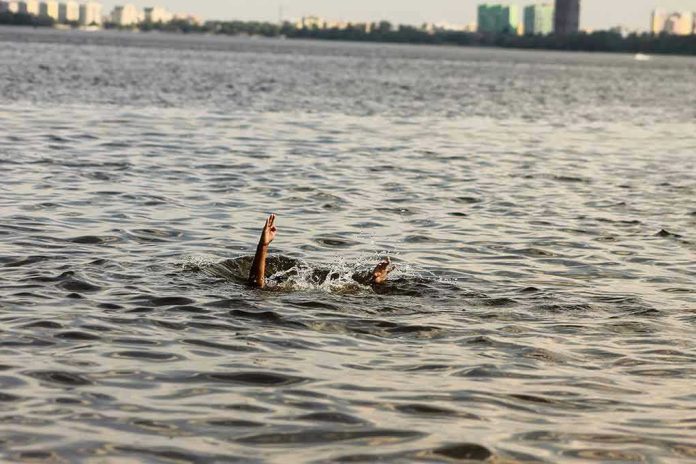
While Washington burns through trillions on politics and pet projects, it was disciplined U.S. rescuers—not federal bureaucrats—that stood between 11 crash survivors and a lonely death in the Atlantic.
Story Snapshot
- A Bahamian twin‑engine turboprop crashed into the Atlantic, leaving 11 adults drifting for five hours on a life raft.
- A functioning emergency beacon triggered a rapid U.S. Coast Guard and Air Force rescue 80 miles off Florida’s coast.
- The “miraculous” survival of everyone on board highlights the value of training, equipment, and accountability over bureaucracy.
- The case underscores how frontline professionals deliver while political elites let core infrastructure and safety age out.
Crash in Rough Seas, Calm in the Cockpit
The aircraft, a twin‑engine turboprop shuttling between Bahamian islands, lost engine power late Tuesday morning and went down in the Atlantic, roughly 80 miles off Melbourne, Florida. All eleven adults on board managed to evacuate into a life raft, an outcome that already reflects clear emergency preparation and composure under pressure. For about five hours they drifted with no radio or phone contact, uncertain if anyone even knew they were alive or where they were.
An emergency locator transmitter mounted on the aircraft became the one voice they did not know they had. When the ditching impact triggered the beacon, its signal traveled through the COSPAS‑SARSAT distress satellite system and alerted watchstanders at the U.S. Coast Guard’s 7th District in Miami around 11 a.m. That single piece of hardware, properly installed and maintained, transformed a potential mass fatality into a survivable incident.
U.S. Rescuers Deliver When Seconds and Fuel Matter
Upon receiving the signal, Coast Guard personnel launched a coordinated search‑and‑rescue effort, calling in a U.S. Air Force HC‑130J Combat King II for wide‑area search and a Coast Guard MH‑60 Jayhawk helicopter for the hoist. Crews flew far offshore toward building weather, betting fuel and their own safety that the beacon data were accurate. Hours later, the HC‑130J crew spotted a small raft under a rain tarp just ahead of an approaching thunderstorm.
The Jayhawk helicopter then moved in to pull the survivors from the ocean. Aircraft commander Maj. Elizabeth Piowaty later explained that they had only minutes of fuel to spare as they completed the hoist, stressing how rarely every person walks away from an ocean ditching. Capt. Rory Whipple described the survivors as physically, mentally, and emotionally exhausted, with dehydration and impact injuries the primary concerns, yet all were stable when flown to Melbourne Orlando International Airport.
Tools That Work, Systems That Don’t
This mission shows what happens when the basics are done right: a functioning emergency beacon, trained pilots, stocked life rafts, and military crews drilled in real‑world scenarios. Those are concrete investments in readiness, not headline‑grabbing programs or diversity task forces. The Bahamas relies heavily on short inter‑island flights over open ocean, where weather shifts quickly and radar coverage can be limited. In that environment, rugged equipment and disciplined procedure are not luxuries; they are the difference between life and death.
By contrast, Americans watching this story recognize a pattern closer to home. Coast Guard cutters, rescue aircraft, and aviation infrastructure often operate on aging platforms while Washington prioritizes new bureaucracies and global initiatives. Both conservatives and many liberals see the same contradiction: the federal government keeps expanding its reach into social engineering while failing to modernize the very safety systems people actually depend on in an emergency.
Frontline Professionals vs. Political Elites
The calm competence on display offshore stands in stark contrast to how political elites handle crises on land. Survivors in that raft had no guarantee anyone would come; they had to trust that somewhere, professionals still took their duty seriously. That trust was rewarded because watchstanders, pilots, and rescue swimmers did their jobs without grandstanding, treating eleven foreign nationals as worth every gallon of fuel and every hour of risk.
Many Americans feel they do not receive that same level of commitment from the political class. From veterans dealing with broken systems to families watching crime rise while border chaos continues, the sense is that ordinary lives are negotiable, while the careers of officials and lobbyists are sacred. This rescue illustrates a different ethic rooted in older American values: mission first, lives first, politics last.
Survivors of plane crash off Florida were on a life raft for hours with no idea if help was coming https://t.co/6D2DrvJRuI
— Daily Breeze (@DailyBreezeNews) May 14, 2026
The bilateral aspect of the rescue also matters. The United States responded instantly to a distress signal involving Bahamian citizens in international waters, coordinated with Bahamian authorities, and then handed over investigative responsibility. That is cooperation based on clear roles, not endless global talking shops. For voters weary of “globalism” that erodes sovereignty, this is a reminder that limited, practical partnerships grounded in mutual responsibility still work.
Accountability, Maintenance, and the Next Crisis
Bahamian investigators will now examine why the engines failed, what maintenance had been done, and how the crew handled the emergency. That process of assigning cause and responsibility is not about blame for its own sake; it is how aviation gets safer. When regulators demand records, and operators know they will be held accountable, corners are less likely to be cut. Conservative readers will recognize this as the difference between real oversight and performative regulation.
Americans watching Congress argue over everything except long‑term infrastructure see the lesson clearly. When leaders underfund core safety while expanding programs that have little to do with public protection, they gamble with lives just as surely as a negligent mechanic does. The miracle here is that eleven people survived a mid‑ocean crash with no major injuries. The warning is that such miracles rely on professionals and systems that cannot be taken for granted as Washington’s priorities drift further from common sense.
Sources:
Plane crash survivors rescued about 80 miles off Florida coast
Air Florida Flight 90 survivors
Plane crash survivor meets God in icy waters