

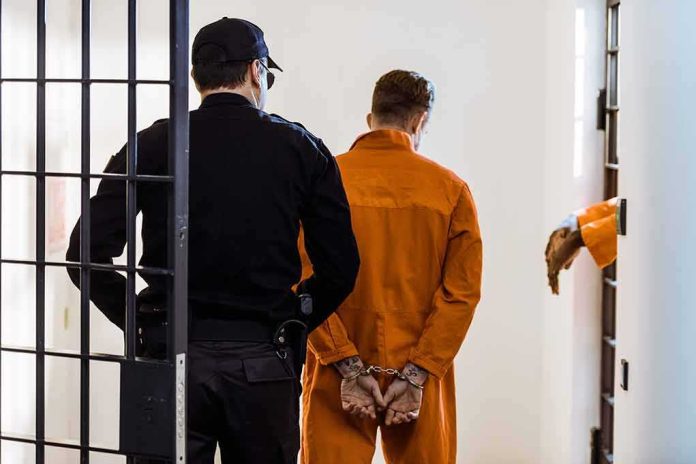
U.S. Marshals arrested social media influencers Andrew and Tristan Tate in Miami after British prosecutors piled on dozens of new rape and sex-trafficking charges, pushing the total case against them to 59 counts.
Quick Take
- Andrew and Tristan Tate were arrested in Miami and are being held in federal detention while they fight extradition to the United Kingdom.
- British prosecutors added 38 new charges, bringing the total to 59, involving seven alleged victims between 2010 and 2017.
- The brothers’ lawyer says the case is a “political witch hunt” and plans to argue the charges are politically motivated.
- Legal experts note U.S.-UK extradition law makes the political-motivation defense extremely hard to win.
Arrest In Miami Follows New UK Charges
U.S. Marshals took Andrew and Tristan Tate into custody in Miami after Britain’s Crown Prosecution Service approved 38 additional criminal charges against them. That brought the combined total to 59 charges tied to seven alleged victims, with accusations spanning 2010 to 2017. Andrew Tate alone now faces seven new counts of rape, along with charges of arranging or facilitating sex trafficking.
The brothers appeared before a federal judge in Miami and were ordered to stay in custody at a federal detention center while their case moves forward. Court documents unsealed after the hearing gave prosecutors’ fullest public account yet of the allegations, describing patterns of alleged abuse across multiple accusers. Both brothers deny any wrongdoing.
Defense Calls Case A Political Attack
The Tates’ attorney told reporters the charges amount to a “garbage” case and a “stitch-up job,” saying flatly, “Yes, it’s politically motivated”. The defense plans to invoke a provision in the U.S.-UK extradition treaty that blocks handover when a request is really meant to punish someone for political reasons rather than pursue an ordinary crime. Their lawyer has tied the timing to the brothers’ recent political activity in Washington, D.C.
This case is part of a much longer saga. British police first sought an arrest warrant back in March 2024, and the Crown Prosecution Service filed an initial 21 charges in May 2025, including rape, actual bodily harm, and human trafficking. The brothers were previously fighting a separate extradition push from Romania, where they faced their own criminal proceedings before UK officials confirmed they would eventually be handed over.
Why The Political Defense Faces Long Odds
Extradition law includes a long-standing “political offense exception,” built to stop governments from using criminal charges as cover to punish rivals or dissidents. Courts historically required proof that a crime was tied to an uprising, protest, or opposition to an oppressive regime, not run-of-the-mill criminal conduct. Legal scholars note this shield has narrowed sharply over recent decades, especially in agreements between allied democracies like the United States and Britain.
The 2003 extradition treaty between Washington and London, the same one covering this case, is widely described by legal researchers as having “virtually eliminated” the political offense exception between the two countries. Courts weighing extradition requests focus mainly on whether probable cause exists and whether the alleged conduct falls under crimes named in the treaty, not on the political leanings of the accused. Rape and trafficking charges rarely, if ever, qualify as political acts under this framework.
What Comes Next For The Brothers
The brothers remain in federal custody in Miami as their legal team prepares formal arguments against extradition. A U.S. judge will eventually decide whether probable cause supports sending the case to trial in Britain, a decision that can then be appealed through federal courts. Even if a judge certifies extradition, the Secretary of State retains final authority over whether the handover actually happens.
Social media reaction has split sharply, with some users pointing to the brothers’ political visibility and others insisting the court record speaks for itself regardless of politics. The case lands amid broader public frustration, on both the left and right, over whether powerful or high-profile figures get treated differently by the justice system than ordinary citizens facing similar charges.
Black Srebnick has joined the brothers’ fight against extradition to the United Kingdom.
🔗 nhttps://www.miaminewtimes.com/news/tate-brothers-turn-to-jeffrey-epsteins-former-miami-law-firm-40569480/ pic.twitter.com/Dp0HSx8hqv
— Miami New Times (@miaminewtimes) July 22, 2026
For now, the core facts are not in dispute: British prosecutors have brought 59 charges, U.S. authorities arrested both brothers on American soil, and a Miami courtroom will decide the next chapter. Whether the political-motivation defense gains any traction will likely hinge less on public opinion and more on decades of narrowing legal precedent between the two allied nations.
Sources:
thegatewaypundit.com, dw.com, bbc.com, wsj.com, youtube.com, intercollegium.com, scholarship.law.marquette.edu, repository.uclawsf.edu, openyls.law.yale.edu, interpol.int, digital.sandiego.edu