

When lawsuits follow a campus pedestrian crash, the criminal case may decide who drove how and why—but the civil case decides who pays, and on what theory. The Cal Poly matter now moving through San Luis Obispo County puts both tracks in sharp relief: a felony DUI hit-and-run prosecution ordered to trial, and a companion civil suit that reaches beyond the driver to the fraternity and individuals who allegedly furnished alcohol.
The Short Version
- Two Cal Poly students were struck at night on Crandall Way on January 8; police arrested a student in a dark-gray Tesla Model 3 soon after.
- Prosecutors charged felony DUI causing injury and hit-and-run; a judge ordered the defendant to stand trial following a preliminary hearing.
- The injured pedestrians sued the driver, two named students, and Kappa Sigma, alleging alcohol was furnished to an underage driver and the Tesla’s use was permitted.
- California law makes direct liability for negligent driving straightforward, but secondary liability for social hosts and fraternities is legally narrow and contested.
What happened and what’s been alleged
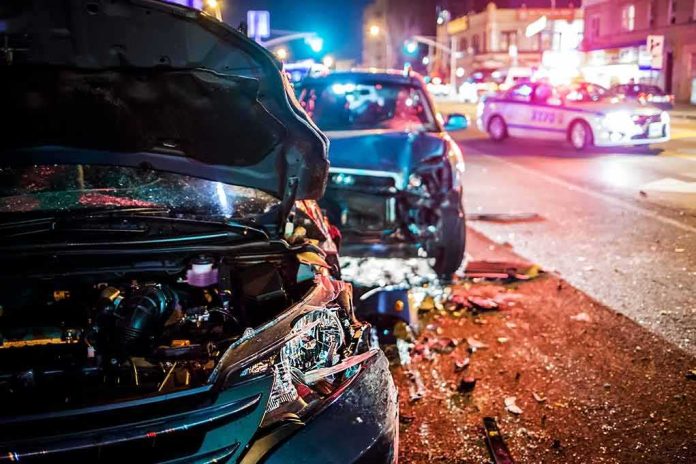
On the evening of January 8, at approximately 9:30 p.m., two women crossing near Cal Poly were seriously injured in a collision on the 100 block of Crandall Way. San Luis Obispo Police recovered a dark-gray Tesla Model 3 based on eyewitness information and arrested a Cal Poly student soon after; local reporting identified the driver as Ishan Pandhare and the vehicle as a Tesla sedan. The criminal filing alleged DUI causing injury, reckless driving causing specified injuries, and hit-and-run causing injury, to which Pandhare entered a not-guilty plea in early February. A San Luis Obispo County judge later ruled the case should proceed to trial after preliminary-hearing testimony described one victim being thrown 20 to 30 feet by the impact.
In parallel, the two injured pedestrians—identified in reporting as Burke and Archibald—filed a civil complaint in San Luis Obispo County Superior Court alleging negligence against Pandhare and extending liability to Kappa Sigma and two of its members, Aidan Jameson Kennedy and Kip Stackle. According to the complaint as summarized in campus and regional outlets, the plaintiffs allege that Kappa Sigma hosted an alcohol-related event, that Kennedy and Stackle furnished alcohol to Pandhare when he was under 21, and that Kennedy owned the Tesla and allowed Pandhare to drive it despite knowing or having reason to know he was intoxicated.
The criminal track: what “ordered to stand trial” actually signals
California’s preliminary hearing is a screening device, not a mini-trial; the judge asks whether there’s probable cause to believe a felony was committed and the defendant committed it. Clearing that bar does not prove guilt, but it matters: prosecutors presented witnesses and evidence sufficient to advance felony DUI causing injury and hit-and-run charges. The testimony that a victim was projected 20 to 30 feet, if credited, tends to corroborate a high-energy impact and significant injury—both central to felony injury counts and to civil damages valuation. The not-guilty plea preserves Pandhare’s contest of the charges at trial; the civil case, however, will move on a separate timeline and evidentiary standard—preponderance of the evidence rather than beyond a reasonable doubt.
One detail that often becomes dispositive in DUI-injury cases—the precise blood alcohol concentration and its timing—has not been publicly reported in the available coverage. That evidence, if it exists, typically sits in police reports and lab records and emerges through discovery or at criminal trial. For now, what is established on the public record is the arrest on suspicion of DUI, the formal charging instruments, and the court’s order holding the defendant to answer following preliminary hearing.
The civil track: direct negligence is one thing; fraternity liability is another
Negligence claims against an identified driver follow a familiar architecture: duty to use reasonable care, breach by impaired or reckless driving, causation, and damages. The presence of felony injury charges and a hit-and-run count, if ultimately proven, would anchor civil liability and expose the driver to substantial compensatory damages and, depending on the facts, potential punitive exposure. But the plaintiffs have also pleaded a wider net—alleging that Kappa Sigma and two named members furnished alcohol to an underage driver and that one of them permitted the Tesla’s use with knowledge of intoxication. Those allegations target two distinct theories: negligent entrustment (allowing a dangerous driver to use your car) and secondary liability tied to supplying alcohol to a minor.
California’s baseline rule makes social hosts broadly immune for harms arising from the consumption of alcohol; liability attaches to the act of drinking, not furnishing. The statutory carve-outs, however, are specific and important: when an adult knowingly furnishes alcohol at their residence to a person they know or should know is under 21, liability may attach for resulting injuries to third parties. Courts have wrestled with how that language maps onto fraternities and related entities—questions of who furnished, where, and under what control conditions become case-dispositive. Some appellate decisions have curtailed efforts to impose duties on universities or national fraternities for off-campus chapter conduct; others have allowed claims to proceed where facts plausibly alleged active furnishing to minors or negligent entrustment of vehicles.
What the plaintiffs must prove against non-driver defendants
The complaint, as summarized in coverage, asserts that Kappa Sigma hosted an alcohol event and that Kennedy and Stackle provided alcohol to an underage Pandhare; it also claims Kennedy permitted use of the Tesla despite impairment. If discovery substantiates that alcohol was knowingly furnished to a minor in a setting covered by the statute, the plaintiffs can attempt to thread California’s social-host exception. Negligent entrustment, by contrast, turns on foreseeability: did the owner know or have reason to know the borrower was likely to use the car in a manner involving unreasonable risk, such as while intoxicated? Documentary evidence—messages, invitations, time-stamped photos, payment records, ride arrangements, and telematics—often carries the day on both questions.
Fraternity liability layers in agency and control. California appellate authority has limited duties for universities and distant national organizations in off-campus incidents not under their direct control. Local chapters and individual members can face exposure on traditional negligence theories if they actively create a risk—furnishing alcohol to minors, supervising hazardous rituals, or exercising control over premises—while national entities often escape on lack of operational control. The plaintiffs’ path here will require precision: who organized the event, who furnished alcohol, where it occurred, whether chapter policies or officers were involved, and whether the conduct fits a recognized exception to immunity. Recent California analyses, including decisions narrowing duties for universities in off-campus settings, outline the guardrails.
Mechanics and evidence: speed, impairment, and hit-and-run conduct
Three evidentiary pillars typically decide pedestrian-injury cases of this kind. First, impairment: field-sobriety observations, toxicology results, and timing of sample collection can establish not just whether alcohol was present but whether it likely impaired driving at the moment of impact. Second, speed and braking: event data from the Tesla, if preserved, can provide second-by-second vehicle speed, accelerator and brake application, steering input, and collision flags. Third, post-collision conduct: phone records, 911 calls, and surveillance footage inform whether the driver fled knowingly and whether any aid was rendered. Preliminary testimony describing a victim thrown 20 to 30 feet points to a high-energy strike; a forensic download can quantify that energy precisely. Prosecutors already persuaded a judge there is enough to try the felony case; civil discovery will seek a fuller, data-rich account.
The vehicle itself matters. Tesla models typically log granular telemetry; while proprietary systems vary, investigators can often pair onboard data with nearby cameras to reconstruct the seconds before and after impact. That reconstruction helps allocate fault—driver inattention, excessive speed for conditions, pedestrian visibility—and informs any comparative negligence defenses. On impairment, chain-of-custody and analytical method (blood gas chromatography, for example) determine reliability; on flight, distance traveled and delay before police contact affect both criminal enhancement and civil punitive arguments.
Why this case resonates beyond San Luis Obispo
Pedestrian crashes near campuses combine known risk factors: nighttime visibility, foot traffic crossing arterials, and social schedules that elevate exposure. National safety data consistently associate alcohol impairment with a large fraction of serious crashes, and pedestrians—unprotected by a vehicle shell—bear the brunt of kinetic energy transfers at even moderate speeds. That structural risk profile explains why cases like this travel: they become templates for how communities, universities, and Greek-life organizations manage alcohol, transportation, and event risk, and how courts parse responsibility when multiple actors are involved.
One brief caveat belongs here: a criminal charge and a civil complaint are allegations until adjudicated. Still, the procedural posture—arrest, charging, a not-guilty plea, and an order to stand trial—anchors the gravity of what occurred on Crandall Way. The civil suit will test how far liability extends beyond the driver to those who allegedly furnished alcohol and enabled access to the car. California’s statutes and case law set narrow gates for that extension; whether the facts fit through them will turn on evidence the public has not yet seen in full.
What to watch next
Three developments will clarify outcomes. First, disclosure of toxicology and Tesla event data, which will harden the core negligence case. Second, civil discovery on alcohol furnishing and car access—messages, payment records, and testimony that either links or severs the fraternity defendants from statutory exceptions and entrustment claims. Third, any plea or verdict in the criminal case; while not determinative of civil liability, a criminal resolution often reshapes settlement posture and narrows factual disputes for a jury. However the facts resolve, the case is a reminder that in California, the straight line to liability runs through the driver’s conduct—and that extending liability to social hosts or affiliated organizations requires meeting exacting, statute-driven tests.
Sources:
nypost.com, m.dailyadvent.com, mustangnews.net, sanluisobispo.com, calcoastnews.com, courthousenews.com