

Iranian officials reportedly slowed talks and tightened Strait control as U.S. gas topped $4, tying foreign leverage to American wallets weeks before the midterms.
Story Snapshot
- Officials told Reuters Iran prolonged negotiations to hurt President Trump politically before November’s vote.
- Iran asserted a “new order” over Persian Gulf and Strait shipping while a mined ship incident raised risks.
- Gasoline prices climbed above $4 per gallon in late October, making energy a top voter concern.
- Analysts say the White House weighed escalation to avoid even higher prices before the elections.
What Changed On The Water—and Why It Matters At Home
Reuters reported that senior officials said Iran dragged out talks with the United States to weaken President Trump before the November midterms. Around the same time, an Iranian security official claimed control over shipping rules in the Persian Gulf and the Strait of Hormuz. The Associated Press reported that Iran’s Revolutionary Guard navy said a cargo ship sank after hitting a naval mine in the Strait, adding fear to insurers and crews. These moves pushed risk higher across global energy trade.
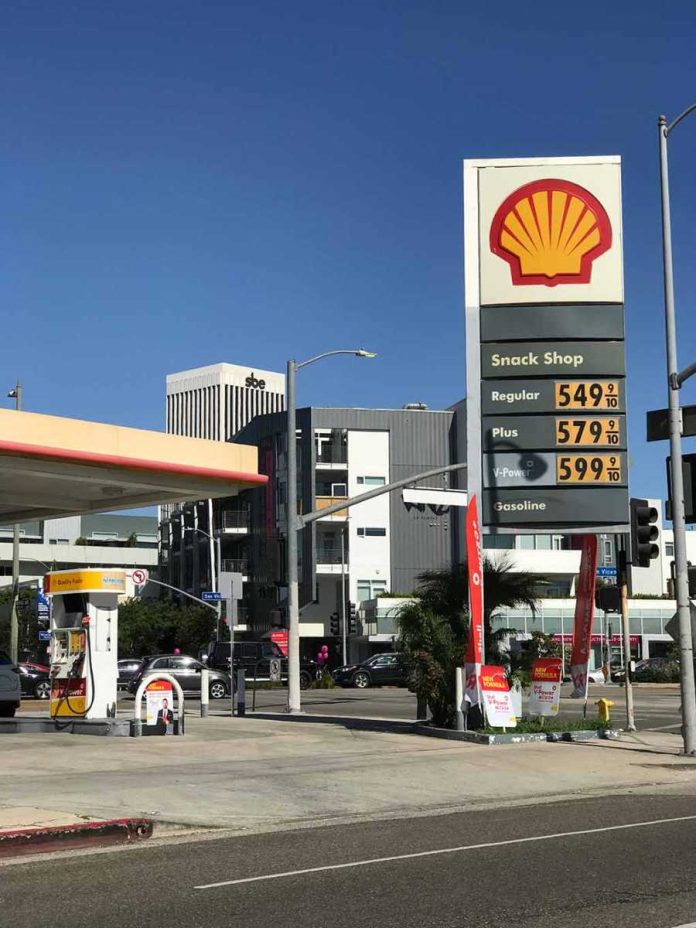
Al Jazeera reported that U.S. gasoline rose from under $3 before the war to more than $4.27 by October 22, 2026. Higher fuel costs hit families, small businesses, and freight. Every extra dollar at the pump strains budgets already stretched by housing and food. When the Strait slows, tankers face delays and higher insurance, and crude prices rise. That cost shows up fast at gas stations. Voters then tell pollsters they feel squeezed, and candidates face the heat.
The Election Clock And The Price At The Pump
Reuters described the Strait as effectively shut to normal traffic since the war started, with ship flows reduced to a trickle. That timing ran straight into the final campaign weeks. Analysts and outlets said the conflict and fuel costs were shaping voter mood and the midterm agenda. The link from shipping to prices to politics is real, but it is not automatic. Many factors set pump prices, and the exact effect on votes is hard to prove with certainty.
The Council on Foreign Relations podcast discussed why the White House might cap escalation before the vote. Guests cited pain from oil prices and the risk that more fighting could trigger Iranian hits on Gulf energy sites, driving prices even higher. That view suggests both sides knew energy was leverage. The administration also faced a classic trade-off: act tough and risk a price spike, or hold fire and hope prices cool before ballots are cast.
How Strong Is The Evidence On Intent?
The Reuters account ties a political motive to unnamed senior officials, which makes it harder to verify independently. Iran’s public claim of a “new order” over shipping shows willingness to flex control, but it does not mention U.S. voters or midterms outright. The mine incident highlights danger in the Strait, but it does not prove central planning to sway U.S. elections. The pattern fits a pressure campaign, yet a direct, on-record command linking tactics to U.S. voting is not shown.
Still, the channel from Strait pressure to pump pain is well known. Research across many democracies finds oil price shocks often hurt incumbents at the polls, by squeezing consumption and stoking anger. That is why both right-leaning and left-leaning voters see a system that fails them. Higher energy costs punish commuters, truckers, and seniors on fixed incomes. When far-off chokepoints and closed-door talks move prices at home, people feel the game is rigged by distant power, not public consent.
What To Watch Next
Watch for records or testimony that identify the officials behind the Reuters claim and detail the intelligence behind it. Look for maritime incident reports that attribute mines or interdictions with clear evidence, and for shipping and insurance data that map the scale of disruption. Track daily fuel and crude prices against any new military steps, sanctions, or shipping changes. If price relief lags, the pressure on Washington—and on family budgets—will keep rising into the next legislative fights.
Sources:
pjmedia.com, cnn.com, ocregister.com, apnews.com, chathamhouse.org, iranintl.com, aljazeera.com