

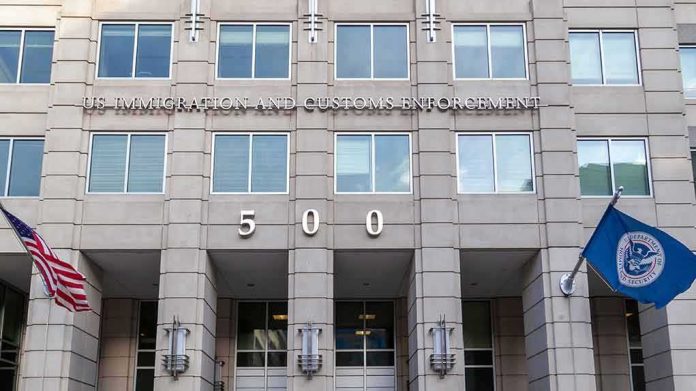
Amid protests and accusations, New Jersey Gov. Mikie Sherrill’s push to shutter a federal immigration facility looks more like partisan theater than proof of abuse—especially with little verified evidence beyond her own claims.
Story Snapshot
- Sherrill says state health officials were denied full access to inspect Delaney Hall, but has offered no independent report to verify alleged abuses [1].
- She tied her stance to anti-private-detention politics and called for the facility’s closure while joining protest optics [3][4].
- Republican critics argue she is siding with demonstrators and attacking enforcement without evidence of systemic violations [5].
- The public record remains thin on documents, inspections, or sworn testimony to substantiate her claims [1][4].
Sherrill’s Access Claim Hinges on Her Own Briefings, Not Released Evidence
Gov. Mikie Sherrill asserted that the New Jersey Department of Health and her team were denied full access to inspect Delaney Hall, a federal immigration detention site in Newark, and cited complaints about unsanitary conditions and food quality [1]. She framed the issue as constitutional rights and humane treatment while demanding transparency. However, she has not produced inspection reports, denial letters, photos, or medical findings to corroborate those conditions, leaving her allegations largely unverified in the public domain [1].
Sherrill also referenced due process concerns, including a claim that a judge handled a high volume of cases in a single day, but she did not present the underlying court records or explain how that figure directly proves systemic violations at Delaney Hall [1]. Without facility logs, grievance data, or independent audits, restricted access—while a valid transparency complaint—does not itself establish mistreatment. The evidentiary gap limits the strength of her case and invites doubts about motive and timing among enforcement-focused voters [1].
Policy Posture Extends Beyond Oversight to Anti-Detention Politics
Sherrill’s remarks go beyond an access dispute and align with a broader ideological position against private detention centers, including a call to close Delaney Hall outright [3][4]. She criticized federal immigration enforcement’s role at the site while positioning herself as a defender of detainees’ rights. That framing, while resonant with progressive activists, gives opponents a basis to say her actions target enforcement capacity rather than specific, documented violations inside the facility [3][4].
Public appearances reinforced that perception. Coverage shows Sherrill engaging around a Memorial Day protest at Delaney Hall, which Republicans cite to argue she is amplifying activist optics over document-based oversight [5]. Former immigration officials and Republican lawmakers pushed back, asserting that Immigration and Customs Enforcement standards are defensible and warning that politicizing detention undermines public safety. Those critiques rely on the absence of released, independent evidence from Sherrill to substantiate her allegations [5].
Protests, “Protected Zones,” and the Public-Safety Narrative
Sherrill’s team emphasized public order measures near Delaney Hall, describing designated protest zones and heightened security management as necessary steps to reduce harm and keep demonstrations under control [1]. That message attempts to balance protest activity with public safety. Yet incidents outside the facility, including reported arrests during clashes, fueled criticism that state leaders tolerated disruptive activism while attacking federal enforcement professionals working under national immigration law [4].
NJ Gov. Mikie Sherrill finally calls for a "peaceful protest zone" outside ICE facility after nearly a week of violent clashes—only after letting tensions spiral. Critics say she let it burn for political effect… #Immigration #ICE #NewJersey #Politicshttps://t.co/Be0TFAvcR1
— @GlobalRightWatch (@AutonomusRepost) May 29, 2026
Conservatives view this as part of a recurring pattern: claims of secrecy and abuse surface without immediate documentation, while politicians opposed to detention steer events toward symbolic conflict. In that environment, the standard for credibility is simple: produce records. Absent inspection access logs, food and sanitation audits, or sworn detainee declarations, calls to close facilities look less like targeted reform and more like an ideological campaign against immigration enforcement itself [1][4][5].
What Documented Proof Would Resolve This Dispute
Concrete records would clarify the facts. Facility-level health and sanitation inspection findings, formal correspondence confirming access denials, visitor logs, meal and medical complaint logs, and independent expert assessments would either validate Sherrill’s claims or undercut them. Until then, the clearest verified elements are her statements, her opposition to private detention, her engagement around protests, and the forceful rebuttals from Republican officials and former enforcement leaders disputing her narrative [1][3][4][5].
From a rule-of-law perspective, Americans deserve both secure borders and humane detention. Accountability requires evidence. If conditions are truly unsafe or unconstitutional, documented findings should compel swift remedies. If not, elected leaders should stop undermining officers doing difficult work amid a still-tense migration environment. Transparency, not theatrics, should guide decisions that affect public safety, taxpayer dollars, and respect for the Constitution [1][4][5].
Sources:
[1] Web – Mikie Sherrill Tries a Desperate Pivot After Coddling NJ Anti-ICE …
[3] YouTube – NJ Governor-elect Mikie Sherrill on the future of the Democratic party
[4] Web – Sherrill’s first 100 days – POLITICO
[5] Web – NJ governor’s race: What are Rep. Mikie Sherrill’s policies?