

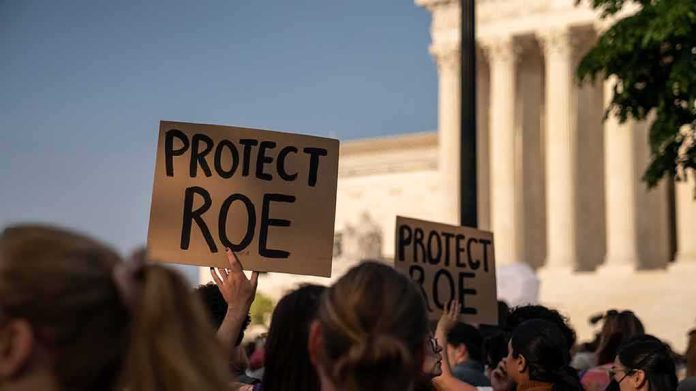
A single fake story about an ICE arrest helped light the fuse on real American anger and street violence.
Story Snapshot
- A viral claim that ICE arrested a mom buying diapers was false; the suspect was wanted for violent assault.
- Fact-checkers have debunked multiple “riot” and “brutal raid” clips that were old footage or AI-generated.
- Misleading ICE videos have fueled real protests and riots by playing on deep fears about government power.
- Both immigration critics and defenders are being manipulated by outrage content that hides what really happened.
The diaper arrest story that helped spark riots
According to reporting cited by Townhall, the flashpoint story that spread across social media claimed Immigration and Customs Enforcement agents grabbed an illegal immigrant in a store while she tried to buy diapers for her baby. The story framed the arrest as cruel and random, feeding long-held fears about families torn apart by immigration raids. People shared it fast, with many users calling it proof that the federal government had lost all sense of basic decency and fairness.
A later investigation found that core details of the diaper story were wrong. The person arrested was not taken over diapers but was wanted in connection with a violent domestic assault, a serious crime that had triggered the warrant. That fact did not erase concerns about how immigration laws work, but it changed the nature of the case from a simple shopping trip to a criminal enforcement action. The original narrative continued to spread anyway, even after it was debunked.
Old protest footage and foreign clips recycled as fresh ICE chaos
While the diaper story was spreading, several dramatic “riot” videos supposedly tied to recent ICE actions also went viral, but many turned out to be recycled clips. A widely shared video of police cars burning in Los Angeles was pushed as proof the city had become a war zone after new immigration raids. Fact-checkers traced that footage back to 2020 protests following the killing of George Floyd, not to current immigration demonstrations. The same images had been reused again and again to inflame new fights.
Other clips were not even from the United States. One viral video claimed to show New Yorkers hurling snowballs at Immigration and Customs Enforcement officers in winter streets, suggesting locals were attacking federal agents. News outlets compared uniforms, buildings, and background signs and matched the footage to protests in Moscow in January 2021, when crowds confronted Russian riot police over the jailing of opposition leader Alexei Navalny. Social media posts still labeled it “New York vs. ICE,” turning a Russian scene into American outrage bait.
AI-generated ICE raids and fake confrontations
Beyond miscaptioned real footage, a wave of fully synthetic videos has targeted immigration enforcement. Analysts at multiple fact-checking groups reviewed a set of viral clips showing dramatic workplace raids at Walmart, McDonald’s, Pizza Hut, a classroom, and more. They found the same pattern across all of them: artificial intelligence artifacts, uniform clip lengths, visual glitches, and even watermarks pointing to generative tools. The verdict was clear. These specific ICE raid videos were fabricated, not recordings of real events.
Other investigations examined clips that supposedly showed Immigration and Customs Enforcement officers being arrested by local police or confronting students at schools and colleges. Reviewers noticed nonsense text on signs, distorted logos, and strange robotic movements in the figures on screen, all signs of synthetic media. Platforms like TikTok even flagged some posts as containing AI content. Still, the videos raced through feeds, used by different sides either to brand officers as monsters or to paint protesters as violent mobs.
How misinfo feeds distrust of a government many already doubt
These fake or twisted ICE stories land in a country where many people, left and right, already believe the federal government serves elites first. Immigration enforcement is one of the hottest flashpoints in that larger distrust. Conservatives see broken borders and crime. Liberals see families torn apart and discrimination. Both sides see powerful agencies acting with little accountability. When a story like the diaper arrest goes viral, it plugs straight into that anger and fear.
Fact-checkers stress that not every ICE video is fake; some evidence of rough tactics and real clashes is verified. But they also warn that a steady stream of rage clips are miscaptioned, recycled, or AI-generated, and they travel much faster than corrections. Each misleading story makes it harder for citizens to know what their government is actually doing. It becomes easier for officials to dismiss all criticism as “fake,” and easier for activists to dismiss all enforcement as “abuse,” pushing the country further from honest debate.
What this episode shows about power, media, and the deep state fear
The truth about the viral ICE diaper story shows how fast a distorted claim can move policy debates and street protests. In this case, a criminal arrest was turned into a symbol of heartless government overreach and helped justify riots that damaged local communities. At the same time, some officials have shared scary protest clips out of context, using old or unrelated footage to push their own narratives about chaos and crime. Both moves play the public.
For many Americans, this pattern confirms their worst suspicions: someone is always steering the story. Engagement-hungry accounts pump out AI raids. Activists recirculate dramatic old clips. Government agencies highlight the scenes that fit their talking points and skip the rest. People who already feel the system is rigged see yet another reason not to trust what they are told. That shared frustration is real, and these ICE videos—fake, recycled, and sometimes true—are now one of the main ways it is being fueled.
Sources:
townhall.com, newsweek.com, washingtonpost.com, globalnation.inquirer.net, ktnv.com, france24.com, factcheck.afp.com