

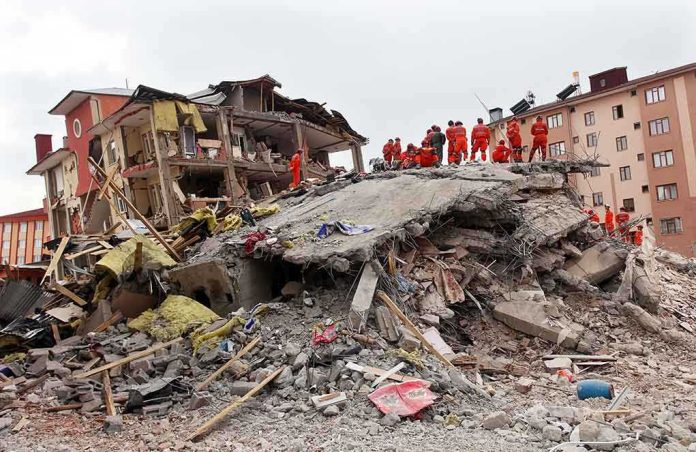
Back-to-back mega-quakes rocked Venezuela as rescue crews race the clock and conflicting reports cloud the true toll.
Story Snapshot
- Two powerful quakes, magnitudes 7.2 and 7.5, struck northern Venezuela minutes apart [6][7].
- United States Geological Survey confirmed the 7.5 mainshock west of Caracas at shallow depth [6].
- Early media said casualties were unconfirmed, while later reports cite rising deaths and mass rescues [3][12].
- Tsunami alerts followed initial shaking; officials warn aftershocks could worsen damage [3][15].
Confirmed Seismic Facts From United States Geological Survey
United States Geological Survey reported a magnitude 7.5 earthquake on June 24, centered southwest of Morón, west of Caracas. The agency listed a depth near 10 kilometers and labeled it the mainshock in a close pair, with another large event seconds before. The shallow depth and proximity to major cities raise risk for strong shaking. These details are firm and reviewed by scientists, giving a reliable base for response planning and public warnings [6].
Social posts and local clips discussed a magnitude 7.2 event nearly at the same time. That aligns with the United States Geological Survey note of a double event, which makes rescue harder and damage more likely. People felt shaking across the north coast and inland valleys. Transport lines stopped. Cell networks faltered. Power flickered in several districts. All of that fits how strong, shallow quakes hit older buildings and crowded blocks in the region [7].
Tsunami Alerts, Aftershocks, And What Comes Next
Television coverage reported tsunami alerts after the first big shock. That alert posture made sense with strong offshore or near-coast motion. No major tsunami damage was confirmed in those early hours, but alerts alone can jam roads and slow ambulances. Officials and aid groups also warned of aftershocks. These can push cracked buildings over, raise landslide risk, and injure rescuers or trapped survivors during the first seventy-two hours [3][15].
Rescue plans now focus on search teams, field hospitals, and safe water. Crews need fuel, generators, and radios. Ports and airports must stage heavy gear for rubble work. Clear chains of command help move supplies fast. Families need shelters away from damaged high-rises. As night falls, lighting towers and drones can speed searches. Every hour matters after a collapse, especially in dense neighborhoods along the coast and west of the capital.
Conflicting Early Reports On Casualties And Damage
Some outlets first said no casualties were confirmed soon after the shaking. That was common in the first rush, when phones were down and officials had partial views. As day broke, other reports described rising deaths, injuries, and people unaccounted for as rescue calls poured in. Live updates highlighted collapsed structures, blocked roads, and overwhelmed clinics in hard-hit zones, including coastal areas tied to the capital’s lifelines [12][13].
Reuters reporting described frantic rescues and fears the toll would grow as crews reached cut-off districts and high-rise corridors. The picture remained fluid, and totals varied by source and hour. What seems clear is that the double event and shallow depths raised the stakes for older or poorly enforced structures. That risk track matches what engineers warn about in the region’s building stock and soil conditions under strong motion [11].
Why This Matters For Americans: Energy, Aid, And Security
Venezuela sits on vast oil reserves that flow through global markets. Shocks near ports, pipelines, and refineries can squeeze supply and nudge prices at our pumps. Americans already carry high energy costs from years of bad policy and undersupply. Any hit to output or shipping lanes can spike prices again, punishing working families and small businesses here at home. Stable supply chains matter, and disasters in key producers ripple across our economy.
Two strong earthquakes have devastated parts of Venezuela, with La Guaira and Greater Caracas among the hardest hit. The Venezuelan Red Cross is responding. The @IFRC has launched a CHF 50 million Emergency Appeal. Urgent support is needed. https://t.co/F72t4LIWuR
— Dylan Winder, IFRC (@DylanWinderIFRC) June 26, 2026
The United States also leads in disaster response. The Trump administration can cut red tape, surge airlift, and push private partners to deliver fuel, water systems, and medical kits fast. That is smart policy and moral duty. It also blocks hostile regimes from using chaos to gain influence. Clear eyes and firm steps now protect our interests, help innocent people, and show what American leadership looks like when minutes count.
What To Watch: Data You Can Trust
Track updates from the United States Geological Survey for aftershock forecasts and shaking maps. Compare casualty figures only when tied to named officials or on-the-ground counts. Be wary of viral posts that skip sources or inflate numbers. Look for photos, geotags, and timestamps. Follow logistics notes from recognized relief groups as they open corridors and confirm needs like trauma care, blood supply, and shelter capacity. Solid facts guide smart giving and safer travel plans [6][15].
Bottom Line For Readers
Two severe earthquakes hit northern Venezuela in quick succession. The science is solid on magnitudes, location, and shallow depths. Early casualty reports conflicted, but serious damage and hard rescues are underway. Expect numbers to change as crews reach cut-off areas. Watch reliable channels. Pray for the victims. Stay alert to energy market shocks. And expect decisive American help that reflects our values: protect life, cut waste, and get the job done without political games [6][11][12].
Sources:
[3] Web – Magnitude 7.1 Earthquake Registered in Venezuela – NAMPA
[6] Web – Magnitude 7.1 earthquake strikes Venezuela – Global News
[7] Web – M 7.5 – 16 km SW of Morón, Venezuela – Earthquake Hazards Program
[11] Web – 2026 Venezuela earthquakes – Wikipedia
[12] Web – Venezuela races to rescue hundreds trapped in rubble after major …
[13] Web – Venezuela earthquakes updates: At least 188 killed, 1500 injured
[15] YouTube – Venezuela Earthquake LIVE | 7.5 Magnitude Quake Rocks Caracas