

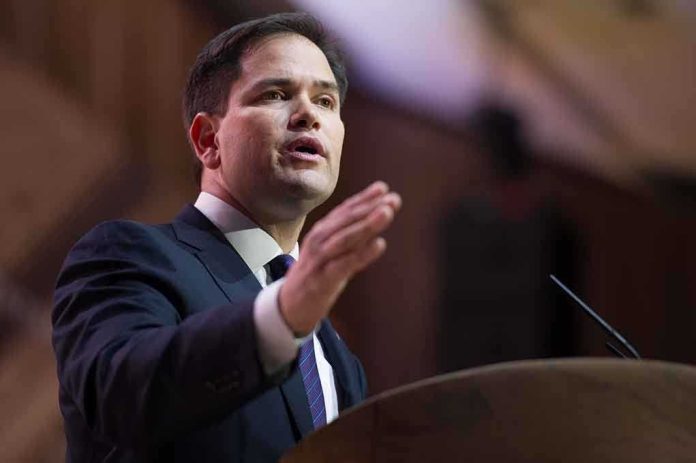
Could a meme about Marco Rubio turning into Cuba’s next leader hold a deeper message for U.S.-Cuba relations?
Story Snapshot
- Trump’s repost of Rubio becoming Cuba’s leader sparks debate.
- The context: heightened tensions post-Maduro’s capture.
- Analyzing the meme’s impact on U.S. foreign policy rhetoric.
- Potential implications for U.S.-Cuba diplomatic relations.
Trump’s Provocative Repost
Donald Trump recently stirred controversy by reposting a meme suggesting Marco Rubio could become the next president of Cuba. This social media moment, while humorous on its surface, emerges amid serious geopolitical tensions following a U.S. operation that captured Venezuelan leader Nicolás Maduro. The meme itself, originating from a small Truth Social account, was elevated to a global discussion point when amplified by Trump, illustrating the power of online jokes transforming into perceived policy signals.
Trump Reposts Suggestion That Rubio Become Next Cuba Leader https://t.co/78h8MtLyzz via @BarronsOnline
— Patrick (@artistpatrick) January 11, 2026
The repost came shortly after Trump’s administration warned that the flow of Venezuelan oil and funds to Cuba would cease, urging Havana to negotiate before it’s too late. While media outlets quickly labeled the Rubio suggestion as a joke, the incident highlights the blurred lines between satirical content and foreign policy, particularly when tensions in the region are high.
U.S.-Cuba Relations in Context
Hostile since 1959, U.S.-Cuba relations have experienced periodic thawing and retightening over the decades. The Trump administration’s tenure saw a return to stricter sanctions and harsher rhetoric toward both Cuba and Venezuela. The recent military operation in Caracas, which resulted in Maduro’s capture and casualties among Cuban security personnel, intensified U.S.-Cuba tensions. Trump’s threat to cut off Venezuelan support to Cuba serves as a direct challenge to Havana, exacerbating existing economic vulnerabilities.
Marco Rubio, an influential figure in Republican politics, has long advocated for democratic change in Cuba. His Cuban immigrant background and hardline stance against the Havana regime add symbolic weight to the meme suggesting his leadership of Cuba, even if it remains a satirical notion.
The Role of Social Media and Memes
In an era where memes and social media drive public discourse, Trump’s repost showcases how digital culture can intersect with real-world diplomacy. Rubio’s multifaceted roles in the administration have already fueled online jokes about his expanding portfolio. However, the Rubio-Cuba meme, when shared by the President, acquires a veneer of seriousness that complicates international perceptions and policy interpretations.
While Rubio himself has engaged with the humor surrounding his roles, the current situation underscores the risks of casual online remarks turning into geopolitical talking points. The incident serves as a case study in how leaders’ social media activities can influence diplomatic narratives and potentially alter foreign relations.
Potential Implications for U.S.-Cuba Diplomacy
The Rubio meme, combined with Trump’s oil and money cutoff threat, may further strain U.S.-Cuba relations. While the suggestion remains unofficial and humorous, the underlying message of coercion is clear. Cuba’s economic dependency on Venezuelan support means any disruption could exacerbate its internal crises, possibly pushing it toward other patrons like Russia or China.
Regionally, the incident may signal a more assertive U.S. posture, raising concerns about potential interventions in Latin America. Domestically, it reinforces Trump’s image among supporters as tough on communist regimes, aligning with Cuban-American and conservative sentiments. However, the fusion of memes and policy poses challenges in maintaining clear diplomatic communication and managing international perceptions.