

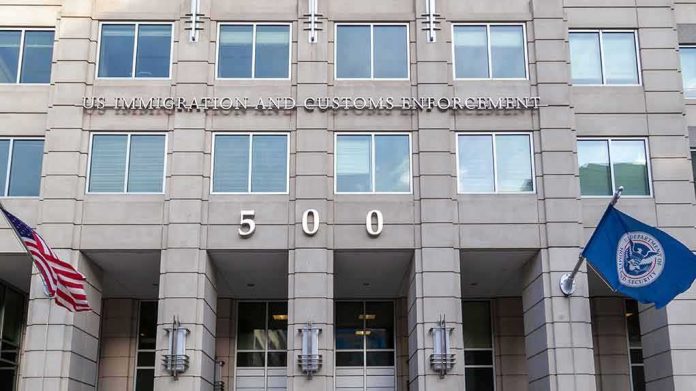
The fiercest fight over immigration enforcement in New York this year is not really about whether ICE agents showed up in Freeport — they did, repeatedly — but about what to call what happened when they arrived, because that single word choice determines whether the public sees law enforcement doing its job or a community under siege.
Key Points
- ICE confirmed and local officials verified multiple enforcement operations in Freeport and across Nassau County through 2025, part of a broader Long Island and New York City surge.
- ICE describes these as targeted, intelligence-driven operations aimed at criminal aliens, fugitives, and re-entrants — not indiscriminate sweeps.
- Freeport residents, advocates, and some local officials describe a different on-the-ground reality: early-morning apartment checks, bus-stop stakeouts, and fear extending well beyond anyone with a criminal record.
- Both framings can be true simultaneously, because “targeted” operations routinely produce collateral arrests of bystanders who were never on any list.
- The dispute reflects a national pattern that predates Freeport and will outlast this particular news cycle, making it a template for understanding future ICE activity anywhere.
What Actually Happened in Freeport
Village officials, not just federal press releases, confirmed the core fact: ICE conducted enforcement operations in Freeport during 2025, part of a wider push across Nassau County. The Freeport village mayor told News 12 that ICE “carried out operations there too,” corroborating similar activity confirmed by the Hempstead Village mayor the same week. A Nassau County lawmaker separately confirmed to Patch that ICE activity had escalated in the area, specifically citing Freeport as a site of agent presence. Independent sighting logs maintained by immigrant-advocacy groups place agents on Babylon Turnpike in Freeport as early as July, taking individuals into custody in full view of neighbors. None of this is seriously contested; the disagreement begins with interpretation, not observation.
Local reporting captured the human texture of those weeks: residents describing agents staking out bus stops, conducting early-morning checks in apartment buildings, and — according to community advocate accounts cited in local coverage — appearing to target individuals based on racial profiling rather than any individualized suspicion. One advocate quoted in that reporting characterized the people swept up as “hardworking mom and pops, neighbors and students,” a description explicitly at odds with ICE’s own stated criteria for who gets arrested.
How ICE Enforcement Operations Actually Work
To weigh the competing accounts fairly, it helps to understand the mechanism. ICE’s Enforcement and Removal Operations division runs two broad categories of activity: routine “fugitive operations,” which pursue people who already have final removal orders or open immigration warrants, and broader “surge” operations announced publicly, often timed to specific metro areas. In its own fact sheet on a New York-area operation, ICE stated plainly that its teams conduct “routine, daily targeted operations” and that the agency “does not conduct sweeps, checkpoints or raids that target aliens indiscriminately”. That same operation yielded 41 arrests across the five boroughs and surrounding areas, all described as criminal aliens, illegal re-entrants, or immigration fugitives.
The numbers across 2025 show a clear escalation in the New York region: 206 arrests during an “enhanced” operation in early April, 82 more over a five-day stretch ending in late September across New York City, the Hudson Valley, and Long Island, and 54 arrests in a separate Hudson Valley and metro sweep. In a CBS New York report offering rare embedded access, Assistant Field Office Director Brian Flanagan said ICE had detained more than 65,000 people nationwide that year, nearly double the prior year’s pace, and framed the mission explicitly as interior enforcement following tightened border controls. Flanagan also acknowledged that mistaken arrests do occur and that agents mask their identities because of doxing and death threats against them — a detail that cuts against any simple narrative of an agency operating without friction or error.
Where the Genuine Disagreement Lies
This is where the story stops being a factual dispute and becomes a definitional one. ICE’s insistence that operations are “targeted” is not empty rhetoric — arrest data consistently names individuals with prior convictions, open warrants, or gang affiliations, including MS-13 and Trinitarios members swept up in a parallel 42-person Nassau County gang crackdown that combined local police work with ICE deportation proceedings. Yet targeting a list does not prevent collateral arrests of people who happen to be present when agents move through an apartment complex, a workplace, or a commercial strip like Manhattan’s Canal Street, where an October operation aimed at counterfeit-goods sellers produced nine arrests but also a chaotic confrontation with bystanders and protesters who saw agents in Homeland Security Investigations jackets stopping vendors indiscriminately. New York City Hall and multiple lawmakers publicly demanded an accounting of that operation within a day of it occurring.
The Freeport pattern mirrors that tension. ICE’s public materials describe precision; residents describe dragnet-like fear that has changed daily routines — parents avoiding bus stops, families keeping children home, whole blocks going quiet during known enforcement windows. An immigration attorney representing detainees held in Long Island cases went further in on-record remarks, calling the broader effort “a propaganda project to dehumanize immigrants” and criticizing detention conditions including inadequate food and clothing changes for people held far from home. That is a serious, named allegation, not an anonymous rumor, and it deserves to be weighed alongside ICE’s own statistics rather than dismissed. Neither side’s account requires the other to be lying; a genuinely targeted list can still produce a neighborhood-wide chilling effect when enforcement is frequent, visible, and conducted without advance public notice.
The Broader Pattern This Fits
Freeport is not an isolated case study — it is one node in a documented national pattern. Wherever ICE has surged operations in 2025, the same split has followed: official releases citing arrest totals and criminal histories, paired with local reporting on fear, racial profiling allegations, and collateral detentions of U.S. citizens and green-card holders caught in traffic stops. New York’s attorney general opened a public portal specifically to collect photos and video of ICE activity from residents, an institutional acknowledgment that official accounts and ground-level accounts were diverging enough to warrant independent documentation. That step doesn’t resolve the underlying dispute, but it does confirm that state officials, not just advocacy groups, saw a documentation gap worth closing.
What It Means Going Forward
Communities like Freeport should expect this cycle to repeat rather than resolve. ICE’s operational tempo in the New York metro area has only increased through 2025, and the agency’s own numbers suggest no near-term pullback. The durable lesson for residents, local officials, and journalists alike is to separate two questions that get collapsed into one: was this operation targeted at people with existing legal exposure, and did its execution nonetheless sweep up others who were not. Both can be answered honestly with the available record, and doing so — rather than picking a single word, raid or operation, and building a worldview around it — is the only way to keep the debate tethered to evidence rather than to whichever framing arrived first.
Sources:
youtube.com, ice.gov, bronx.news12.com, theweek.in, military.com, patch.com, deportationtracker.live, thehill.com