

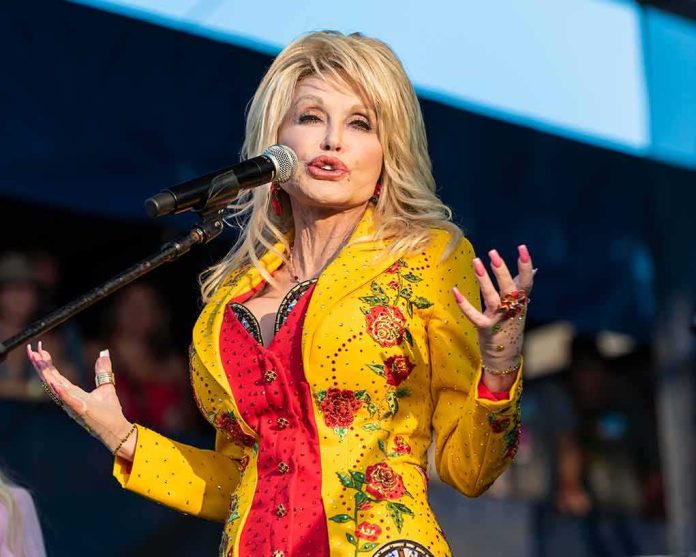
Dolly Parton’s family and representatives said she died at age 80 in Nashville after a brief battle with cancer, a cause later confirmed in on-record statements from her publicist; the arc of reporting that followed shows how a single, sourced family narrative becomes the definitive public record when no clinical details are released.
The Short Version
- Parton died at 80 in Nashville; her family announced the death on Aug. 25, 2026.
- Her publicist said she died after a brief battle with cancer; no cancer type was disclosed.
- Reports said she was surrounded by loved ones at Vanderbilt-Ingram Cancer Center.
- Early headlines varied on whether a cause had been given; within hours, outlets converged on cancer.
What was announced, by whom, and when
The core facts are straightforward and well sourced. On Aug. 25, 2026, Dolly Parton’s family announced that she had died at age 80. Major outlets reported the family announcement the same day. A widely circulated video statement by a nephew speaking for the Parton and Owens families informed fans that the news came at Parton’s request for how her passing should be shared, consistent with her long-standing preference to set her own terms in public moments. Subsequent same-day reporting attributed the cause of death—“a brief battle with cancer”—to her publicist, Marcel Pariseau, and situated her death in Nashville.
Location and setting details also aligned across reputable local and national desks. Reporting in Tennessee, drawing on representatives’ statements, said she died surrounded by loved ones at Vanderbilt-Ingram Cancer Center in Nashville, information that was echoed in national broadcast and digital coverage in the hours that followed. This combination—named family figures delivering the initial message and a publicist on record with cause and setting—is the standard chain through which celebrity deaths enter the historical record in the absence of medical documentation.
How the “brief battle with cancer” framing became definitive
In the first wave, one major wire noted that no cause had been disclosed; within the next cycle of updates, that same ecosystem of outlets incorporated the publicist’s attribution to cancer, and the phrasing converged quickly across headlines and ledes. That progression is typical of breaking obituaries that begin with family-confirmed death, then add cause as an attributed detail once a representative goes on the record. The phrase itself is nonspecific—a summary of timing and character rather than a diagnosis. It does not name a cancer type, stage, course of treatment, or whether cancer was the immediate cause versus an underlying condition. But it represents what the family chose to make public, and reputable outlets appropriately treated it as such.
The precision that does exist sits in the attributions. The cause—cancer—was tied to Parton’s publicist on the record; the place—Vanderbilt-Ingram Cancer Center—and the detail that she was surrounded by loved ones were tied to representatives’ statements. Those are the load-bearing facts the coverage carried forward, and absent contrary evidence, they stand on solid ground.
Context: health disclosures and timing
Parton had recently acknowledged health concerns in a public interview, creating context—but not a diagnosis—for what followed. Days before her death, she referenced issues she had long neglected while caring for her husband, a signal to fans that she was confronting a period of personal medical attention after decades of relentless work. That candid admission set a frame that made the later cancer statement more comprehensible to the public without inviting speculation about specifics her family chose not to share.
The reporting cadence also reflected the dynamics of legacy media verification. Family-posted video, quickly amplified, set the initial fact pattern of her death; named-outlet follow-on coverage supplied the on-record cause and place, sharpening the historical record while keeping to the family’s boundaries on detail. The early moment in which at least one wire said cause was not disclosed does not contradict the later, attributed cancer statement; it documents the sequence in which facts moved from private to public.
Why attribution chains matter in celebrity obituaries
Deaths of figures at Parton’s level of prominence are both intensely personal and, inevitably, public events. In the absence of medical records—documents that are typically private even after death—the authoritative version rests on named, on-record statements by family and formal representatives. That is why careful outlets describe cause and context as “according to” the publicist or family, and why matching language across multiple independent newsrooms meaningfully reduces the risk of an isolated misstatement becoming canon. Here, the family’s announcement established the fact of death; the publicist’s attribution established the cause; local reporting with strong sourcing placed the setting at a major regional cancer center in Nashville.
The approach also aligns with how desk editors evaluate obituary claims: the stronger the sourcing—named spokesperson, on-record quotes, consistent details across reputable outlets—the more confidently they state those facts. When a claim is precise, surprising, or numerically specific, editors seek a second, equally authoritative source before elevating it. In this case, the cause was simple and representative-sourced, and the setting was consistent with the family’s Nashville base and Parton’s deep ties to Vanderbilt’s medical community.
The lasting record
What endures in the public file is clear. Dolly Parton died at 80 in Nashville. Her family announced her death. Her publicist said she died after a brief battle with cancer. Representatives said she was surrounded by loved ones at Vanderbilt-Ingram Cancer Center. Those statements, repeated consistently by national and local outlets and tied to named sources, form the backbone of an accurate, respectful obituary that honors the privacy choices of a family and the public’s need to understand what happened.
Sources:
thegatewaypundit.com, npr.org, wsmv.com, theguardian.com, nytimes.com, reuters.com