

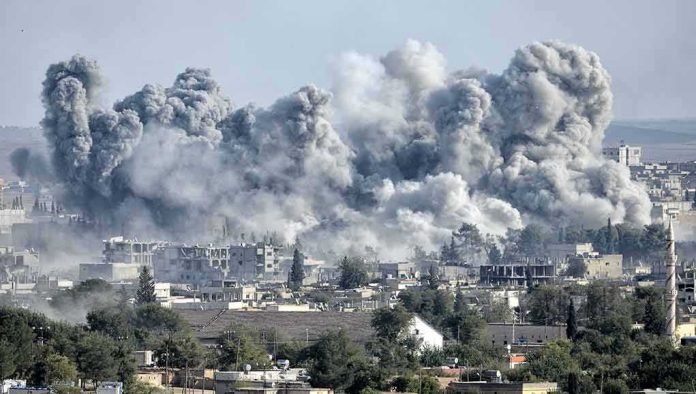
Iran’s latest missile and drone barrage pushed war into Kuwaiti skies, testing U.S. resolve and Gulf sovereignty at once.
Story Snapshot
- Kuwait says Iranian strikes violated its sovereignty and endangered civilians and vital facilities.
- Iran’s Guard claimed it targeted U.S.-linked sites on Kuwaiti soil in retaliation for U.S. action.
- Kuwait’s air defenses reported intercepting hostile missiles and drones over its territory.
- Officials in Kuwait invoked the United Nations Charter right to self-defense under Article 51.
What Kuwait Says Happened
Kuwait’s government said Iranian attacks struck at its territory and airspace. Officials called the strikes a flagrant violation of sovereignty and international law. Leaders warned the attacks threatened civilians and vital sites. The Foreign Ministry cited breaches of the United Nations Charter and a specific Security Council resolution. The cabinet affirmed Kuwait’s full right to self-defense under Article 51. These statements frame the event as an attack on Kuwait itself, not a narrow strike on foreign tenants.
Kuwait’s military reported active air defense engagements. Commanders said systems intercepted hostile missiles and drones. Residents heard explosions that the army linked to interception events, not confirmed impacts. These details show an attack wave reached Kuwaiti airspace and triggered real defenses. They do not, by themselves, prove which targets Iran intended to hit on the ground. The focus remained on sovereignty and safety, consistent with the government’s firm diplomatic line.
What Iran Claims It Targeted
Iran’s Islamic Revolutionary Guard Corps said it struck U.S. infrastructure in Kuwait. Its statements, carried by state-aligned and international outlets, named U.S.-linked bases and assets. Reporting described aircraft shelters, satellite systems, and equipment storage tied to American forces. Tehran cast the operation as retaliation after U.S. military strikes days earlier. These claims give specific locations and categories, which makes them testable, but they remain Iranian assertions absent outside proof.
Independent confirmation of damage to U.S. facilities in Kuwait has not appeared in the cited record. No publicly quoted United States statements in this package verify hits on American assets there. Kuwait’s official messaging did not name U.S. targets. Instead, it condemned repeated Iranian attacks on its territory. That creates a gap between Iran’s target list and Kuwait’s legal framing. Until verified images, logs, or assessments surface, the extent of physical damage stays unclear.
Why This Flashpoint Matters Now
This clash fits a wider cycle where Iran answers U.S. actions by firing across third-country territory. Gulf states then bear the risk, even when they are not the claimed aim. Kuwait hosts sites used by U.S. forces, which raises the stakes each time missiles fly. The pattern strains air defenses, scares civilians, and shakes energy markets. It also deepens doubts that regional leaders can keep people safe while bigger powers trade blows overhead.
Iran hosts funeral for victims reportedly killed by U.S. air strike during wedding, fires on Kuwait https://t.co/Q1sky7IVPG
— The Globe and Mail (@globeandmail) September 3, 2026
Americans across the spectrum see a familiar problem here. Leaders talk deterrence and deals, but ordinary people live with the fallout. Conservatives see danger from a long, costly standoff that never ends. Liberals see civilians and critical services put at risk while great powers posture. Both worry that officials hide facts or spin blame. Clear answers would help: satellite photos, debris forensics, base incident logs, and named damage reports could settle key claims without spin.
What To Watch Next
Watch for formal damage assessments from Kuwait and the United States. Look for commercial satellite imagery of Ali al-Salem and Ahmad al-Jaber air bases. Monitor any detailed Kuwaiti air-defense reports that map inbound tracks and intended targets. Track United Nations responses to Kuwait’s sovereignty claims and self-defense language. If verified hits on U.S.-linked assets emerge, expect tighter base security and new red lines. If not, expect continued ambiguity that fuels the next round.
Sources:
kuna.net.kw, iranintl.com, aa.com.tr, bbc.com, malaymail.com, wsj.com, tabnak.ir