

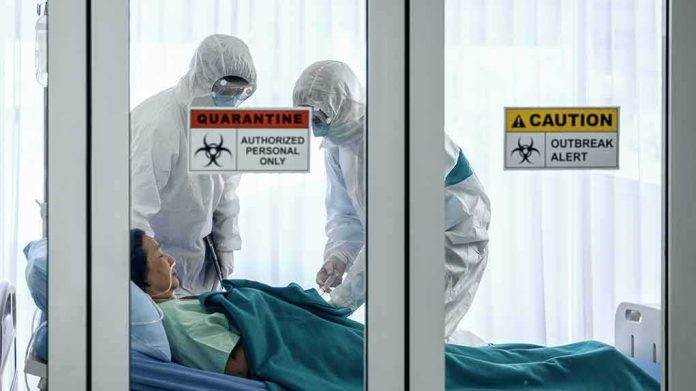
The fiercest disputes over COVID hospital care were never just about drugs or devices; they were about power—who set the rules under crisis, who explained them, who enforced them at the bedside, and whether those choices crossed the line from necessary triage into misconduct.
The Short Version
- Patients and clinicians raised serious allegations that some COVID-era hospital policies harmed patients or suppressed dissent; a handful progressed into formal investigations or litigation.
- Official clinical and ethical guidance during the pandemic consistently required individualized, shared decision-making and proportional infection control—not disease-status gatekeeping.
- The evidentiary record is uneven: abundant testimony versus fewer documentary findings; where documents exist, they carry more weight than anecdote.
- The enduring question is not whether errors occurred—they did—but whether specific institutions deviated from accepted crisis standards of care and transparency.
What “misconduct” means in a crisis—and why the definition matters
Accusing a hospital of abuse or misconduct is a high bar; in medicine, the standard is not perfect outcomes but whether decisions aligned with accepted guidance and the facts clinicians faced in real time. During surges, responsible bodies published clear touchstones: make holistic, individualized assessments; discuss goals of care with patients or surrogates; and escalate or withhold treatment based on likely benefit, not diagnosis labels or social judgments. These were not optional ideals. NICE’s rapid guideline, for example, instructs teams to base escalation on recovery likelihood and to document expectations and goals with patients and families—explicitly embedding shared decision-making into COVID care pathways. The Royal College of Physicians framed the same principle ethically and operationally: decisions should not be disease-specific gatekeeping, and accountability rests with identifiable, credible staff acting on evidence and agreed values.
At the same time, the World Health Organization’s living guideline codified severity-based treatment selection and isolation for transmission control—guardrails that legitimated cohorting and temporary service reconfiguration without granting license to ignore consent or communication. These texts are the yardstick for judging whether contested policies were necessary crisis responses or impermissible shortcuts that eroded patient rights.
The strongest claims are documented, not just described
Across the pandemic, public debate often outpaced discovery; families and clinicians told searing stories, while the most probative records—charts, incident logs, and internal directives—remained inside institutions. That asymmetry explains why a single documented episode can outweigh dozens of testimonies. Consider New York’s suit against Fulton Commons, a Long Island nursing facility. The Attorney General alleged the facility issued a false internal directive declaring there was no COVID-19 in the building, told staff not to discuss infections, sent misleading robocalls, and underreported COVID deaths by up to 45 percent—claims grounded in an investigation and filed complaint, not merely recollection. This is the type of fact pattern—concrete instructions, traceable communications, and numerical discrepancies—courts and regulators can adjudicate. It also shows what “misconduct” looks like on paper: suppression of risk communication and distortion of mortality data.
By contrast, high-profile forums such as Sen. Ron Johnson’s roundtable functioned as amplifiers for lived experience: patients and clinicians recounted isolation policies, treatment refusals, and perceived retaliation. Coverage described hundreds of submissions and stories of requests to avoid certain drugs being overridden, and allegations that unvaccinated patients faced barriers to care. These accounts deserve moral attention, but as evidence they are preliminary. Some could be validated against charts and orders; others may reflect the brutal constraints of surge medicine. The roundtable’s public framing as a venue for “real stories” was candid about this gap: it was not an adjudication; it was a record of claims.
How crisis standards actually worked on the ward
Three forces shaped bedside decisions. First, clinical severity triaged options. WHO’s guidance required early assessment of risk factors and disease stage, tied to specific interventions, and isolation of moderate disease to reduce in-hospital spread. Second, infection-control rules constrained family presence and transfer flexibility, often at acute emotional cost, but they did not negate informed consent; they required teams to communicate differently and document more precisely. Third, system-level surge management changed what “available” meant: national and provincial guidance authorized health systems to scale back non-urgent services to create capacity, and to coordinate mutual aid across sites. In such periods, “rigidity” may have signaled adherence to standardized order sets designed to prevent omission and conserve scarce resources, not indifference to individual preference—unless records show that clinicians failed to discuss, document, or revisit those choices when clinical trajectories changed, which would breach the very guidelines intended to govern crisis care.
None of this absolves errors. It clarifies the test. Where claims assert that teams refused to explain, suppressed second opinions, or ignored a patient’s advance directives, the question becomes whether documentation shows a holistic assessment and shared decisions—or whether protocols became de facto edicts. The burden shifts with the paper trail.
Where genuine disagreement lies—and how to weigh it
Several recurring allegations demand careful parsing. First, treatment selection disputes, particularly around antivirals or adjunctive therapies, often conflate disagreement with denial. If a therapy fell outside guideline recommendations at the time, a refusal is not ipso facto misconduct; it becomes misconduct if a hospital policy barred individualized consideration or concealed alternatives without clinical justification. NICE and WHO place clinicians under an affirmative duty to align therapy with severity and evolving evidence; departures require reasoned documentation.
Second, claims of discrimination against the unvaccinated are morally and legally distinct from infection-control stratification. Separating higher-risk or unvaccinated patients for cohorting is compatible with WHO policy; denying medically indicated care because of vaccination status would violate ethical guidance. Allegations that leadership endorsed blanket refusals demand records: triage memos, scheduling logs, or directives. Without them, the claim remains uncorroborated testimony; with them, it becomes actionable.
What accountability should look like now
Two forms of accountability endure. Prospective accountability means codifying crisis protocols that hardwire shared decision-making, documentation, and communication transparency—even during visitor restrictions—and auditing adherence in real time. Professional bodies have already provided the scaffolding; institutions should train to it, simulate it, and measure it. Retrospective accountability demands targeted investigations wherever there is specific, checkable evidence of suppression, misreporting, or systematic exclusion. The Fulton Commons case demonstrates that when investigators obtain internal directives and mortality data, they can distinguish necessary infection control from deceptive practice.
How patients and families can protect agency in a future surge
Preparation, not improvisation, preserves voice under duress. Patients should keep a current, signed advance directive and designate a reachable health-care proxy. Families should request that goals-of-care and major treatment decisions be documented and summarized during daily updates; NICE makes that documentation an explicit expectation, a fact worth citing when care teams are overstretched. When conflicts emerge, ask for the chain of escalation—charge nurse, attending physician, ethics consult—because crisis guidance anticipates collective decision-making and mutual aid, not isolated edicts. And when allegations rise to the level of misconduct, pursue the records: the medical chart, policy manuals in force during the admission, staffing logs. In this domain, paper speaks louder than memory—for everyone involved.
Sources:
yahoo.com, cavalierdaily.com, ganjingworld.com, ag.ny.gov, quinnemanuel.com, theguardian.com, childrenshealthdefense.org, law360.com, lawreview.uchicago.edu, topclassactions.com