

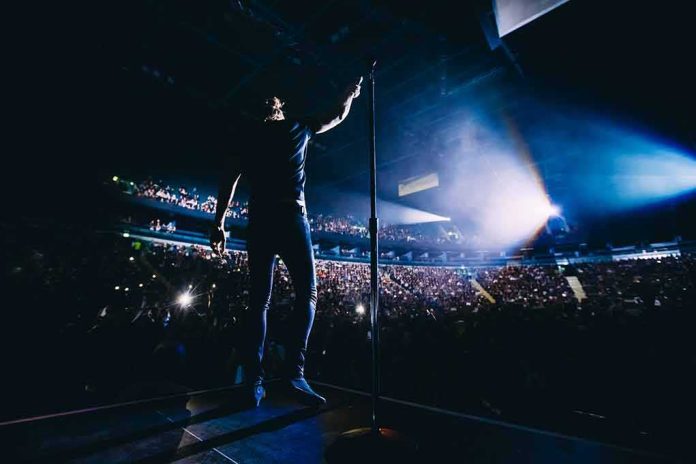
Jerry Seinfeld flipped a hostile protest into a punchline, then threatened to send the hecklers’ ticket money to Israel—and the crowd roared.
Story Snapshot
- Pro-Palestinian activists disrupted Seinfeld’s Chicago Theatre show; security removed them.
- Seinfeld answered with sharp sarcasm and vowed to donate their ticket cost to Israel.
- Clips ricocheted online, framing the stunt as a backfire that boosted Seinfeld’s narrative.
- Research shows disruptive protests grab attention but often spark backlash against the cause.
The Chicago flashpoint: who did what, and how it escalated
Protesters interrupted Jerry Seinfeld’s set at the Chicago Theatre, shouting about Gaza deaths and accusing him of backing genocide. Security moved to remove them as Seinfeld mocked the charges from the stage. He leaned into sarcasm—“It’s a genocide. I’m into it”—and then delivered the money line: he would find out the protester’s ticket price and send it to Israel. The crowd’s reaction favored Seinfeld, and the exchange surged online within hours.
Footage shows Seinfeld dancing as a protester was escorted out and quipping that the interruption had just helped raise funds for a Jewish person. Reports chronicled repeat disruptions and a steady rhythm of taunts answered by jokes before security cleared the aisle. The episode never became a policy debate because there was no time or format for it. It was a clash of slogans versus a professional comic’s timing—and timing wins on a stage.
What the protesters claimed, and what they did not prove
Activists asserted soaring casualty figures and said United States taxpayer money funded those deaths. They did not present sourcing or documentation in the moment. They linked Seinfeld to Israeli abuses by citing his public support for Israel and prior appearances where he criticized the Free Palestine movement. Those facts are established in coverage of his travel to Israel and campus remarks. They do not, by themselves, prove he endorses the killing of civilians or specific military actions.
From a persuasion standpoint, this choice of venue was risky. Ticketed shows create a natural constituency—paying customers—who want the act they bought. Disruptions can harden that audience against the message. Studies on disruptive protest show a pattern: more attention, more salience, but a measurable backlash against the tactics and sometimes the demand. The Chicago exchange followed that script. The clips lit up, yet the narrative favored the performer, not the protesters.
Seinfeld’s stance and why the counterpunch landed
Seinfeld has spoken in support of Israel since the October 7 terror attack and has criticized the Free Palestine slogan as a mask for anti-Jewish hostility. He has even compared that rhetoric to the Ku Klux Klan’s open prejudice. These are strong claims that draw fire, but they also explain his certainty on stage. When challenged, he did not hedge. He met accusation with ridicule and moral clarity, which many audience members and viewers read as confident and justified.
Jerry Seinfeld mocked anti-Israel agitators after they tried to hijack his Chicago show.
The disruption at the Chicago Theatre Friday came after activists shouted “genocide” accusations, and the Anti-War Committee Chicago said it organized the protest.https://t.co/SmddTGUOBt…
— Billy_Sitches (@Billy_Sitches) October 16, 2026
Commentators argued the protesters bought tickets to stage the disruption and only managed to boost Seinfeld’s line by revealing the tactic. Whether or not that motive can be fully proven from public records, the crowd calculus was simple: a live show was interrupted, the headliner answered, and security restored order. In a culture that values free speech and personal responsibility, the person with the mic who stays cool usually wins the room—and the clip.
What this means for protest, celebrity, and outcomes
Disruptive protest works best when the target is responsible for a policy lever. A comedian is not a policymaker. Hitting a celebrity stage guarantees reach, but it also hands narrative control to a skilled performer. Research on disruptive tactics backs the trade-off: attention goes up; support for the disruptors often goes down. If the goal is to move public opinion, swapping a facts-light chant for a viral roast is a bad bargain.
Sources:
foxnews.com, ibtimes.co.uk, abc11.com, newarab.com, worldisraelnews.com