

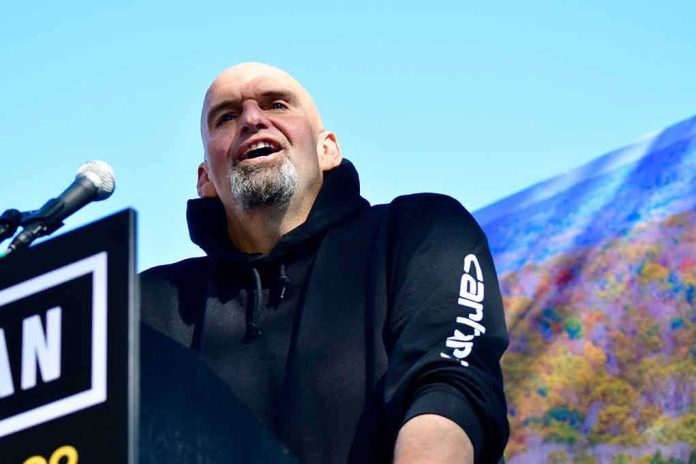
California gubernatorial candidate Steve Hilton promised every homeless encampment will be cleared statewide by December 31, 2027, pairing removals with recovery centers offering beds and treatment.
Story Snapshot
- Hilton set a firm 2027 deadline to clear all encampments, with local and state action phases.
- The plan centers on Homeless Recovery Centers that provide shelter, health care, and job training.
- Sunbreak Ranch in San Diego County is named as the prototype site for the model.
- Cost, capacity needs, and enforcement standards remain unspecified in public materials.
Hilton’s Timetable And Enforcement Sequence
Steve Hilton announced a two-step timeline at Sunbreak Ranch on October 17, 2026. He said local leaders should act by Labor Day 2027, with a final statewide deadline on December 31, 2027. He pledged to meet with mayors and county officials in his first month. He said public-camping bans would be enforced after suitable facilities open. He added that the state would step in if local governments fail to act by the deadlines.
Hilton first framed the promise earlier this year and repeated it at the San Diego event. He stated sidewalks and parks would be returned to residents, and that the state would ensure follow-through if cities stall. He also argued people cannot recover from addiction or mental illness while living on the street. He has used direct language online, writing in July that the cleanup would happen by the end of 2027 “one way or another”.
Recovery Centers And The Sunbreak Ranch Prototype
The campaign’s “Off the Streets and Back on Track” plan proposes statewide Homeless Recovery Centers. These centers would offer beds, meals, showers, medical and psychiatric care, addiction treatment, job training, and case management that aims to lead to stable housing. The campaign identified Sunbreak Ranch in San Diego County as the prototype for this model. The pitch links encampment clearance to help that continues beyond intake and treatment.
Hilton says the state should move people off sidewalks and into care and work pathways. The plan describes placements that include treatment for those who need it and longer support for people with ongoing needs. It also pairs services with stronger enforcement of existing laws once beds and care are available. Campaign materials further propose redirecting about thirty million dollars per year from harm-reduction grants to treatment-focused efforts.
Known Gaps: Cost, Capacity, And Legal Design
Public materials do not state how many centers will be needed or how many beds each would provide. They also do not disclose a total cost, staffing plan, or build-out timeline for a statewide network. Reporting notes the absence of a published capacity analysis matching the 2027 deadline. The plan’s enforcement trigger—“suitable facilities”—is not defined in terms of minimum standards, placement distance, or whether entry would be voluntary.
California gubernatorial candidate Steve Hilton makes an ambitious homelessness pledge: ‘Every encampment will be cleared’ pic.twitter.com/IQLgzzdzJ7
— Tom Moore (@junogsp7) October 18, 2026
The legal frame has shifted since the Supreme Court’s City of Grants Pass v. Johnson ruling in 2024. That decision allows governments to enforce camping bans that are generally applicable, narrowing earlier limits under Martin v. Boise. State leaders now have wider room to clear encampments if they also provide options. The campaign’s materials have not yet outlined due-process steps, disability accommodations, or property-handling rules for large-scale enforcement.
How This Fits The Larger Policy Fight
California’s debate reflects a national split. One side focuses on public order and fast clearance. The other focuses on long-term housing, treatment, and outreach capacity. Research generally finds that permanent housing supports better long-term outcomes than temporary displacement. Studies warn that sweeps without real placements can raise health risks and costs, while placements with services can improve safety and stability for those who accept them.
Why Voters Across The Spectrum Care
Residents across politics see encampments as a sign that government is not doing its job. Families want safe parks and sidewalks. People also want real help for addiction, mental illness, and job loss. Hilton’s plan speaks to both demands: cleaner public spaces and a path to recovery. The pledge is bold and specific, which many welcome. The missing cost, capacity, and legal details will decide if the 2027 finish line is realistic or another promise that leaders cannot keep.
Sources:
nypost.com, cbs8.com, ktla.com, uscannenbergmedia.com, lifezette.com, yahoo.com, ph.ucla.edu, jamanetwork.com, vivo.weill.cornell.edu, pmc.ncbi.nlm.nih.gov