

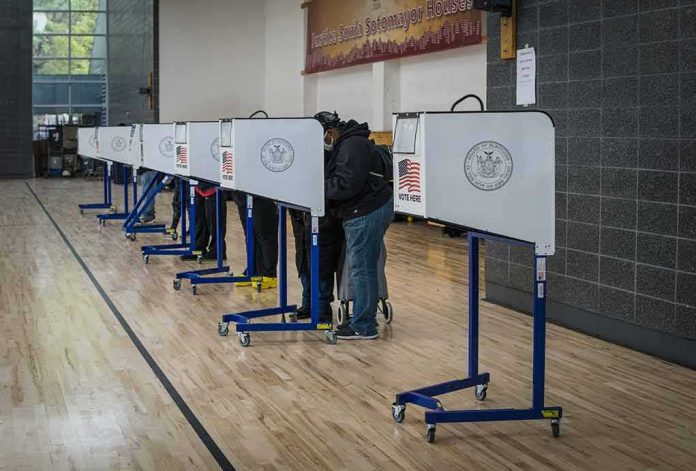
When a former liberal television analyst admits Republicans were right about real weaknesses in our election system, it cuts straight to Americans’ growing fear that the people in charge have not been honest about how secure our votes really are.
Story Snapshot
- Former mainstream media analyst now agrees Republicans were correct that U.S. election systems have real technical vulnerabilities.
- Declassified federal documents and a 2025 White House election integrity order confirm serious concerns about internet-connected voting systems.
- Security experts say hacking and denial-of-service attacks are real risks, even while large-scale fraud remains rare.
- Both parties use election fears for advantage, deepening public mistrust of a system many now see as managed by self‑protecting elites.
What the Former Analyst Admitted
The core admission from the former cable news analyst is simple but powerful. For years, many in left-leaning media said claims about vulnerable voting systems were nothing more than “conspiracy theories” pushed by Republicans. Now this analyst concedes that Republicans were right about a key point: our election infrastructure, especially electronic and internet-connected systems, does have serious security risks that officials did not fully explain to the public.
This kind of reversal matters because it comes from someone who once helped shape the “everything is fine, move along” narrative. When a voice from inside that media bubble says the quiet part out loud, it confirms what many ordinary voters on both the right and the left have felt for years. They suspect that people in Washington and big media often hide or soften bad news about critical systems like elections to avoid anger, blame, or loss of power.
What Official Documents Now Reveal
Recently released federal documents have added hard facts to those suspicions. The White House’s own election integrity page acknowledges that Americans “were blatantly lied to” about the security of voting machines and ballot-counting systems, and cites previously classified intelligence reports about real threats to election infrastructure. In March 2025, President Trump signed a directive ordering the Department of Homeland Security to review all electronic systems used in voter registration and voting, including those that connect to the internet.
That directive tells Homeland Security officials to report on risks like malicious software and unauthorized intrusions into election systems. When a sitting president and his security agencies say these risks are serious enough to need a full national review, it is hard to argue they are just made-up talking points. Independent scientific bodies back this up. The National Academies of Sciences has warned that every form of internet voting is vulnerable to denial-of-service attacks, which can block or disrupt access to systems during critical times.
Fraud Is Rare, But Vulnerabilities Are Real
At the same time, research still shows that proven, large-scale voter fraud is very rare in the United States. Studies summarized by groups like the Brennan Center and think tanks such as Brookings find only scattered cases of fraud over decades, mostly at the local level, and none shown to change outcomes of major national races. Experts who reviewed the 2020 elections overwhelmingly rejected claims of widespread fraud in their states, even as political arguments raged on.
This creates an important distinction that is often lost in talk shows and social media posts. Weak security and human errors are real and documented. That does not automatically mean every close or upsetting election was “stolen.” Courts reviewing lawsuits over the 2020 election found that claims of illegal voting were not supported by solid evidence. Yet those same years of litigation and investigation did reveal technical problems, administrative mistakes, and places where rules were unclear, all of which fed public doubt.
How Both Parties Play the Election Fear Game
Politicians in both parties have learned how powerful election fears can be. President Trump has made election integrity a central theme, warning about foreign actors and noncitizen voting while pushing laws like the SAVE Act to tighten citizenship checks for voters. Democrats and many media voices respond by warning that such measures could restrict legal voters and expand federal control over state elections. Each side points to real facts, but they often focus only on the ones that help their political story.
Research on voter attitudes shows that both Republican and Democrat supporters worry about things like foreign interference and mail-in ballots, but their level of concern changes sharply depending on whether their side wins or loses. When their candidate loses, people are more likely to doubt the fairness of the process. This “motivated reasoning” means leaders who play up fraud claims can stir anger and loyalty, even if the evidence is thin. Over time, it also means more Americans feel the whole system is rigged by elites who never face consequences.
Why This Matters for Trust in Government
For many Americans, this latest admission by a former mainstream analyst reinforces a broader belief: the federal government and big institutions have not been straight with them. Older conservatives see one more proof that warnings about globalist priorities, weak borders, and sloppy election rules were brushed aside until they could not be ignored. Older liberals see confirmation that large corporations, wealthy donors, and security agencies hold huge sway behind the scenes, no matter which party claims to be in charge.
Both groups increasingly agree on one thing. They feel the government is slower to fix deep problems than to defend its own image and power. When officials insist elections are perfectly safe, then later quietly admit serious vulnerabilities, it feeds the sense that ordinary citizens are last to know and first to pay the price. The admission from a former media insider that Republicans were right about key election weaknesses does not end the debate, but it does strip away one more layer of denial. It encourages a more honest conversation about how to secure elections without using fear as a weapon or shutting down valid questions.
Sources:
townhall.com, heritage.org, hks.harvard.edu, brennancenter.org, whitehouse.gov, en.wikipedia.org, pmc.ncbi.nlm.nih.gov, nationalacademies.org, abcnews.go.com, aljazeera.com, congress.gov, online.hilbert.edu, ballotpedia.org, americanbar.org, bbc.com, pbs.org