

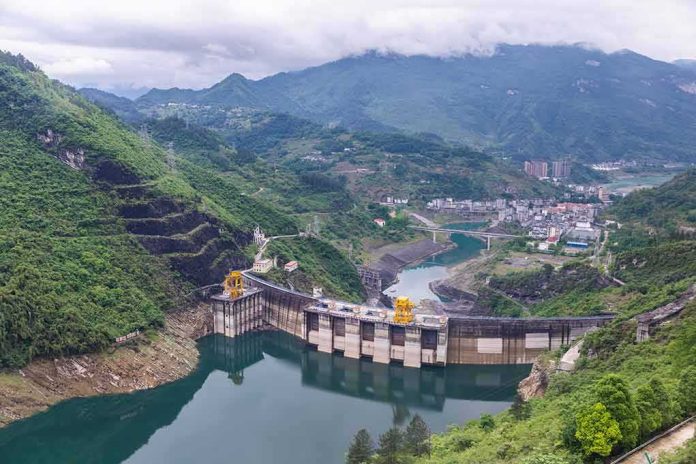
Hundreds of hydropower workers in Nepal are still believed trapped in flooded tunnels as troops and foreign experts rush heavy gear to cut them free.
Story Snapshot
- Authorities say rescue work is underway at tunnels across at least five hydropower sites.
- The army reached one tunnel entrance and started clearing debris, a first breakthrough.
- Officials cited hundreds still unaccounted for, with some reports putting the figure near 933.
- Rough terrain and wrecked roads forced airlifts of equipment and troops to the rescue zones.
Rescuers Target Blocked Tunnels After Deadly Floods
Government officials in Nepal said rescue teams are working at several hydropower projects after floods blocked tunnels and cut off workers inside. Crews focused on opening clogged portals where water, mud, and rock sealed access. Nepal’s Energy Ministry and the national disaster agency directed the push. Specialists from China and India joined the effort, adding tools and skills on drilling and debris removal to speed the work at the most at-risk sites.
Rescue commanders said teams are using controlled blasts, excavators, and search lights to carve safe passages. The Nepal Army reported progress on Sunday, when crews reached one tunnel mouth and began clearing obstructions. That marked the first on-site breakthrough after days of rain, landslides, and broken roads slowed movement. Officials warned conditions inside remain hard to judge, as power outages and unstable ground make contact with deeper sections difficult.
Scale Of The Crisis And Conflicting Headcounts
Officials and media described a large number of people still out of reach. One Reuters report cited 933 workers believed trapped across 11 projects in the affected region. Other outlets reported different totals as rescues advanced and lists were checked. The variation reflects fast-changing conditions and damaged communications. What is clear is the human scale is large, and the need to open the tunnels remains urgent to locate, treat, and move survivors to safety.
Some rescues already occurred at the Upper Trishuli complex, where local reporting said soldiers and crews pulled out hundreds of workers and nearby residents. That operation showed people could survive inside sections that held back the worst of the flood surge. It also showed how mud and silt can slow stretchers, pumps, and cutting tools. Each meter cleared takes time and fuel, and each blast must balance speed against the risk of fresh collapse.
Logistics, Weather, And Regional Help Shape The Response
Disaster managers deployed thousands of troops to the mountains, where missing bridges and blocked highways turned every delivery into a test. Helicopters airlifted excavators and supplies to staging points near river canyons. Chinese and Indian experts brought tunnel and flood experience, adding capacity to guide drilling, shore up weak rock, and manage water flow. That cross-border help aligned with the goal of clearing multiple sites at once, not just one headline location.
Nepal rescue crews are working to reach hundreds of workers trapped inside flood-blocked hydropower tunnels as mountain guides join the operation. #NepalRescue #NepalNews #NepalBreakingNews #NepalFloods #Nepal pic.twitter.com/LE0SBoFNvk
— NewsX World (@NewsX) August 31, 2026
The Himalayan setting adds constant risk. Steep slopes funnel rain and rock into narrow valleys. Tunnels run through weak layers that can shift when saturated. Past studies warned that geology, force majeure events, and construction delays are recurring hazards for Nepal’s run-of-river projects. Those risks compound during extreme weather, when fast water, loose debris, and thin oxygen inside worksites can turn rescue minutes into life-or-death windows.
Sources:
kathmandupost.com, bbc.com, tbsnews.net