

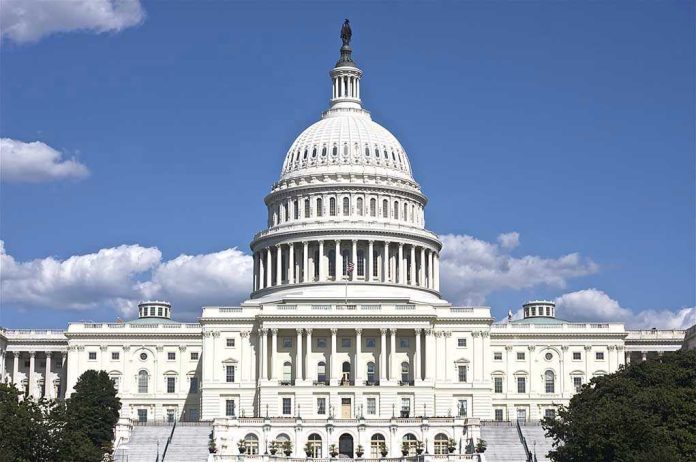
A 54-45 Senate vote just put a former MMA fighter in charge of Homeland Security while airports buckle under a shutdown clocking toward 40 days.
Quick Take
- Sen. Markwayne Mullin (R-OK) won confirmation as DHS secretary on March 23, 2026, amid a partial DHS shutdown and travel chaos.
- Two Democrats backed him while one Republican, Sen. Rand Paul, opposed him, exposing unusual cracks in the normal party script.
- Mullin promised a tactical reset: empower front-line leaders, reduce headline-grabbing blunders, and require judicial warrants for certain entries.
- Kristi Noem’s ouster followed Minneapolis enforcement shootings and scrutiny over DHS-related spending, intensifying pressure for a steadier hand.
A Confirmation Vote That Was Really a Shutdown Pressure Valve
The Senate confirmed Markwayne Mullin as Secretary of the Department of Homeland Security on Monday evening, March 23, 2026, by a 54-45 vote. The roll call mattered less as a personnel story than as a relief valve for a federal system straining under a partial DHS shutdown nearing 40 days. DHS doesn’t just “do immigration.” It runs TSA checkpoints, ICE operations, and crisis response, so leadership gaps show up where voters feel them.
Mullin stepped in after President Trump nominated him in early March following Kristi Noem’s removal. The timing wasn’t subtle: a shutdown plus spring travel is the political equivalent of stacking dry timber near a grill. Negotiators can posture for weeks when consequences feel abstract. They cannot posture when lines stretch, flights snarl, and federal workers go unpaid. The Senate’s message looked like this: stop the drift, pick a captain, and move.
The Strange Bipartisanship: Fetterman and Heinrich Say Yes, Paul Says No
The most telling detail wasn’t the margin; it was the cross-traffic. Democrats John Fetterman of Pennsylvania and Martin Heinrich of New Mexico voted to confirm a Trump pick to run DHS, while Republican Rand Paul of Kentucky opposed him. Supporters described Mullin as independent enough to negotiate and direct enough to impose discipline. Paul’s “no” drew attention because it wasn’t generic opposition; it came out of a committee clash and an ongoing personal feud.
That odd alignment matters to readers who value common-sense governance. Conservative voters usually want secure borders, consistent enforcement, and agencies that can execute a plan without spiraling into scandal. They also tend to reject Washington theatrics when it threatens basic operations like airport security. Two Democrats breaking ranks suggests they saw shutdown pain and public outrage as bigger risks than a party-line protest vote. Paul’s dissent suggests personality and past remarks can still derail unity.
Why Noem Fell: Minneapolis Shootings and the Cost of Losing Public Trust
Noem’s exit hung over every line of this story because it set the stakes for Mullin’s first day. Reporting tied her ouster to backlash over DHS handling of immigration crackdowns, including deadly January shootings in Minneapolis during federal operations, and to scrutiny of advertising-related spending. Even voters who support stronger enforcement expect competence and restraint. When an agency’s tactics produce deaths and confusing public explanations, political support collapses fast, including support that would otherwise be reliable.
Name discrepancies around the Minneapolis victims across early reports underline the broader problem: when officials lose narrative control, everything gets messier, not clearer. For DHS, that mess doesn’t stay on cable news. It hardens distrust among communities, invites lawsuits, and makes agents second-guess decisions under stress. Conservative principles don’t require giving government a blank check; they require government to use lawful force with discipline, transparency, and defensible procedures that stand up in court.
Mullin’s Promise: Warrants, Empowerment, and a Quieter DHS
Mullin told senators he wanted DHS “not in the lead story every day,” a revealing goal because it admits how much reputational damage DHS has taken. He also pledged to empower people inside the department and to require judicial warrants for entries in situations he framed as needing stronger legal footing. That approach signals an attempt to protect enforcement by tightening process. Strong borders often depend on boring paperwork done correctly, not viral footage done recklessly.
Critics will argue warrants slow agents down. Supporters will argue warrants keep cases intact and reduce politically explosive mistakes. Common sense says the real test will be operational design: when warrants are required, how fast can they be obtained, who approves action, and what oversight prevents improvisation? If Mullin builds a system that moves quickly while staying lawful, he strengthens enforcement and shrinks the openings opponents use to block funding or tie DHS up in court.
The Shutdown’s Real-World Bite: TSA Callouts and ICE at Airports
Shutdown fights sound like Capitol Hill trivia until they reach the terminal. Reporting pointed to record TSA callouts, including an 11.76% rate on March 22, as the standoff dragged on. When employees go unpaid and morale collapses, absenteeism rises and the line at security becomes a visible referendum on leadership. The White House response included deploying ICE personnel to help at airports starting March 24, an extraordinary patch for an ordinary function.
This is where the story becomes less ideological and more mechanical. Airport screening runs on staffing, training, and predictability. Using ICE to help may alleviate pressure, but it also signals the system is stressed enough to mix missions that usually stay separate. Voters over 40 remember when DHS was created after 9/11 to coordinate and prevent seams. A shutdown reintroduces seams, and seams are where mistakes hide.
What Happens Next: A Deal, a Rebrand, or Another Headline
Mullin’s confirmation removes one excuse from the negotiating table: “we don’t know who’s in charge.” Lawmakers were already edging toward a solution, and a confirmed secretary can make commitments, set enforcement guardrails, and negotiate with credibility. The deeper question is whether DHS can regain legitimacy while executing a deportation push that will remain politically combustible. A smarter, warrant-based posture could reduce outrages without surrendering enforcement. If not, the next crisis won’t wait for a vote.
Mullin confirmed as DHS chief as lawmakers near solution on shutdown standoff https://t.co/5FGHAyRueH
— Fox News (@FoxNews) March 24, 2026
Oklahoma politics also enters the frame because Mullin’s departure opens a Senate seat for Gov. Kevin Stitt to fill, at least temporarily. That downstream effect matters because DHS funding and immigration policy live and die in narrow margins. The confirmation drama hinted at a larger truth: Washington’s toughest fights aren’t always about ideology; they’re about whether government can perform basic duties under pressure without turning every operational failure into another shutdown trigger.
Sources:
Mullin confirmed as DHS chief as lawmakers near solution on shutdown standoff
Markwayne Mullin confirmed as DHS secretary by Senate
Senate set to vote on confirming Sen. Markwayne Mullin as DHS secretary
Senate advances Mullin’s DHS nomination
Markwayne Mullin confirmed as the next Secretary of Homeland Security