

As Venezuela’s twin earthquakes expose deadly state failure, Americans are once again reminded why honest numbers, strong civil society, and accountable government matter when disaster strikes.
Story Snapshot
- Official death counts swung from dozens to more than 1,700, while over 50,000 people remain missing.
- United Nations officials warn the toll could rise sharply, as satellite data shows nearly 60,000 buildings damaged.
- Survivors and volunteers say citizens, not the state, led early rescues amid power and internet collapse.
- The pattern of disputed casualty numbers follows Venezuela’s long record of underreporting in past disasters.
Quakes Shatter A Weak State And Leave Tens Of Thousands Unaccounted For
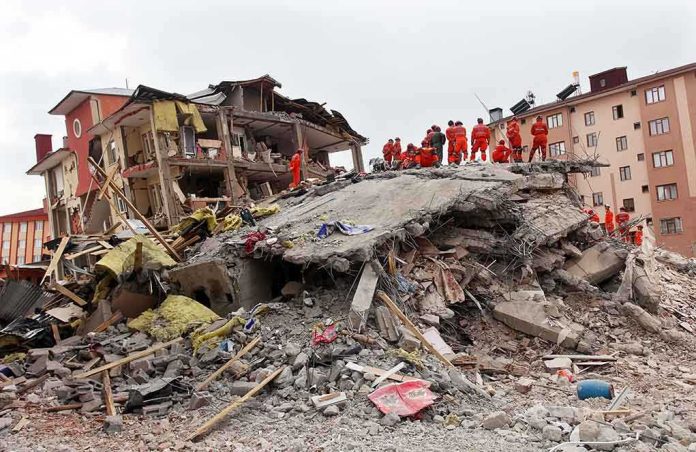
Two massive earthquakes, measured at magnitude 7.2 and 7.5, slammed northern Venezuela on June 24, striking just 39 seconds apart and turning homes, schools, and hospitals into rubble. By Friday, Venezuela’s National Assembly president said the official death toll had risen to 920, with “tens of thousands” still missing. United Nations aid chief Tom Fletcher warned that more than 50,000 people could be unaccounted for and that the final toll would “rise significantly” as rescuers dig through collapsed buildings.
As crews pushed into the hardest-hit coastal state of La Guaira and parts of Caracas, the numbers kept climbing. Updated figures released days later reported at least 1,719 dead, 5,034 injured, and more than 15,000 displaced from their homes. A rapid satellite radar study suggested destruction far beyond the government’s early claims, with as many as 58,870 buildings damaged or destroyed across the region. Analysts and local observers now warn that the real number of dead could end up in the many thousands.
Citizens Dig With Bare Hands While Officials Struggle And Numbers Shift
On the ground, Venezuelans described a grim scene: families and neighbors digging through concrete with hand tools, days before meaningful heavy equipment arrived. Caracas-based journalist Tony Frangie Mawad spoke of a “practical total absence of the state,” noting that civil society, churches, and schools organized their own rescue networks while official teams lagged. Videos on social media show residents confronting soldiers and asking why the armed forces were standing by while civilians carried out dangerous rescues with little state support.
While acting President Delcy Rodríguez declared La Guaira a “disaster zone” and promised field hospitals and organized aid, survivors say early government action was slow and highly controlled. Internet and phone service collapsed after power and telecom infrastructure took heavy damage, making it hard for trapped people to call for help or for families to locate loved ones. Journalists reported cases where victims were sending text messages from beneath the rubble, begging for rescue that arrived late or not at all. That gap between official promises and lived reality is fueling deep anger and calls for accountability.
Clashing Numbers And A History Of Hiding The Full Human Cost
For many Venezuelans, the fight over the death toll feels painfully familiar. During the 1999 floods and landslides in neighboring La Guaira, the government first spoke of hundreds of deaths, while later estimates ranged from 3,000 up to 30,000, and no clear official final count was ever released. Today, that same region has been hit again, and once more the numbers are contested. The first official count after this quake was only 32 dead and about 700 injured. Within days that figure jumped to 188, then 235, then over 1,400, and now more than 1,700.
Independent trackers promoted by the political opposition list more than 55,000 people as missing or unaccounted for, far beyond the “hundreds” of missing people that officials admit. The United States Geological Survey modeled expected deaths in the “thousands to tens of thousands” range for quakes of this strength in a country with fragile infrastructure. Yet state media and some international institutions still treat the lower official counts as the main story, often labeling opposition-based figures as “unverified claims” rather than serious warnings that need auditing.
Global Aid Flows Through Caracas While Ordinary People Shoulder The Burden
International help is arriving, but almost all of it is being routed through the Venezuelan state. United Nations agencies have mobilized at least 25 search-and-rescue teams from about 17 countries, plus thousands of foreign specialists, rescue dogs, and tons of equipment and medicine. The U.S. government has committed at least $150 million in immediate aid and is preparing hundreds of millions more, briefly easing some economic sanctions so emergency supplies can move faster. A U.S. disaster response team with more than 250 personnel and several canine units is already on the ground working with local crews.
🚨Sky turns eerie red in #Venezuela, triggering shock & awe amid #earthquake tragedy https://t.co/LR85WdxKVh pic.twitter.com/HF760JFxol
📍Venezuelans in #Caracas were surprised to see the sky take on a reddish-orange hue on Tuesday evening (June 30), leaving people in awe and…
— ⚡️🌎 World News 🌐⚡️ (@ferozwala) July 1, 2026
At home, however, many Venezuelans say rules and red tape still get in the way. Citizens have accused authorities of blocking private aid that communities collected in the critical first hours, insisting that donations be channeled only through official networks. That message is familiar to readers who have watched big governments and global groups try to control everything, from energy policy to speech online. Venezuelans now fear that the same top-down mindset is shaping the rescue, leaving ordinary people to carry the real weight while officials manage the headlines.
Why This Matters For Americans Who Care About Truth, Liberty, And Preparedness
This tragedy should hit close to home for Americans who value honest government, strong families, and local control. Venezuela’s long slide into institutional decay shows what happens when leaders hide numbers, politicize crises, and treat citizens as a problem to manage instead of partners to trust. Research on health outcomes in Venezuela already links rising conflict and state failure to more infant deaths and heart disease mortality, even before this quake. When disaster strikes such a system, the human cost is magnified and the truth becomes hard to pin down.
For a conservative audience, the lesson is clear. First, real resilience starts from the bottom up: families, churches, and neighbors ready to act when distant bureaucrats are slow or distracted. Second, transparency and free speech are not luxuries; they are life-or-death safeguards against underreported tragedies and quiet cover-ups. And third, when U.S. aid and United Nations plans work only through flawed governments, we must watch closely to ensure help reaches people on the ground, not just regimes and their favored networks.
Sources:
insiderpaper.com, batimes.com.ar, cnn.com, ualrpublicradio.org, facebook.com, youtube.com, instagram.com, thenewhumanitarian.org, x.com, ifrc.org