

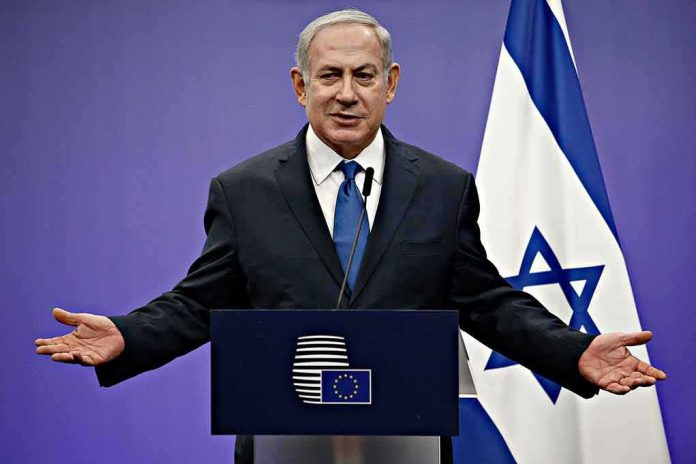
Israel’s prime minister is warning that Britain is caving to an “Islamist-Marxist alliance” just as a suspected Iranian bomb plot near a Royal Air Force base puts the two allies’ spy-sharing relationship to the test.
Story Snapshot
- Prime Minister Benjamin Netanyahu called the United Kingdom the “Islamic Republic of Britain” and warned of a dangerous Islamist-Marxist alliance.
- British police arrested five men near the RAF Fairford air base over a suspected Iran-linked plot; Iran denies any role.
- UK Prime Minister Andy Burnham said there are “strong indications” Tehran was involved in suspicious activity near the base.
- Israeli intelligence has reportedly helped British agencies foil Iran-backed plots for years, but a fight over sanctions on Israel now threatens that partnership.
Netanyahu’s Blunt Warning to London
Benjamin Netanyahu described Britain as the “Islamic Republic of Britain” during a recent interview, tying the label to fears that an Islamic state could one day get nuclear weapons. He framed the remark as part of his long-running campaign against Iran’s nuclear program, not as a literal description of British law. Still, the comment landed as the UK and Israel were already clashing over sanctions tied to the Gaza war.
Netanyahu’s camp argues the “caving in” he describes is dangerous because it weakens Western resolve against Iran and groups he labels Islamist-Marxist. That framing has not been confirmed by British officials, who instead describe the threat in narrower terms: Iran-backed plots, state threat activity, and attacks on dissidents and the Jewish community.
A Foiled Plot Near a British Air Base
British counter-terrorism police arrested five British nationals near the RAF Fairford base in Gloucestershire, accusing them of plotting a bomb attack. All five were later released on bail. UK Prime Minister Andy Burnham said there were “strong indications” that Tehran was involved in suspicious activity connected to the incident. The case remains under investigation, and no charges tied directly to Iran have been confirmed publicly.
Iran rejected any connection to the plot. The Iranian Embassy in London called the accusations “unfounded and malicious speculations” tied to the weekend arrests. The strong denial shows Tehran took the allegation seriously enough to respond directly, even as British investigators continued looking into the matter.
Years of Quiet Intelligence Sharing
Israeli intelligence has reportedly given British agencies key information about Iran-backed threats on UK soil for at least two years. Reports say Mossad passed along details that helped stop an Iranian-linked plot targeting the Israeli embassy in London, leading to several arrests. Separate reporting says Israeli tips also helped foil a plot against Iranian journalists working in Britain.
This quiet cooperation sits behind Netanyahu’s public warning. If Israel pulled back on sharing intelligence, British security services could lose an early-warning channel they have leaned on for years. That stake is why Netanyahu’s complaint about Britain “caving in” carries real weight beyond rhetoric.
Sanctions Dispute Threatens Cooperation
Tension built after UK Foreign Secretary David Miliband and Prime Minister Andy Burnham moved ahead with sanctions tied to West Bank settlements, reportedly against advice from the Foreign Office and intelligence services. Analysts say the decision could cause friction in the broader UK-Israel security relationship, including the intelligence sharing both countries have relied on for years. Israeli officials have reportedly discussed scaling back defense cooperation with Britain over the dispute.
🚨🇮🇱 Netanyahu warns that what he describes as an emerging Islamist-Marxist alliance could pose a serious threat to the West.
He says Israel shared intelligence with Britain about a suspected Iran-linked plot. The investigation remains ongoing. ⚠️🇬🇧 pic.twitter.com/YeBssNDQRa
— Whiplash (@mr_Whiplash_) October 1, 2026
Britain’s Own Record on the Iranian Threat
British officials have made clear for months that they see Iran as a direct danger inside the UK, separate from any debate over Netanyahu’s specific wording. Prime Minister Burnham said Iran backed more than 20 potentially lethal attacks on UK soil in the past year alone. The government has sanctioned 508 individuals and 1,189 entities linked to Iran and placed the entire Iranian state under an enhanced foreign influence registration scheme.
British leaders have also drawn a line between defending against Iran and joining military action. The Foreign Secretary said plainly that the UK was not involved in strikes against Iran, calling that a military action carried out by Israel. That distinction matters because it shows Britain backs a defensive posture against Iran while trying to avoid being pulled into direct conflict, even as it manages a separate rift with Israel over Gaza-related sanctions.
Sources:
facebook.com, moneycontrol.com, ilfoglio.it, jfeed.com, jpost.com, ynetnews.com, english.aawsat.com, ground.news, jewishnews.co.uk, ibtimes.co.uk, rferl.org, gov.uk