

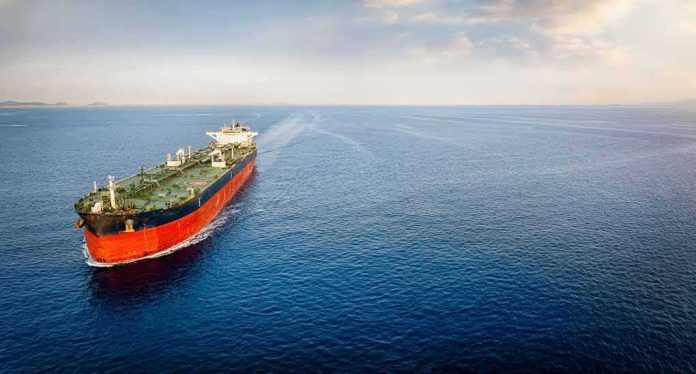
Iran is trying to rebrand a Strait of Hormuz toll scheme as a “service fee” plan, and that is setting off alarms for free navigation and U.S. leverage in a vital sea lane.
Quick Take
- Iran says it is not imposing tolls, but charging for services such as navigation and environmental protection.[1][2]
- United States officials and maritime law critics say the move is still a toll by another name.[2][3]
- Iran argues the strait falls under coastal state control and says it can collect fees there.[4][5]
- Legal analysts say international law protects transit passage and blocks fees for passage itself.[1][10]
Iran’s Fee Pitch Targets a Critical Chokepoint
Tehran says ships crossing the Strait of Hormuz will pay for services, not for passage. Iranian Foreign Ministry spokesman Esmaeil Baghaei said the government is “not seeking to levy transit tolls,” but will charge fees for services that are provided. That language matters because the strait handles a huge share of global energy traffic, and any new payment system could raise shipping costs fast.[1][2]
Iran has also tied the plan to navigation safety, rescue work, and pollution control. Officials have used similar wording in public posts and interviews, saying the fees would cover environmental protection and maritime management rather than a simple tax on transit. Supporters of the plan frame it as a service model, not a blockade. Critics say that label does not change the basic effect on ships that must pass through the waterway.[1][4][5][11]
Washington and Legal Critics See a Toll by Another Name
United States officials have rejected the idea outright, saying no country can charge tolls or fees on an international waterway. Maritime law analysts quoted in the research say the legal line is simple: states may charge for real services, such as pilotage or rescue help, but not for the right to pass through a natural strait. That is why the dispute is not just about money. It is also about control.[2][3][18]
Several legal sources in the research say the Strait of Hormuz remains covered by transit passage rules under the United Nations Convention on the Law of the Sea and related custom. Those sources say coastal states may regulate for safety and pollution, but they may not hamper passage or turn access into a paid privilege. In plain terms, critics argue Iran cannot rename a toll and then make it lawful.[1][7][10]
Iran’s Sovereignty Claim Runs Into a Hard Legal Wall
Iran’s defenders say the strait is not open high seas and that the coasts of Iran and Oman meet closely enough to support state control. Iran has also said prior authorization may be required for warships and that security interests justify tighter rules. The problem for Tehran is that the dominant legal view in the research rejects fees for passage itself, even when the waterway lies inside territorial waters.[1][4][5][10]
🚨 Strait of Hormuz: Oman Rejects Transit Fees, Proposes 'Singapore Model' for Maritime Traffic
Omani Foreign Minister Badr bin Hamad Albusaidi clarified that Oman does not support charging ships for passing through the Strait of Hormuz. This is a significant opposition to IRAN… pic.twitter.com/xg4cTgFMbW
— Asia Strategic Eye (@AsiaStratEye) June 30, 2026
The research also shows no public treaty, court ruling, or formal legal opinion that clearly blesses Iran’s fee plan. Some reports say Iran has talked about sharing proceeds with Oman, but that appears to be only a proposal, not a binding deal. That leaves the whole plan vulnerable to the same criticism conservatives know well: Washington and its allies are still watching a regime that tests limits first and explains itself later.[1][3][12]
What This Means for Trade, Energy, and U.S. Power
The Strait of Hormuz is one of the world’s most sensitive chokepoints, and the research says disruption there can carry major trade costs. That makes Iran’s move more than a legal fight. It is a direct pressure point on oil flow, insurance rates, and regional stability. Any system that lets Tehran charge different rates or pick favorites would also hand hostile power to a government already blamed for aggression at sea.[12][13][16]
For American readers, the core issue is simple. If a strategic waterway can be turned into a cash machine, then free commerce is no longer secure. The research shows Iran is trying to sell the idea as environmental help and navigation support, while critics say it is a disguised toll regime. That conflict will shape whether the strait stays open on fair terms or becomes another geopolitical choke point.[1][2][7]
Sources:
[1] Web – Tehran Plans to Make Billions in Fees From Reopening Hormuz…
[2] Web – Access to the Straits of Hormuz, transit fees, and the International …
[3] YouTube – Iran deal allows Tehran to charge maritime service fees on Hormuz …
[4] Web – The Legal Question of Tolling Hormuz
[5] Web – Iran claims it has a legal right under international law to charge …
[7] Web – The Closure of the Strait of Hormuz by Iran: Considerations over the …
[10] Web – Legal Perspectives on the Possibility of Imposing Tariffs and Fees in …
[11] Web – The Strait of Hormuz – QIL-QDI
[12] Web – Iran has announced plans to introduce a formal service fee …
[13] Web – Fees for the Strait: Iran’s Hormuz Tolls Revive Ancient Maritime …
[16] Web – The International Maritime Organization says no country can …
[18] Web – Can countries charge tolls on vessels passing critical straits? World …